Revolutionizing Education Through Deep Learning by 2026
2 May 2026
Remember that feeling of sitting in a classroom, staring at the clock, while the teacher droned on about something you couldn't care less about? Or the panic of a pop quiz on a topic you zoned out on three weeks ago? Yeah, we've all been there. But what if I told you that by 2026, that version of education might feel as outdated as a floppy disk? We are standing on the edge of a massive shift, and the engine driving it is deep learning. I'm not talking about just slapping a chatbot on a school website. I'm talking about a fundamental rewiring of how we teach, how we learn, and how we think about knowledge itself.
Let's be real: the current education system is a one-size-fits-all factory model. It was great for the Industrial Revolution, but in a world that changes every six months, it's breaking. Kids get bored, gifted students get held back, and struggling students get left behind. Deep learning offers a way out of this mess. It's not a magic pill, but it's the closest thing we have to a personalized tutor for every single student on the planet. And by 2026, this won't be a sci-fi fantasy. It will be the new normal.
The Death of the "One-Size-Fits-All" Classroom
Let's start with the biggest problem: the classroom itself. Right now, you have thirty kids in a room, all at different levels. The teacher has to pick a middle ground, which means half the class is bored and the other half is lost. It's a lose-lose. Deep learning changes this completely.Imagine a system that knows you. Not just your name and your grades, but how you think. An AI tutor, powered by deep neural networks, watches your every move. Did you hesitate on that algebra problem? The system notices. Did you speed through that history reading? It knows. Did you fall asleep during the video on photosynthesis? Yep, it catches that too. This isn't about surveillance; it's about adaptation. The AI can instantly adjust the difficulty, the pace, and even the teaching style. If you're a visual learner, it shows you a diagram. If you learn by doing, it gives you a hands-on simulation. If you need a joke to remember a fact, it tells you one.
By 2026, we won't have "grade levels" in the same way. A student might be at a college level in math but a middle school level in writing. Deep learning systems will treat each subject as a unique journey. You don't move on until you truly understand the concept, not just because the calendar says it's time for the next chapter. It's like having a GPS for your brain. It doesn't just tell you that you're lost; it reroutes you to the destination in the most efficient way possible.
From Grading Papers to Giving Feedback
Let's talk about the impossible job: being a teacher. I have friends who are teachers, and they are superheroes. But they are drowning. They spend hours grading papers, filling out forms, and dealing with bureaucracy. That leaves almost no time for the actual human part of teaching: inspiring, mentoring, and connecting with students.Deep learning is going to take the grunt work off their plates. By 2026, AI will handle the bulk of grading for objective work. But here's the kicker: it won't just slap a letter grade on an essay. It will give deep, contextual feedback. It can analyze the structure of an argument, point out logical fallacies, suggest better vocabulary, and even detect plagiarism. It can do this for thirty essays in the time it takes a human to read one. Some teachers might worry this will replace them. I think the opposite is true. It will free them up to do what only a human can do: build relationships, foster creativity, and teach empathy.
Imagine a teacher walking into a classroom with a dashboard that shows exactly which students are struggling with a specific concept and which students are ready for a challenge. They can then spend their time having small group discussions, one-on-one coaching, or leading a creative project. The AI handles the data; the teacher handles the wisdom. It's not a replacement; it's a superpower.
The End of "Cramming for the Test"
We all know the cycle: you cram for a test, you pass, and two weeks later you can't remember a thing. That's because the current system rewards short-term memory, not deep understanding. Deep learning flips this on its head.These systems use a concept called "spaced repetition." It's not new, but AI makes it incredibly powerful. The AI tracks when you learned a concept and schedules reviews just before you are about to forget it. It's like having a personal trainer for your memory. By 2026, your textbook will be alive. It will know when to quiz you and on what. It will weave old concepts into new lessons so your brain builds strong, interconnected knowledge.
Think of it like building a house. Right now, we teach by dumping a pile of bricks in front of a student and saying "build." Deep learning helps you lay each brick perfectly, making sure the mortar is dry before you add the next one. The result? A building that doesn't collapse when the wind blows. By 2026, "studying for a test" will be an old-fashioned phrase. You'll be constantly learning, constantly reinforcing, and actually retaining the information for life.
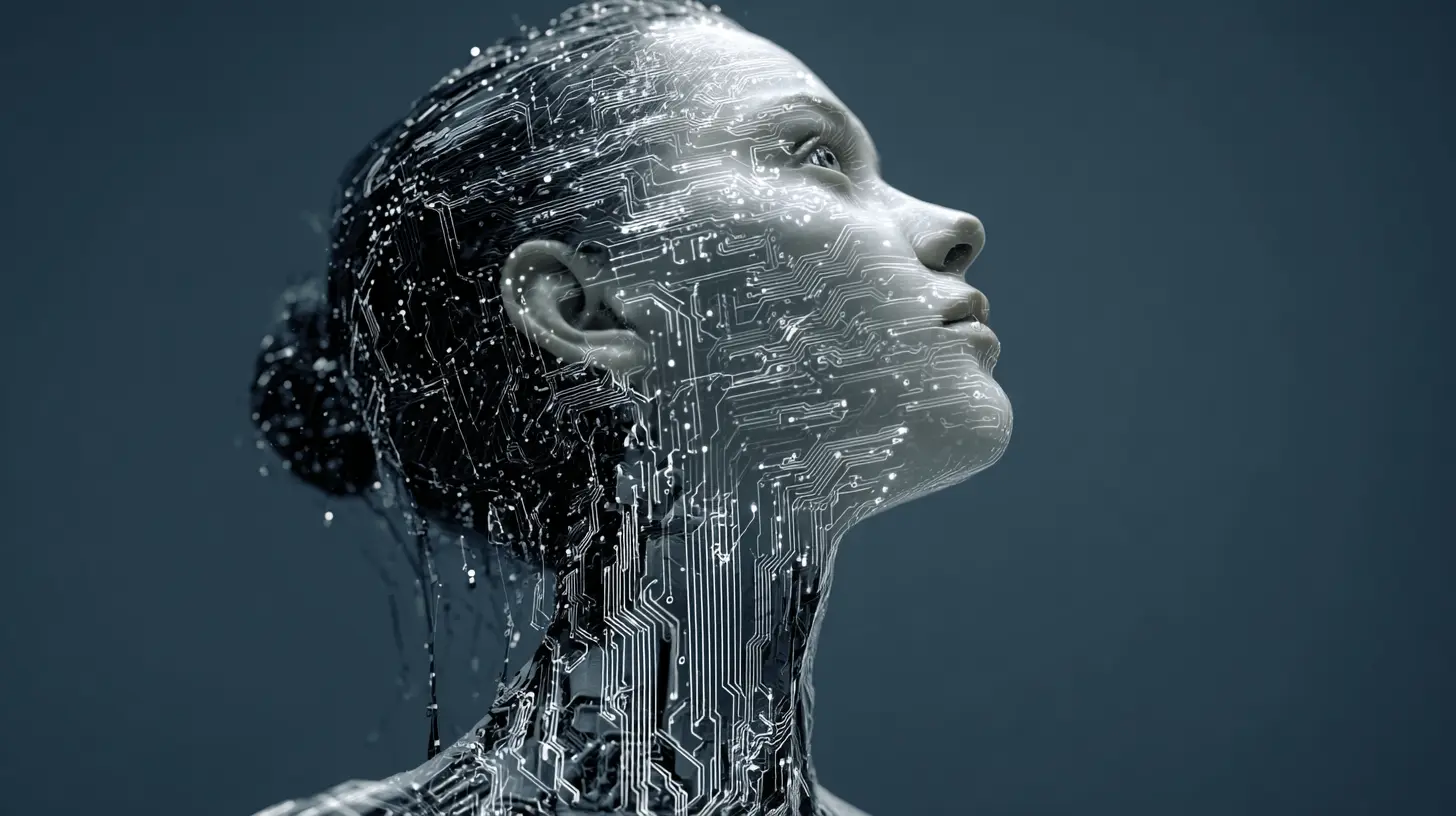
Breaking the Language Barrier (Once and For All)
One of the most exciting things about deep learning in education is real-time translation. I'm not talking about clunky Google Translate that butchers poetry. I'm talking about AI that understands context, nuance, and tone. By 2026, a teacher in Japan can deliver a lecture that sounds perfectly natural to a student in Brazil. The AI will match the lip movements, the tone of voice, and even the cultural references.This is huge. It means that the best course in the world, taught by the best professor, is available to anyone with an internet connection. No more "sorry, it's only in English." The world's knowledge will be accessible in your native tongue. This doesn't just level the playing field; it blows up the stadium. A kid in a rural village in Kenya could learn advanced physics from a Nobel laureate at MIT. That's not just education; that's a revolution.
The Dark Side: What Could Go Wrong?
Now, I don't want to be the guy who only talks about rainbows and unicorns. Deep learning in education has some serious risks, and we need to talk about them. By 2026, we will have to deal with these issues head-on.First, there's the data problem. These systems need to know a lot about you to personalize your learning. Who owns that data? Is it the school? The tech company? Could it be used to track your thinking patterns or even predict your behavior? We need iron-clad privacy laws. If a student feels like they are being watched all the time, they will stop taking risks. And you can't learn without taking risks.
Second, there's the bias problem. Deep learning models are trained on human data, which means they inherit our biases. If a system is trained on textbooks that ignore certain cultures or histories, it will perpetuate that ignorance. We need diverse teams building these systems and testing them for fairness. Otherwise, we risk creating a new generation of AI that reinforces old prejudices.
Third, there's the "human connection" problem. Learning is not just about information transfer. It's about inspiration. It's about the feeling you get when a teacher says "I believe in you." Can an algorithm replicate that? No. Not by 2026, and probably not ever. We have to be careful not to let the machine become the teacher. It should be the tool that empowers the teacher.
The New Role of the "Teacher"
So, what does a teacher do in 2026? They don't stand at the front of the room and lecture. That job is done by the AI. The teacher becomes a coach, a mentor, a facilitator. Their job is to ask the big questions. "Why does this matter?" "How does this connect to your life?" "What do you think about this?"They focus on the things that are hard for AI: creativity, critical thinking, collaboration, and character. They run Socratic seminars, lead project-based learning, and help students navigate their emotions. In a world where information is free, the teacher's job is to teach you how to think, not what to think.
I think this is a much harder job than the one they have now. It requires more skill, more empathy, and more energy. But it's also a much more rewarding job. Instead of being a dispenser of facts, they become a shaper of minds.
What Will School Look Like in 2026?
Let me paint you a picture. It's 2026. A student wakes up, puts on their augmented reality glasses, and their lesson for the day appears in their field of view. It's not a boring textbook. It's a 3D model of the solar system that they can walk through. They spend 20 minutes on a deep learning module that adapts to their pace. The AI notices they are struggling with gravitational forces. It pauses the lesson and offers a short, interactive simulation. They get it.Then, they join a live online session with their teacher and ten other students from around the world. They discuss the ethics of space exploration. The teacher doesn't lecture; they guide the conversation. The AI is in the background, taking notes, suggesting resources, and tracking who is participating.
After the session, the student works on a collaborative project with a classmate in Germany. They build a presentation together using a shared AI workspace. The AI helps them organize their ideas, find sources, and even suggests better ways to present their data.
There are no grades in the traditional sense. Instead, the student has a "skill map" that shows exactly what they have mastered and what they still need to work on. It's a living document that follows them through life. When they apply for a job or college, they don't show a transcript. They show a portfolio of their work and a map of their skills, verified by the AI system.
This sounds like a utopia, but it's actually very close to what the technology can do right now. The barrier is not the tech; it's the will to change. It's the school boards, the governments, and the old habits that hold us back.
The Bottom Line: It's About Liberation
At the end of the day, deep learning in education is not about making computers smarter. It's about making humans freer. It's about freeing students from the boredom of a one-size-fits-all curriculum. It's about freeing teachers from the drudgery of grading and paperwork. It's about freeing knowledge from the cage of language and geography.By 2026, we won't have a perfect system. We will still have problems. But we will have a choice. We can use this technology to double down on the old model, making it more efficient and more controlling. Or we can use it to break the mold and create a system that is more human, more creative, and more just.
The future of education is not written in stone. It's written in code. And we get to decide what that code looks like. So, let's make it a good one. Let's make it one that helps every single person on this planet unlock their full potential. Because that, my friend, is the real revolution.
all images in this post were generated using AI tools
Category:
Deep LearningAuthor:

Adeline Taylor
Discussion
rate this article
2 comments
Sienna Kirkpatrick
This is an exciting glimpse into the future of education. Deep learning could truly reshape learning experiences.
May 31, 2026 at 3:02 AM
Adeline Taylor
I'm glad you found it exciting! Deep learning has huge potential to transform how we learn.
Falkor Palmer
Revolutionizing education by 2026? Sounds ambitious. Sure, deep learning can jazz up the classroom, but let's not pretend tech alone can fix systemic issues. Innovation is great, but it needs a reality check to truly make an impact.
May 4, 2026 at 10:27 AM
Adeline Taylor
You raise a valid point. Tech alone won't solve everything, but it's a step towards addressing some of those systemic issues. We need to blend innovation with practical solutions.