Predicting the Consumer Drone Landscape in 2027
4 September 2026
The consumer drone market has a peculiar habit of humbling even the most confident forecasters. In 2016, pundits predicted that by 2020 we would have autonomous delivery drones buzzing over every city block, and that camera drones would become as ubiquitous as smartphones. Neither happened. Instead, the industry consolidated, regulations tightened, and the average pilot today is less interested in aerial cinematography and more interested in practical, repeatable tasks like roof inspections, search-and-rescue support, or simply flying for the joy of it.
Looking ahead to 2027, we need to avoid the trap of linear thinking. The next three years will not simply be a faster version of the last three. The forces shaping consumer drones are structural: regulatory evolution, battery chemistry breakthroughs, artificial intelligence moving from the cloud to the edge, and a fundamental shift in what ordinary people expect from a flying object. This article will break down those forces, separate realistic trajectories from marketing hype, and give you a framework for making smart purchasing or investment decisions before the market settles into its next phase.
The Regulatory Bottleneck Finally Breaks, But Not the Way You Think
For years, the single biggest constraint on consumer drone adoption has not been hardware, but airspace access. In the United States, the Federal Aviation Administration's Remote ID rule, fully enforced since early 2024, effectively tethered every drone to a broadcast signal that authorities can track. That was a blow to privacy advocates, but it also paved the way for more relaxed operating rules. The logic was simple: if the system knows where every drone is, it can safely allow more complex flights.By 2027, expect the regulatory pendulum to swing toward what the industry calls "beyond visual line of sight" (BVLOS) waivers for recreational and light commercial users. Do not confuse this with fully autonomous package delivery in suburban neighborhoods. That remains a logistical nightmare for another decade. Instead, what will happen is a tiered licensing system. Think of it like a driver's license for drones: a basic license for park flying, a mid-tier license for flying over private property with a spotter, and an advanced license for BVLOS operations in designated rural corridors.
The practical implication for consumers is that a drone purchased in 2025 will still be perfectly legal to fly in 2027, but you will likely need to pass a short online course to unlock its full range of features. The bigger change is that obstacle avoidance, which today is a safety net, will become a legal requirement for higher-tier flights. That means the gap between cheap drones and premium drones will widen, not narrow, because only premium models will have the sensor redundancy to qualify for advanced airspace.
One common misconception is that the European Union and the United States are converging on a single global standard. They are not. The EU's EASA framework is stricter on geofencing and pilot certification, while the FAA is more permissive on hardware but stricter on operational rules. If you plan to travel with a drone in 2027, you will need to carry separate compliance modules for each region. This is a headache, but it also creates a niche for modular drones that can swap software profiles based on GPS location.
Battery Chemistry and the End of the 20-Minute Flight
The most tedious limitation of every consumer drone today is flight time. Twenty to thirty minutes is simply not enough for serious work or long exploration. By 2027, we will see a meaningful shift toward solid-state and lithium-sulfur batteries in consumer electronics, but do not expect miracles. The energy density improvements will be incremental, roughly a 40 to 60 percent gain over current lithium-ion cells, not the 300 percent jump that lab prototypes suggest.What will change is how drones manage power. The real breakthrough is not longer flight times, but smarter energy distribution. In 2027, a mid-range drone will have a hybrid power system: a small internal battery for landing and takeoff, plus a hot-swappable external pack for cruising. This is already common in industrial drones, but consumer models have avoided it because of weight and cost. By 2027, manufacturing costs will drop enough that a $1,200 drone will offer a modular battery bay.
Here is the trade-off you need to understand. A modular battery system adds mechanical complexity and a potential failure point. A drone that crashes on a hard landing might eject a battery pack, which is dangerous. However, the convenience of carrying two or three charged packs and swapping them in under ten seconds, without powering down the drone, will be worth it for many users. The smarter approach for manufacturers is to make the drone hover on the internal reserve while you swap the external pack. Expect DJI, Autel, and a few new entrants to adopt this design by late 2026.
Do not buy a drone in 2027 solely based on advertised maximum flight time. Those numbers are always measured in perfect, windless conditions with a fresh battery and no camera recording. Instead, look at the "realistic endurance" rating, which should be published within two years. This rating accounts for hovering, moderate wind, and continuous 4K recording. A drone that advertises 45 minutes will realistically give you 28 to 32 minutes of usable flight. Plan your operations around that number, not the marketing figure.
Edge AI Turns Drones into Autonomous Observers
The most profound change in consumer drones by 2027 will not be visible in the camera specs or the airframe design. It will be in the onboard processing. Today, almost all intelligent features, like subject tracking and obstacle avoidance, rely on a combination of onboard sensors and cloud-based processing. That creates latency, requires a strong cellular connection, and raises privacy concerns because your video feeds are often analyzed on remote servers.By 2027, the standard for consumer drones will be true edge AI. That means a dedicated neural processing unit (NPU) on the drone itself, capable of running real-time object detection, scene segmentation, and path planning without any external connection. This is not a hypothetical. The chips already exist in smartphones, and adapting them for drones is a matter of thermal management and power efficiency, not fundamental science.
What does this mean for you as a user? First, autonomous follow-me modes will become genuinely reliable. Today, if you are skiing or mountain biking, a drone will occasionally lose you against a cluttered background or when you pass behind a tree. In 2027, the drone will not just track your shape, but predict your trajectory based on your body movement and the terrain map it has built in real time. This is a massive improvement for solo content creators.
Second, and more importantly, edge AI will enable a new category of "inspection routines." Imagine flying a drone over your roof after a storm. Instead of manually piloting and eyeballing the footage, you will simply select "roof inspection" from a menu. The drone will autonomously map the perimeter, fly a pre-programmed grid at the correct altitude, and use its onboard AI to flag anomalies like cracked shingles or lifted flashing. It will then generate a short report with annotated still images. This capability exists today in commercial software, but it costs thousands of dollars and requires a skilled operator. By 2027, it will be a built-in feature on a $1,500 drone.
The caution here is about over-reliance. Edge AI is excellent at recognizing patterns, but it is still terrible at understanding context. A drone might flag a shadow as a crack, or miss a subtle leak because the color contrast is low. Always treat AI-generated inspection reports as a pre-screening tool, not a final verdict. You will still need to look at the raw footage for critical decisions.
Camera Evolution Stalls, Computational Photography Takes Over
For the past decade, the marketing war among consumer drones has been fought over camera sensors: more megapixels, larger sensors, higher dynamic range. By 2027, that war will be effectively over. The physical limits of sensor size for a consumer gimbal have been reached. A full-frame sensor in a sub-250-gram drone is physically impossible without compromising flight performance, and even a Micro Four Thirds sensor requires a drone that is too large for most casual users.The next frontier is computational photography. This is the same trick that smartphones have used for years: capture multiple exposures in rapid succession and merge them on the fly. By 2027, even a mid-range drone will have a 1-inch sensor, but it will shoot burst sequences of five to seven frames every time you press the shutter. The onboard NPU will then align, denoise, and merge those frames into a single image that looks like it came from a much larger sensor.
This has two practical consequences. First, low-light performance will improve dramatically. You will be able to shoot usable footage at dusk without pushing the ISO to unusable levels. Second, dynamic range will expand, allowing you to capture a sunset with detail in both the sky and the foreground without using graduated neutral density filters. For amateur photographers, this is a game changer because it removes the need for post-processing skills.
However, beware of the "artificial sharpening" trap. Computational photography can produce images that look crisp on a phone screen but fall apart when viewed on a large monitor. The algorithms tend to over-enhance edges and create a plastic, unnatural texture. When you read reviews in 2027, pay attention to whether the reviewer tested the drone's RAW output, not just the JPEG preview. If a manufacturer does not allow RAW capture, treat that as a warning sign.
Another shift will be the return of manual controls for video. As computational photography handles the basics, manufacturers will add back physical dials for aperture, shutter speed, and ISO. This seems counterintuitive in an age of automation, but it reflects a growing segment of users who want cinematic control. The best drones in 2027 will offer a "pro mode" that bypasses all computational processing and gives you a clean, uncompressed feed. This mode will drain battery faster and require more skill, but it will be there for those who want it.
The Rise of Sub-250-Gram Drones as Daily Carry Items
One of the most consequential regulatory changes in recent years has been the classification of drones under 250 grams. In many jurisdictions, these are exempt from registration and can be flown in areas where heavier drones are banned. This has created a booming market for tiny, folding drones like the DJI Mini series. By 2027, this segment will not just dominate in sales, but in capability.The engineering challenge for sub-250-gram drones has always been the trade-off between weight, battery life, and camera quality. You can only have two of the three. By 2027, advances in carbon fiber airframes and more efficient motors will allow manufacturers to fit a 1-inch sensor and a 30-minute battery into a 249-gram package. The catch is that these drones will be more fragile and less wind-resistant than their larger siblings. Flying a 249-gram drone in a 20-knot wind will still be a white-knuckle experience.
The real innovation in this segment will be the "pocket base station." Instead of carrying a bulky remote controller with a built-in screen, you will use your smartphone as the primary display, with a small clip-on controller that attaches to the phone's frame. This is not new, but the quality of the connection will improve. By 2027, sub-250-gram drones will use a dedicated frequency band, separate from Wi-Fi, that provides a stable 10-kilometer range with minimal interference.
Do not make the mistake of buying the lightest drone you can find. Weight is not the only factor in regulatory compliance. Some drones under 250 grams still have no obstacle avoidance, no geofencing, and no remote ID module. These "barely legal" drones are a trap. In 2027, the market will consolidate around a few models that offer full safety features within the weight limit. Buy those. A drone that saves you 50 grams but loses obstacle avoidance is not a bargain; it is a liability.
The Subscription Economy Comes to Drones
Hardware margins in consumer electronics are thin. Manufacturers have realized that the real money is in recurring revenue. By 2027, expect every major drone brand to offer a mandatory or semi-mandatory subscription service. This is a controversial development, and you need to understand what you are paying for before you commit.A typical subscription will include three tiers. The base tier, possibly free, will provide firmware updates and basic flight logging. The mid-tier, costing around $10 to $15 per month, will unlock advanced AI features like autonomous inspections, hyperlapse modes, and cloud storage for your flight logs. The top tier, perhaps $30 per month, will include extended warranty, priority customer support, and access to a "flight intelligence" database that maps no-fly zones and weather conditions in real time.
Here is the key question: will manufacturers be able to force subscriptions for hardware features that already exist on the drone? In the past, this was considered unethical, and some companies faced backlash. By 2027, the industry will have settled on a compromise. Basic flight and camera functions will remain free forever. Subscription will only gate cloud-based features, like AI model updates that require server-side training. This is a fair model, but you should read the fine print. Some brands will try to charge for features that should be standard, like obstacle avoidance in low light. Avoid those brands.
The practical advice is to calculate the total cost of ownership over three years. A $1,000 drone with a $15 monthly subscription will cost you $1,540 over that period. If the subscription adds genuine value, like continuous AI improvements that make the drone safer, that might be worth it. If the subscription only provides cloud storage that you do not need, then you are better off with a brand that offers a perpetual license model, even if the upfront cost is higher.
The Environmental and Social Backlash
It would be naive to predict the consumer drone landscape without addressing the growing resistance to drones in public spaces. By 2027, many national parks, private beaches, and even entire municipalities will have banned recreational drone flights unless the pilot holds a special permit. This is not just about privacy, though that is a major factor. It is also about noise pollution and wildlife disturbance. A quiet electric drone still emits a high-pitched whine that carries surprisingly far.This will push consumers toward two extremes. One group will embrace "quiet drone" technology, which uses larger, slower-turning propellers and active noise cancellation to reduce the audible signature. This is technically challenging, and the trade-off is reduced maneuverability. The other group will simply fly in rural areas and designated drone parks. The market will bifurcate: urban drones will be small, quiet, and heavily restricted, while rural drones will be larger, more capable, and less encumbered.
Do not expect a technical solution to solve the social problem. Even a silent drone is still an eye in the sky. If you plan to use a drone in 2027, the best practice is to treat it like a camera on a tripod. Ask permission when you are near people, avoid hovering over private property, and be prepared to land immediately if someone expresses discomfort. This is not just polite; it is the fastest way to prevent more restrictive regulations.
How to Choose Your Next Drone in 2027
Given all these changes, how should you approach a drone purchase in 2027? First, ignore the urge to buy the latest model on launch day. The market will have significant firmware issues in the first three months, and prices will drop by 15 to 20 percent within six months. Second, prioritize modularity over raw specs. A drone that allows you to swap out the camera gimbal, the battery system, and the obstacle avoidance sensors will remain useful for years. A sealed, integrated drone will become obsolete much faster.Third, pay attention to the software ecosystem. The best hardware in the world is useless if the flight planning app is buggy or the cloud service is unreliable. Read forums and subreddits for long-term user reports, not just launch-day reviews. A drone that was praised in March might be abandoned by September if the manufacturer stops updating its software.
Fourth, consider buying used. The consumer drone market has a high churn rate because many people buy a drone, fly it a dozen times, and then sell it. By 2027, there will be a robust secondary market for drones that are one or two years old but in excellent condition. Just be sure to verify that the remote ID module is functioning and that the drone has not been reported as stolen.
Finally, do not overestimate your own needs. If you are a weekend hobbyist who wants to capture family vacations, a $700 drone with a decent camera and reliable obstacle avoidance is all you need. Spending $2,500 on a professional-grade drone will not make your footage better if you do not know how to compose a shot or edit video. The best drone is the one you actually fly, not the one with the most impressive spec sheet.
The Uncomfortable Truth About Autonomy
Every forecast for 2027 includes some version of "fully autonomous flight for everyone." The uncomfortable truth is that autonomy will make flying easier, but it will also make crashes more spectacular. When a human pilot makes a mistake, they usually correct it quickly. When an AI makes a mistake, it often does so with confidence and at full speed. The transition from human-piloted to AI-piloted drones will not be smooth, and there will be a period of highly publicized failures.Do not let this discourage you. The path forward is to use autonomy as a co-pilot, not a replacement. In 2027, the best pilots will be those who understand both manual control and AI assistance. They will know when to trust the autonomous return-to-home feature and when to override it. They will know that a drone's obstacle avoidance is not perfect in rain, fog, or when flying toward a low-contrast wall. They will treat the drone as a tool that amplifies their own judgment, not a magic box that eliminates it.
The consumer drone landscape in 2027 will be richer, more complex, and more capable than today. It will also be more regulated, more subscription-based, and more socially contested. The winners will be those who adapt to the new rules without losing the joy of flight. The losers will be those who cling to the wild-west era of drones and find themselves grounded, both literally and figuratively.
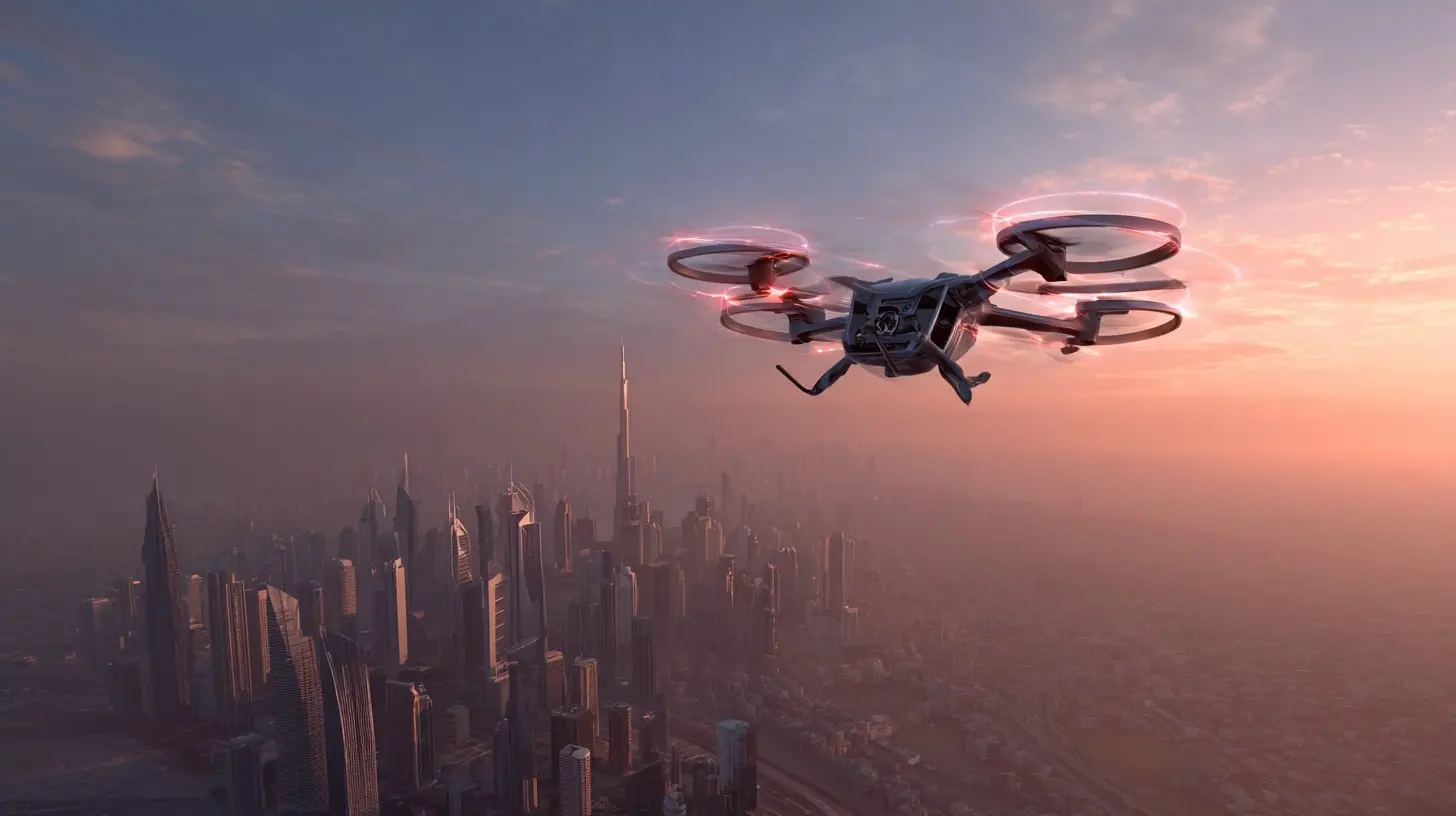
all images in this post were generated using AI tools
Category:
DronesAuthor:

Adeline Taylor