Emerging Tools to Build Your Creative Brand Online
5 August 2026
The internet has always been the great equalizer for creative professionals. Twenty years ago, you needed a portfolio site, a publisher, or a gallery to show your work. Today, you need something far more elusive: attention. And attention, for a creative brand, is not about being loud. It is about being distinct, consistent, and strategically visible across the right digital surfaces.
But here is the uncomfortable truth most advice columns miss: the tools themselves do not build your brand. They only amplify the clarity of your vision. If your point of view is muddled, a thousand new apps will not fix that. However, if you have a clear sense of what you make and why it matters, a new generation of emerging tools can accelerate your reach in ways that were impossible even three years ago.
This article is not a list of shiny objects. It is a field guide to the categories of tools that are quietly reshaping how independent creators, small studios, and solo practitioners establish a brand identity, distribute work, and convert casual viewers into loyal followers. We will look at what actually works, where the pitfalls are, and how to choose the right stack for your specific creative discipline.

The Shift from Portfolio to Presence
For a long time, the creative brand online meant a portfolio website. You bought a domain, installed a template, uploaded your best pieces, and waited. That model is not dead, but it has become secondary. The primary battleground is now distributed presence: the places where your work travels to meet people, rather than the place where people travel to see your work.The emerging tools reflect this shift. They are not built around the idea of a static homepage. They are built around the idea of a living feed, a collaborative workspace, or an AI-assisted distribution engine. The most successful creative brands now operate like small media companies. They publish consistently, repurpose content across platforms, and use analytics to sharpen their message.
That means your tool stack should be divided into four functional layers: creation, curation, distribution, and measurement. Most creators only think about the first layer. The emerging advantage is in the other three.

Creation Tools That Shape a Distinct Voice
You cannot build a brand on someone else's template forever. The tools that matter here are the ones that let you develop a recognizable visual or written signature without requiring a full engineering team.AI-Assisted Design with a Human Edit
Generative image tools have matured past the novelty phase. The ones that help your brand are not the ones that produce a finished piece from a prompt. They are the ones that integrate into your existing workflow as a starting point or a texture source. Think of them as a tireless brainstorming partner that never gets tired of your vague requests.The practical use case is mood boarding and concept development. Instead of spending three hours searching for reference images, you can generate forty variations of a color palette or a composition style in minutes. Then your job as the creative director is to curate, refine, and inject the human judgment that AI lacks. The mistake is to publish raw AI output and call it your brand. That is a race to the bottom because anyone can type the same prompt.
The better approach is to use these tools for internal exploration, then use a traditional editor to bring the selected direction into a polished, coherent asset. Your brand voice lives in the choices you make after the AI stops, not in the AI's first pass.
Collaborative Whiteboards That Replace Email
Creative work is iterative, and iteration lives in conversation. The emerging collaborative canvas tools have become the de facto space where creative brands take shape. Unlike a shared document, these tools allow for spatial thinking. You can place a logo next to a color swatch next to a customer persona next to a draft of a tagline.What makes these tools genuinely new is their integration with other parts of your stack. You can embed a live prototype, a survey result, or a video clip directly into the canvas. This collapses the distance between research and execution. For a solo creative, this is your second brain. For a small team, it is the difference between a chaotic group chat and a visible, organized trail of decisions.
The trade-off is that these tools require discipline. A blank canvas can become a dumping ground. Set a rule: every session ends with a summary of what was decided and what the next action is. Otherwise, you will have a beautiful map to nowhere.

Curation and Management Tools for Consistent Output
Consistency is the bedrock of brand recognition. But consistent output is hard because creative work is not linear. You have bursts of inspiration and long stretches of revision. The tools that help here are the ones that impose a gentle structure on your workflow without killing the spontaneity.Digital Asset Management for Solo Creators
You do not need a heavy enterprise system. But you do need a place where every version of a file lives, with clear naming and searchability. The emerging tools in this space are now built for individuals, not just corporations. They offer automatic tagging, visual search, and version history without requiring you to understand a database.The real value is that you stop losing time hunting for the final version of a file. That saved time goes directly into making more work or refining your message. A simple habit: when you finish a piece, file it immediately with a date and a project name. Future you will be grateful.
Scheduling Tools That Understand Context
Posting at the right time matters, but the emerging scheduling tools go beyond that. They analyze your past performance to suggest not just when to post, but what type of content format performs best for your specific audience. Some can even suggest repurposing a long video into several short clips based on which segments had the highest engagement.The caution here is over-automation. Your followers can sense when you have gone dark and let the bot run. The best practice is to use scheduling for the mechanical part of distribution, but to keep a personal presence in the comments and in the conversations that happen after a post goes live. The tool gives you the time; you must spend that time on genuine interaction.
Distribution Tools That Reward Repurposing
This is where the biggest shift has happened. The old model was to create one piece of content and push it to one platform. The new model is to create a single core asset and then reformat it into a dozen smaller pieces for different channels. The emerging tools are designed to make that repurposing almost effortless.The Long-Form to Short-Form Pipeline
Suppose you record a twenty-minute video essay about your creative process. The emerging editing tools can automatically identify the most quotable moments, generate captions, and cut vertical clips that are optimized for short-form video platforms. This is not just about saving time. It is about reaching audiences who would never click on a twenty-minute video but might watch a forty-five second clip and then seek out the full piece.The nuance is that automatic clipping can miss the context that makes a moment meaningful. Review every clip before you publish. A clip that is technically engaging but emotionally flat will hurt your brand more than not posting at all. Your creative judgment is the filter that makes the automation work.
Newsletters as the Owned Distribution Channel
Social platforms change their algorithms without warning. The emerging counterweight to that volatility is the return of the email newsletter. New tools have made it simple to create beautiful, branded newsletters that feel like a natural extension of your visual identity.Why does this matter for a creative brand? Because an email list is the only audience you truly own. If a platform shuts down or changes its rules, you still have a direct line to the people who care about your work. The emerging tools here are focused on design flexibility and automation, allowing you to send a new piece of work to your list with a few clicks.
The mistake is to treat the newsletter as a broadcast channel. It is a conversation. Ask questions. Show behind-the-scenes work. Share what failed. The relationship you build in the inbox is deeper than the one you build in a feed.
Measurement Tools That Inform, Not Obsess
Analytics are a necessary evil. Without them, you are guessing. With them, you can easily fall into the trap of optimizing for numbers that do not matter. The emerging measurement tools are trying to solve this by focusing on engagement quality and audience growth patterns rather than raw impressions.Understanding the Difference Between Views and Resonance
A view is a passive event. A save, a share, or a thoughtful comment is an active signal. The new analytics platforms are better at separating these signals. They can show you which pieces of work led to profile visits, which led to follows, and which led to direct messages or inquiries.The practical takeaway is to stop chasing the algorithm's idea of success and start chasing your brand's idea of success. If you are a portrait photographer, a post that gets a hundred comments from potential clients is worth more than a post that gets ten thousand views from people who will never hire you. The tools can show you this, but only if you look at the right metrics.
The Privacy-First Shift
As third-party cookies fade and privacy regulations tighten, the measurement landscape is changing. The emerging tools are moving toward first-party data: information you collect directly from your audience through your own channels. This is a structural advantage for creative brands who own their email lists and their websites.The implication is that you should start building your own data collection now. Simple things like a feedback form on your site or a poll in your newsletter will become more valuable over time. The platforms will know less about your audience, but you can know more if you build the right mechanisms.
Common Mistakes and Misconceptions
There is a persistent belief that a creative brand is just a logo and a color palette. That is a visual identity, not a brand. A brand is the sum of all the experiences people have with your work: the tone of your captions, the reliability of your publishing schedule, the way you respond to criticism, the values you express through your choices.The first mistake is ignoring the gap between your best work and your typical output. If you only post your masterpieces, you create an impossible standard that your audience can feel. It is better to show the process, the rough sketches, and the failed attempts. This builds trust and makes your final pieces more impressive because people understand the effort behind them.
The second mistake is spreading yourself across every platform. The emerging tools make it tempting to be everywhere at once. But a creative brand is stronger when it owns one or two channels deeply than when it has a weak presence on six. Choose your platforms based on where your ideal audience actually spends time, not where the trends are.
The third mistake is treating tools as a substitute for a point of view. The most sophisticated stack in the world will not help you if your work does not have a clear voice. Before you buy another subscription, write down in one sentence what makes your creative work different. If you cannot write that sentence, no tool will write it for you.
How to Choose Your Stack
Start with the constraint of your time. Every tool you add has a learning curve and a maintenance cost. A good rule is to adopt one new tool per quarter at most. Use it for a specific project, not just for general experimentation. Evaluate it at the end of that project. If it did not save you time or improve your output, drop it.Consider the integration between tools. A stack where your design tool, your scheduling tool, and your newsletter tool can talk to each other is far more valuable than three best-in-class tools that do not connect. The seams between tools are where time gets lost.
Think about your audience's expectations. If you are in a visual field like illustration or photography, your tools should be heavy on imagery and light on text. If you are a writer, your tools should facilitate long-form reading and easy sharing. The tool should fit the medium, not the other way around.
The Future of Creative Brand Building
The direction is clear. The tools are getting smarter, more integrated, and more automated. The creative professional's role is shifting from executor to editor and director. You will spend less time on the mechanical tasks of formatting, resizing, and scheduling. You will spend more time on the strategic choices: what to make, what to say, and who to say it to.The creators who thrive will be the ones who treat these tools as an extension of their craft, not a replacement for it. They will use the automation to buy back time, then spend that time on the human connection that no algorithm can replicate. They will measure their success not in likes, but in the depth of the relationships they build with the people who value their work.
The emerging tools are not the story. You are the story. The tools are just the way you tell it more clearly, to more people, with more consistency. Use them with intention, and your creative brand will not just be visible. It will be unforgettable.
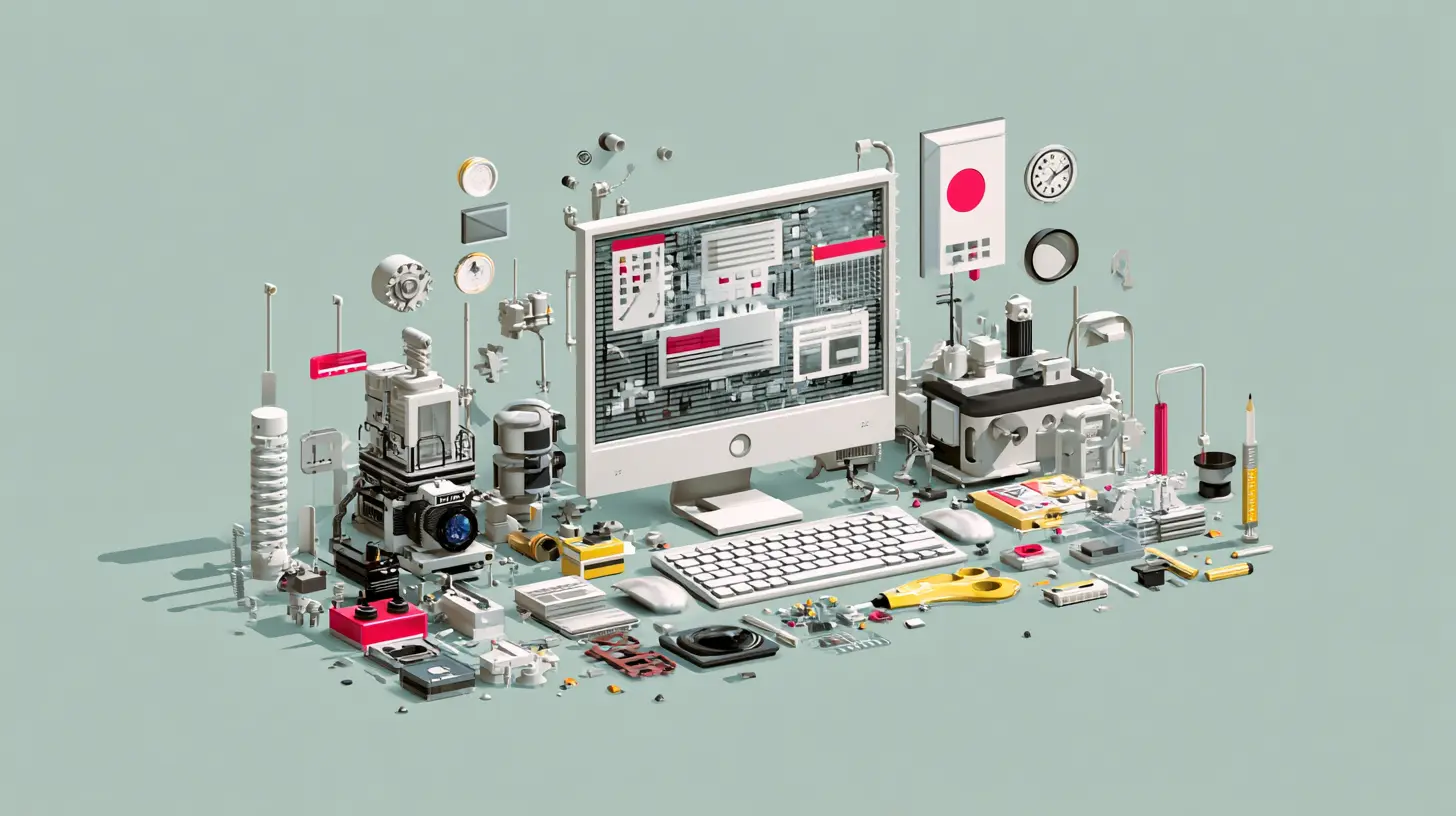
all images in this post were generated using AI tools
Category:
Tech For CreatorsAuthor:

Adeline Taylor
Discussion
rate this article
1 comments
Lira Vasquez
Great insights on building a creative brand! Excited to explore these emerging tools and see how they can elevate our online presence. Thanks for sharing!
August 5, 2026 at 4:16 AM
Adeline Taylor
Thanks for your enthusiasm! I'm glad you found the insights helpful. Excited to see how you leverage these tools for your brand!