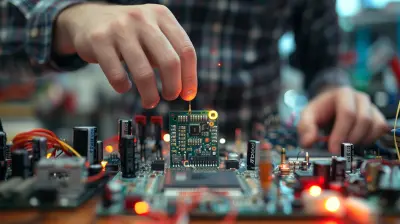
Edge Computing and Its Impact on Digital Privacy
28 August 2026
The way data travels has changed. For the past two decades, the dominant model was simple: your device sends information to a distant cloud server, the server processes it, and the result comes back. That model worked well when applications were simple and latency was tolerable. But the explosion of connected devices, autonomous systems, and real-time analytics has pushed the cloud to its limits. Enter edge computing, a paradigm that moves computation closer to the source of data. And with that shift comes a fundamental rethinking of what privacy means, who controls data, and where vulnerabilities actually live.
This article is not a cheerleading piece for edge computing. It is a practical examination of how this architecture changes your digital privacy, what you should actually worry about, and what you can do about it. The trade-offs are real, and the answers are rarely black and white.

What Edge Computing Actually Changes
To understand the privacy implications, you first need to understand what edge computing does differently. In a traditional cloud model, your smart thermostat sends temperature readings to a data center in another state. The cloud decides whether to turn on the heat, and sends a command back. The data sits on a server you do not control, owned by a company you may not trust, subject to laws you may not know.Edge computing flips part of that. Instead of sending everything to the cloud, some processing happens on the device itself, or on a nearby gateway, or on a small server at the local cell tower. Only the results, or a filtered subset of the raw data, go to the cloud. This is not a binary switch. It is a spectrum. A smart camera might do facial recognition on the device and only send a notification that says "known person detected." A factory robot might process sensor data locally and only send maintenance alerts. A self-driving car makes split-second decisions entirely on board, only uploading maps and trip summaries later.
The privacy impact comes from this simple fact: data that never leaves your device cannot be intercepted in transit, cannot be scraped by a cloud provider, and cannot be subpoenaed from a distant server. That is a massive win for privacy in many scenarios. But it is not a universal win. Edge computing also creates new privacy problems, and some of them are worse than what they replace.

The Privacy Wins You Can Actually Rely On
Let us start with the clear benefits, because they are real and they matter.Data Minimization Becomes a Technical Reality
Privacy regulations like GDPR and CCPA push for data minimization, the principle that you should only collect what you need and keep it only as long as necessary. In a pure cloud model, this is hard to enforce. The data has to travel to the server, so it exists somewhere. Even if you delete it later, it existed in transit, in logs, in backups.Edge computing changes this. If the device processes the data and only sends an aggregated result, the raw data simply does not exist anywhere except on the device. There is nothing to hack, nothing to leak, nothing to subpoena. This is not a policy choice; it is an architectural guarantee. For sensitive data like health metrics, biometric identifiers, or personal voice recordings, this is a profound improvement.
Consider a smart speaker that processes voice commands locally. The audio never leaves your home. The device only sends the text transcription of the command, or even just the intent, to the cloud. If the cloud provider is breached, the attacker gets a list of commands like "turn on the lights" but not the sound of your voice, your background conversations, or your emotional state. That is a meaningful difference.
Reduced Attack Surface in Transit
Every time data crosses a network, it is vulnerable. It can be intercepted by a malicious actor on a public Wi-Fi network, tapped by an ISP, or compromised by a man-in-the-middle attack. Encryption helps, but encryption is not magic. Keys get stolen, protocols get broken, and endpoints get compromised.Edge computing reduces the amount of data in transit. If your industrial sensors process data locally and only send a weekly summary, an attacker who taps your network gets a weekly summary, not a continuous stream of operational data. This is not just about hiding secrets. It is about reducing the blast radius of a network compromise. The less data that flows, the less data that can be stolen.
Local Control for Sensitive Environments
For healthcare, finance, and government, there are legal and ethical reasons to keep data within a specific jurisdiction. Edge computing makes this easier. A hospital can process patient data on local servers and only send anonymized statistics to a central research database. A bank can run fraud detection on branch-level hardware and only send alerts to headquarters. This avoids the legal headache of cross-border data transfers and the political risk of storing sensitive data in a country with weak privacy laws.
The Privacy Risks That Are Often Overlooked
Now the harder part. Edge computing is not a privacy silver bullet. It introduces new risks, and some of them are subtle.The Device Itself Becomes the Weak Point
In a cloud model, the device is relatively dumb. It collects data and sends it away. If the device is compromised, the attacker gets what the device has, which is often not much. In an edge model, the device is smart. It holds raw data, runs models, and makes decisions. If that device is compromised, the attacker gets everything.This is a serious problem. Edge devices are often small, cheap, and physically accessible. A smart camera on a street corner can be opened and tampered with. A sensor on a factory floor can be replaced with a malicious clone. A wearable health monitor can be lost or stolen. The security of the edge device is now the security of your data, and many edge devices have terrible security. Default passwords, unpatched firmware, and lack of secure boot are common.
The irony is that edge computing moves data from a highly secured cloud data center to a device that might be protected by a four-digit PIN. You are trading a professional security team for a plastic case and a cheap processor. That can be a bad trade.
Local Storage Means Local Breaches
When data stays on the device, it also stays on the device. If the device is lost, stolen, or discarded without proper wiping, the data goes with it. In a cloud model, you can remotely wipe a device and the data is gone. In an edge model, the data is physically on the device, and physical access often means full access.This is a particular concern for consumer devices. A used smart TV with a built-in camera and microphone might still contain local recordings. A second-hand car with an edge-based driver monitoring system might retain facial data. A discarded industrial controller might hold years of production data. The problem is not just theft; it is disposal. Many people and organizations simply do not wipe edge devices properly before getting rid of them.
The Edge Node Is a New Intermediary
Edge computing often does not mean device-only processing. It usually means a local server, often called an edge node or gateway, that sits between the devices and the cloud. This node is a new party in the data flow, and it is often operated by someone you do not fully control.For example, a smart home system might use a local hub that processes data from all your sensors. That hub is made by a specific company, runs specific firmware, and sends data to a specific cloud. The hub is an edge node, but it is not your device. It is a corporate device in your home. The company can update it, change its behavior, and extract data from it. You might have agreed to this in a terms-of-service agreement you never read.
In a business context, the edge node might be a server in a retail store, operated by a third-party vendor. The vendor has access to all the data that flows through that node. The vendor might be trustworthy, or might not be. The point is that edge computing does not eliminate intermediaries. It just changes who they are and where they sit.
Edge Data Is Often Less Protected by Regulation
Cloud providers are heavily regulated. They have compliance frameworks, audits, and legal obligations. Edge nodes, especially small ones, often fall through the cracks. A cloud provider must comply with GDPR if they process EU data. A local edge gateway in a small office might not even be known to the regulator.This is not a technical problem; it is a governance problem. The data is processed in a place that is harder to audit, harder to inspect, and harder to hold accountable. If a cloud provider mishandles data, there is a paper trail. If an edge node mishandles data, who knows? The node might be in a different country, operated by a subcontractor, with no clear chain of responsibility.

Practical Scenarios and Their Trade-offs
Let us look at concrete examples to see how these trade-offs play out in real life.Smart Home Cameras
A cloud-based camera sends continuous video to the provider's servers. The provider can see your home, can be hacked, and can be forced by law enforcement to hand over footage. An edge-based camera processes video locally, detects motion and faces, and only sends short clips or metadata.The privacy benefit is obvious: continuous video never leaves your home. But the risk is that the camera itself is a target. If an attacker gains access to the camera, they get the full video feed, not just the clips. Also, the camera's local storage might hold weeks of footage. A thief who steals the camera gets the footage. In the cloud model, the thief gets a plastic shell.
The best approach is a hybrid: edge processing for real-time analysis, encrypted local storage, and selective cloud backup with strong access controls. But that is more complex and more expensive, which is why most consumer cameras still default to cloud.
Wearable Health Monitors
A heart monitor that sends every heartbeat to the cloud creates a massive privacy risk. The data is sensitive, continuous, and valuable to insurers, employers, and hackers. An edge-based monitor processes the data on the device, detects anomalies, and only sends alerts.This is a clear privacy win, but it has a downside. The on-device algorithm might miss patterns that a cloud-based AI would catch. The device has limited processing power and battery. If the algorithm is too simple, it might fail to detect a serious condition. The trade-off is between privacy and diagnostic accuracy. Some users will prefer the cloud model for better health outcomes, even at the cost of privacy.
Autonomous Vehicles
Self-driving cars are the ultimate edge devices. They must make decisions in milliseconds, so they cannot rely on the cloud. They process sensor data locally, including camera feeds, LiDAR, and radar. This means the car holds a massive amount of sensitive data: where you go, who you pick up, what you look like, where you park.The privacy risk is that the car is a rolling surveillance device. Law enforcement can seize the car and extract data. A hacker who compromises the car's system gets your entire driving history. The edge architecture is necessary for safety, but it creates a new kind of privacy exposure that did not exist with a simpler car.
There is no easy answer. The car must process data locally for safety, but the local data is a goldmine. The solution is strong encryption, secure enclaves, and strict data retention policies. But these are not always implemented, and the user has little control over them.
Common Misconceptions and Mistakes
There are several widespread beliefs about edge computing and privacy that are simply wrong.Misconception: Edge Computing Means No Data Leaves the Device
This is false. Edge computing means less data leaves the device, not no data. Most edge systems still send data to the cloud for aggregation, model updates, or remote management. The data that leaves is often less raw, but it is still data. A smart speaker that processes voice locally still sends a text transcript to the cloud. A factory that processes sensor data locally still sends production statistics to headquarters.The mistake is assuming that edge equals private. It does not. You need to know exactly what data is sent, to whom, and for what purpose. This is often buried in the fine print of a privacy policy.
Misconception: Local Processing Is Always More Secure
Local processing reduces the attack surface in transit, but it increases the attack surface on the device. A cloud server is hardened, monitored, and patched. An edge device is often forgotten. The security of the edge depends entirely on the device's design, firmware, and maintenance. Many edge devices are not designed with security in mind.The mistake is assuming that moving data from the cloud to the edge automatically makes it safer. It does not. It moves the risk from one place to another. You have to evaluate the security of the edge device itself.
Mistake: Ignoring the Edge Node Operator
Many people think of edge computing as a two-party system: the user and the device. In reality, there is often a third party: the edge node operator. This could be a telecom company, a cloud provider offering edge services, or a hardware vendor. This third party has access to the data, and their privacy practices are often unclear.The mistake is trusting the device manufacturer without questioning the edge node operator. You should ask: who operates the edge node, what do they log, and what do they do with the data? If you cannot get clear answers, that is a red flag.
Mistake: Treating Edge as a Replacement for Privacy Policies
Edge computing is a technical tool, not a legal framework. It does not replace the need for privacy policies, consent mechanisms, or data protection impact assessments. A company that processes data on the edge still has legal obligations. The edge architecture might make compliance easier, but it does not make it automatic.The mistake is assuming that because data is processed locally, you do not need to worry about compliance. You still need to document what data is processed, where, and why. You still need to respond to data subject requests. Edge computing does not exempt you from the law.
Best Practices for Privacy-Aware Edge Computing
If you are deploying edge computing, or if you are a user of edge devices, there are concrete steps you can take to protect privacy.For Organizations
First, map your data flows. Know exactly what data is processed on the edge, what is sent to the cloud, and what is stored locally. This is the foundation of any privacy program. Without this map, you cannot make informed decisions.Second, implement data minimization at the design level. Do not process data on the edge just because you can. Process it on the edge because it is necessary. If you do not need raw data, do not collect it. If you can process an aggregate, do that instead.
Third, secure the edge devices themselves. This means secure boot, encrypted storage, regular firmware updates, and strong authentication. An edge device with a default password is a privacy disaster waiting to happen.
Fourth, have a clear data retention policy for edge storage. How long does data stay on the device? What happens when the device is decommissioned? You need a process for secure wiping and disposal. Many breaches happen because old devices were not properly wiped.
Fifth, audit your edge node operators. If you use a third-party edge service, you need to know their security and privacy practices. Do they log data? Do they share data with third parties? Do they comply with relevant regulations? Get answers in writing.
For Individuals
First, read the privacy settings on your edge devices. Many devices allow you to control what data is sent to the cloud. Turn off cloud sharing if you do not need it. Disable voice recording if you do not want your voice stored. These settings are often buried, but they exist.Second, be aware of what your device stores locally. If you sell or discard a smart device, wipe it first. This is not always easy, but it is important. A factory reset is not always enough. Look for a "secure erase" or "wipe data" option.
Third, question the edge node operator. If you are using a smart home system, find out who operates the hub. Is it the device manufacturer? A third party? What do they do with your data? If the answers are vague, consider a different product.
Fourth, do not assume that edge means private. The device is still collecting data. The question is what happens to it. Be skeptical of marketing that claims "local processing" as a privacy feature. Ask for specifics.
The Future of Edge Privacy
Edge computing is not going away. It is the foundation of the next generation of technology, from autonomous vehicles to smart cities to industrial IoT. The privacy implications will only become more significant as these systems scale.The good news is that there are emerging technologies that can help. Secure enclaves, which are isolated areas of a processor that protect data even from the operating system, are becoming more common. Homomorphic encryption, which allows computation on encrypted data, is still slow but improving. Differential privacy, which adds noise to data to protect individual records, is being used in some edge systems.
The bad news is that these technologies are not magic. They add complexity, cost, and performance overhead. They are not always implemented correctly. And they do not solve the fundamental governance problem: who is responsible for the data on the edge?
The regulatory landscape is also evolving. The EU's GDPR already has provisions that apply to edge computing, even if they are not always enforced. New regulations, such as the EU AI Act, will impose additional requirements on edge-based AI systems. Other jurisdictions are likely to follow. The trend is toward more accountability, not less.
Making the Right Decision
Edge computing is a tool. It can be used to protect privacy or to undermine it. The architecture itself is neutral. The outcome depends on how it is designed, deployed, and governed.For organizations, the decision to move to edge computing should be driven by requirements, not by hype. If you have low-latency needs, edge is necessary. If you have bandwidth constraints, edge is useful. If you have privacy requirements, edge can help, but only if you design it correctly. Do not assume that edge is automatically better for privacy. Evaluate each use case on its own merits.
For individuals, the decision is about awareness. You cannot control every aspect of how your data is processed, but you can make informed choices. You can choose devices that respect your privacy. You can configure them to minimize data sharing. You can demand transparency from manufacturers. The market responds to consumer pressure, but only if consumers are informed.
The bottom line is that edge computing changes the privacy equation, but it does not solve it. It moves data from centralized servers to distributed devices, which has real benefits and real risks. The key is to understand the trade-offs and to make deliberate choices. Privacy is not a feature that you buy. It is a property of a system that you design and maintain. Edge computing gives you more options, but it also gives you more responsibility. The question is whether you are ready for it.
all images in this post were generated using AI tools
Category:
Digital PrivacyAuthor:

Adeline Taylor
Discussion
rate this article
1 comments
Ellie Gibson
Edge computing offers significant benefits for data processing efficiency, yet it raises important concerns about digital privacy. By decentralizing data storage, it can reduce latency but also complicates data security and user consent. Balancing innovation with strong privacy measures is essential for sustainable growth in this field.
August 30, 2026 at 4:24 AM