This Indian woman scientist’s research was published by NASA and her technology now guides flights across India
July 26, 2026 - 18:02

For every high-profile rocket launch or defence milestone, there are countless scientists working quietly in the background. One such name is Dr. Tessy Thomas, often called the "Missile Woman of India." But another lesser-known figure, Dr. S. Somanath's colleague and a brilliant mind in her own right, has a story that deserves attention. Her research, originally published by NASA, now forms the backbone of flight navigation systems across Indian airports.
This scientist, whose work focused on atmospheric physics and signal propagation, developed a technology that helps aircraft land safely in low visibility. Her models predict how radio waves behave in different weather conditions, allowing pilots to rely on instrument landing systems even during heavy fog or rain. What started as a paper in a NASA journal became a practical tool adopted by the Airports Authority of India.
Today, her algorithms are embedded in the navigation aids used at major Indian airports. The technology has reduced flight delays and cancellations significantly, especially during winter months when fog grounds planes in northern India. It is a rare example of pure research crossing over into everyday life without fanfare.
Her journey was not easy. She faced skepticism from peers who doubted whether a woman could handle the rigors of field research. But she persisted, spending long hours at remote radar stations and analyzing data that others had dismissed as too complex. Her work eventually caught the attention of international agencies, but she chose to stay in India, applying her findings to benefit her own country.
Today, when a plane lands smoothly in Delhi or Mumbai despite poor visibility, it is partly because of her. Her name may not be on the boarding pass, but her science is in the cockpit.
MORE NEWS
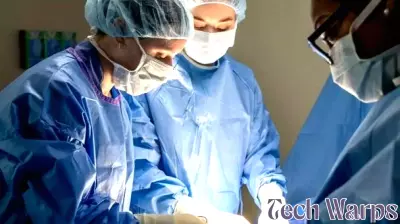
November 11, 2026 - 13:52
Training for Tomorrow: Inside Pellissippi State's Surgical Technology ProgramPellissippi State Community College`s Surgical Technology students are immersed in a learning environment that closely resembles a real hospital setting. The college has established specialized...
November 10, 2026 - 18:35
Insights on FSD Vehicles and Quantum Computing at the Jenks CenterWalter Hubbard shared his experiences with fully self-driving (FSD) vehicles during a recent forum at the Jenks Center in Winchester. Hubbard, a seasoned expert in automotive technology, discussed...
November 10, 2026 - 03:37
Update on Collaboration Between Micromem Technologies and University of TorontoMicromem Technologies has successfully fulfilled its financial obligations outlined in the collaboration agreement with the University of Toronto and Defence Research and Development Canada. This...
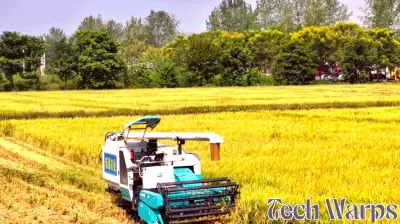
November 9, 2026 - 06:05
Transforming Healthcare: The Impact of Constraint-Driven InnovationIn recent years, constraint-driven innovation has emerged as a powerful force in reshaping healthcare delivery worldwide. This approach focuses on overcoming limitations to create impactful medical...