Privacy and Property
June 19, 2026 - 04:12

A new academic paper published in the journal Ethics and Information Technology proposes a radical shift in how we think about digital privacy. Instead of viewing privacy as a right to control access to personal information, the author argues that it should be understood through the lens of property law, specifically beneficial ownership.
The paper, titled "Privacy and Property," suggests that current debates between tech companies and regulators are stuck in a flawed framework. Regulators often treat privacy as a consumer protection issue, while companies frame it as a matter of user consent. The author contends that both approaches fail because they treat personal data as something that can be voluntarily given away or licensed.
The core argument is that individuals hold a form of beneficial ownership over their personal information. In legal terms, beneficial ownership means having the right to enjoy and benefit from an asset, even if someone else holds the legal title. Applied to data, this means that even when a user agrees to a terms-of-service contract, they retain an underlying ethical claim to the value generated from their information.
This perspective changes the conversation. If privacy is a form of property, then unauthorized data collection is not just a breach of trust or a violation of consent. It is a form of theft or unjust enrichment. The paper argues that this model provides stronger protections than existing privacy laws, which often rely on lengthy consent forms that few people read.
The implications are significant. Under a beneficial ownership model, companies would not simply need permission to use data. They would need to demonstrate that the user retains a fair share of the benefits, whether through direct compensation, improved services, or transparent governance. The paper challenges the assumption that data is a free resource for companies to exploit, arguing instead that it remains fundamentally tied to the person who generates it. This approach could reshape everything from social media advertising to medical research, placing the individual's economic and ethical stake at the center of the debate.
MORE NEWS
September 26, 2026 - 18:27
Massachusetts Backs Local Climate Tech With New FundingMassachusetts is putting money behind two local climate technology companies as federal support for renewable energy becomes less certain. The state has offered tax incentives to Florrent, a...

September 26, 2026 - 06:09
Disney (DIS) Names its First Technology Chief. Can AI Investment Deliver Returns?Disney has named Karandeep Anand, the outgoing chief executive of the generative AI chatbot service Character.AI, as its first chief technology officer. The appointment takes effect on October 2,...

September 25, 2026 - 20:24
MIT Program Connects Technical Students with Tulsa CommunitiesA university internship initiative is broadening how engineering and data science students understand the social impact of their work. The program places participants with tribal nations and local...
September 25, 2026 - 04:51
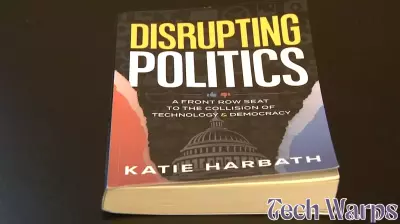
'Disrupting Politics' details Green Bay native's experiences in D.C. tech with eye on AIFor more than twenty years, a Green Bay native has held a front row seat in Washington D.C. at the intersection of technology and politics. Katie Harbath has spent 23 years working in the nation`s...