China’s Block on Meta-Manus Deal Sends a Clear Signal in the Global AI Race
April 29, 2026 - 04:46

When Mark Zuckerberg’s Meta announced its acquisition of Manus, a Singapore-based artificial intelligence startup with deep Chinese roots, many industry observers dismissed it as a routine cross-border tech deal. They clearly do not understand China’s strategic calculus in the escalating AI competition.
China’s regulatory authorities quietly but decisively intervened, blocking the transaction and delivering an unmistakable message: Beijing will not tolerate the transfer of homegrown AI talent, intellectual property, or strategic technologies to American tech giants. The move underscores a broader shift in China’s approach to technology governance, where national security and technological sovereignty now override conventional business logic.
Manus, though incorporated in Singapore, was founded by Chinese entrepreneurs and relied heavily on research talent and data ecosystems originating in China. For Beijing, the deal represented a potential leak of proprietary algorithms and engineering know-how that could accelerate U.S. dominance in generative AI, large language models, and autonomous systems. By blocking the acquisition, China is effectively drawing a red line around its AI supply chain.
The decision also signals that China views the AI race not as a commercial competition but as a geopolitical struggle for technological supremacy. Washington has already imposed export controls on advanced chips and AI software to China. Beijing’s retaliation is now taking shape through tighter scrutiny of outbound investments, technology transfers, and foreign acquisitions involving Chinese-linked entities.
For global investors and tech firms, the message is stark: any deal that touches Chinese AI assets—whether directly or through third-country shells—will face intense regulatory headwinds. The era of frictionless technology flow between the U.S. and China is over. In its place, a new paradigm of digital borders and strategic decoupling is taking hold, with AI at the very center of the conflict.
MORE NEWS
September 26, 2026 - 18:27
Massachusetts Backs Local Climate Tech With New FundingMassachusetts is putting money behind two local climate technology companies as federal support for renewable energy becomes less certain. The state has offered tax incentives to Florrent, a...

September 26, 2026 - 06:09
Disney (DIS) Names its First Technology Chief. Can AI Investment Deliver Returns?Disney has named Karandeep Anand, the outgoing chief executive of the generative AI chatbot service Character.AI, as its first chief technology officer. The appointment takes effect on October 2,...

September 25, 2026 - 20:24
MIT Program Connects Technical Students with Tulsa CommunitiesA university internship initiative is broadening how engineering and data science students understand the social impact of their work. The program places participants with tribal nations and local...
September 25, 2026 - 04:51
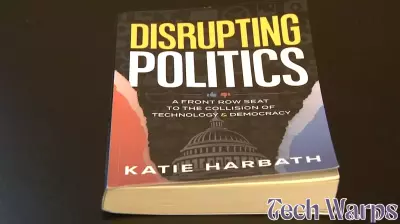
'Disrupting Politics' details Green Bay native's experiences in D.C. tech with eye on AIFor more than twenty years, a Green Bay native has held a front row seat in Washington D.C. at the intersection of technology and politics. Katie Harbath has spent 23 years working in the nation`s...