The Unexpected Comeback of Compact Cameras in 2026
5 October 2026
For nearly a decade, the compact camera looked like a casualty of progress. Smartphones swallowed the point-and-shoot market almost whole, and anyone who wanted better image quality was told to buy a mirrorless body with interchangeable lenses. The logic seemed airtight. Why carry a second device when the one in your pocket keeps getting smarter every year?
And yet, here we are in 2026, and compact cameras are selling again. Not as nostalgic curiosities, but as deliberate tools chosen by people who understand exactly what they are buying. Photographers are hunting down premium fixed-lens models. Teenagers are trading tips on which early-2010s digicam produces the best "grainy" look. Manufacturers that quietly discontinued entire lines are re-entering the category or teasing new ones.
This is not a simple story about retro charm. It is a story about what happens when a technology gets good enough, cheap enough, and distinct enough to survive alongside the thing that was supposed to replace it. Let's break down why compact cameras came back, what they are actually good for in 2026, and how to decide whether one belongs in your bag.
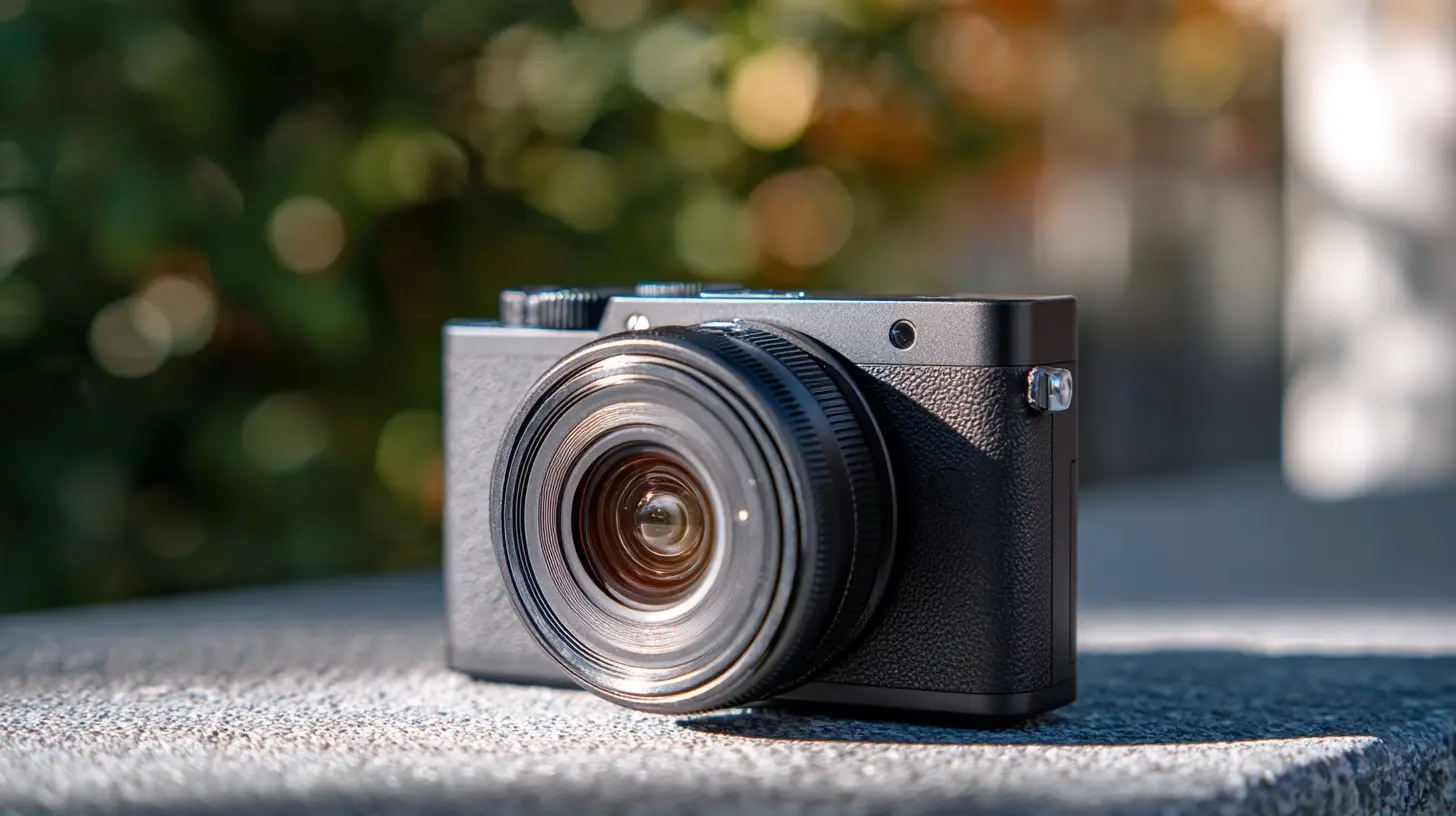
What "Compact Camera" Means Now
Before going further, it helps to define terms, because the category has fractured.A compact camera today generally means a small, fixed-lens camera with a built-in zoom or prime lens. It is not a mirrorless camera with a kit lens, even if that combo is physically small. The defining trait is that you cannot change lenses. That constraint is the whole point.
Within that definition, a few subcategories matter:
- Premium large-sensor compacts. Cameras with 1-inch or APS-C sensors, fast lenses, and full manual control. These are the serious tools.
- Rugged and waterproof compacts. Built for beaches, slopes, and kayaks. Often the only camera you can safely take somewhere.
- Superzoom travel compacts. Massive zoom range in a small body. Compromises on sensor size, wins on flexibility.
- Vlogging and creator compacts. Flip screens, good microphones, clean HDMI or USB output. Designed around video first.
- Vintage digital compacts. Older CCD-sensor models from the 2000s and early 2010s, now sought after for a specific aesthetic.
Each of these competes with smartphones differently. A premium compact competes on image quality and control. A rugged compact competes on durability. A vintage digicam competes on look and feel. Understanding which category you are shopping in prevents a lot of disappointment.
Why Smartphones Did Not Finish the Job
The standard narrative says smartphones killed compacts. That is only half true. Smartphones killed cheap compacts. The ones with tiny sensors, slow lenses, and terrible low-light performance. Those cameras genuinely had no reason to exist once a mid-range phone could outperform them.But premium compacts were never really competing with phones on convenience. They were competing on physics.
A larger sensor captures more light. A real optical zoom gives you reach without digital trickery. A fast lens lets you blur backgrounds in a way that computational portrait mode only approximates. Physical controls let you change settings without digging through menus. These advantages did not disappear when phones got better. If anything, they became clearer, because phone cameras hit their own ceiling: the sensor has to stay small enough to fit in a pocketable slab.
There is also a subtler factor. Phone photography is optimized for sharing. It is fast, automatic, and heavily processed. That is exactly what most people want most of the time. But it is not what everyone wants all the time. Some people want a slower, more deliberate process. Some want files they can edit without fighting aggressive noise reduction. Some simply want to look through a viewfinder and frame a shot with intention.
The compact camera survived because it serves those people, and that group turned out to be larger than the industry expected.
The Three Forces Behind the Comeback
You can trace the revival to three overlapping trends. None of them alone would be enough. Together, they changed the market.1. The premium tier proved the concept
When manufacturers released high-end compacts with 1-inch and larger sensors, they were testing a hypothesis: people will pay a premium for a small camera that beats a phone. The hypothesis held. These models found a loyal audience among travelers, street photographers, and parents who wanted better photos of their kids without hauling a full kit.The key insight was that these cameras were not trying to replace a phone. They were trying to replace a camera bag. A photographer who owns a full-frame system might still buy a compact for the days when carrying that system is impractical. That is a different purchase decision than "I need a camera," and it is far more resilient.
2. Social media changed what "good" looks like
For years, the implicit goal of camera marketing was technical perfection: sharp, clean, noise-free images. Then a generation grew up on heavily filtered phone photos and started craving something with texture. Grain became a feature, not a flaw. Lens flare became a signature. Slightly soft corners became character.This shift did not make older cameras technically better. It made them aesthetically relevant again. A camera that produces files with visible noise and warm color rendering suddenly had a reason to exist that had nothing to do with specifications.
3. The used market created its own gravity
Once a critical mass of people started talking about vintage digicams online, prices for certain models rose. Rising prices attracted sellers. More supply attracted more buyers. A feedback loop formed, and it pulled the entire category into the cultural conversation.This is important to understand because it means the comeback is partly self-reinforcing. Attention creates demand, demand creates scarcity, scarcity creates more attention. That dynamic can inflate prices beyond what the hardware justifies, which is a trap worth watching for.
What Compact Cameras Actually Do Better
Let's get concrete. Here is where a compact camera genuinely outperforms a phone, and where it does not.Real optical zoom
A phone's "10x zoom" is usually a combination of a small telephoto lens and heavy computational interpolation. It works surprisingly well in good light. It falls apart in dim conditions or when you need fine detail at the long end.A compact with a genuine optical zoom, even a modest one, gives you real reach. The difference matters most for travel, wildlife in parks, and any situation where you cannot physically get closer.
Depth of field control
A larger sensor plus a fast lens produces real background blur. Not simulated blur. The optical kind, with natural falloff and believable edges. If you shoot portraits, food, or anything where subject separation matters, this is a meaningful advantage.Low-light performance
More sensor area means more light collected. That translates to cleaner files at higher ISO settings. A premium compact can often shoot at ISO 1600 or 3200 and still produce usable images, while a phone at the same sensitivity is smearing detail to hide noise.Physical controls
Buttons, dials, and a viewfinder change how you shoot. You can adjust exposure without looking away from the scene. You can shoot with the camera at your eye, which is more stable than holding a phone at arm's length. These sound like small things. Over hundreds of shots, they add up.Battery independence
A dedicated camera does not drain your phone. On a long day out, that matters. You can shoot all day and still have a phone for navigation, messages, and emergencies.Where phones still win
Phones win on convenience, always-on connectivity, instant sharing, computational tricks like night mode and portrait lighting, and the fact that you already own one. They also win on video stabilization in many cases, and on the sheer ease of handing your phone to a stranger to take a group photo.The honest framing is this: a compact camera is a specialized tool, and a phone is a generalist. If you shoot a handful of photos a week and share them immediately, a phone is the right answer. If you shoot deliberately and care about the files you get, a compact earns its place.
The Vintage Digicam Phenomenon
No discussion of this revival is complete without addressing the older cameras. Models from the 2000s and early 2010s, many with CCD sensors, have become genuinely popular. Understanding why helps you decide whether to join in.What makes them appealing
The look is the main draw. CCD sensors and early image processors render color and noise differently than modern sensors. Highlights roll off in a particular way. Shadows carry visible grain that reads as texture rather than error. Flash photos have a distinct, slightly harsh character that has become a recognizable aesthetic.There is also the experience. These cameras are simple. They have few menus, modest resolution, and no expectation of perfection. That simplicity can be liberating if you are tired of endless settings.
And there is the price, at least in theory. Many vintage compacts still sell for very little, though popular models have climbed.
The problems nobody mentions
Here is where I want to be blunt, because the online conversation tends to skip this part.Batteries are a real issue. Many older cameras use proprietary batteries that are no longer manufactured. Third-party replacements exist for some models, but quality varies, and some are worse than the originals. If you buy a vintage camera, budget for battery hunting before anything else.
Memory cards are another trap. Some older cameras use formats that are hard to find or have size limits. A camera that only accepts cards up to 2GB is not much fun in 2026.
Image quality is genuinely limited. Low resolution, slow autofocus, poor high-ISO performance, and sluggish operation are all part of the package. If you are used to a modern phone, the adjustment can be jarring.
Repair is difficult. Parts are scarce, service documentation may not exist, and many repair shops will not touch these cameras. When something breaks, it often stays broken.
How to approach vintage cameras sensibly
If the aesthetic appeals to you, treat the purchase as buying a experience, not a tool. Set a firm budget. Check that a battery is available before you buy. Confirm the card format. Test every function the moment it arrives, because return windows are your only protection.Do not pay collector prices for a camera you intend to use daily. And do not assume that "vintage" automatically means "better looking." Some of these cameras produce files that need significant editing to look good, and some produce files that cannot be saved at all.
Choosing Between a Premium Compact and a Phone
This is the decision most readers actually face. Here is a framework.Buy a premium compact if:
- You regularly shoot in low light and want cleaner files.- You want real optical zoom for travel or events.
- You value physical controls and a viewfinder.
- You edit your photos and want files with editing latitude.
- You want a dedicated device so your phone stays charged.
- You shoot video and want better stabilization, audio inputs, or clean output.
Stick with your phone if:
- You share photos immediately and rarely revisit them.- You shoot mostly in good light.
- You dislike carrying extra devices.
- You rely on computational features like night mode.
- Your budget is tight and you would rather spend on experiences.
Consider both if:
- You want a phone for daily use and a compact for specific trips or projects.- You are willing to carry a small camera in a bag or pocket and accept the tradeoff.
There is no universally correct answer. The mistake is buying a camera out of vague dissatisfaction with phone photos, then leaving it at home because it is inconvenient. If you will not carry it, it does not matter how good it is.
Common Mistakes to Avoid
A few patterns show up again and again among people entering this space.Chasing specifications over use case. A camera with a bigger sensor is not automatically better for you. If you shoot in bright light and want zoom, a smaller sensor with a longer lens may serve you better.
Ignoring ergonomics. A camera that feels awkward in your hands will not get used. Hold it before buying if you can. Check that the controls make sense to you.
Underestimating the accessory cost. Batteries, chargers, memory cards, cases, and straps add up. Factor them in.
Buying vintage without a return option. Always buy from a seller who accepts returns. Test immediately.
Assuming a compact replaces a full system. It does not. It complements one. If you need interchangeable lenses, buy a camera that takes them.
Overlooking video needs. If you shoot video, check stabilization, microphone inputs, and whether the camera overheats during long recordings. These details matter more than sensor size for many creators.
Practical Recommendations by Use Case
Let's map scenarios to sensible choices.Travel with varied subjects. A premium compact with a moderate zoom and a 1-inch sensor hits a sweet spot. Small enough to carry all day, capable enough for landscapes, street scenes, and portraits.
Street photography. A compact with a fast prime lens and quiet operation is ideal. Discretion matters more than zoom range here.
Outdoor and water activities. A rugged waterproof compact is the only sensible option. No phone survives a river trip without a case, and cases compromise usability.
Family and everyday documentation. A compact with fast autofocus and good low-light performance. Kids move, and indoor light is usually poor. Prioritize autofocus speed over resolution.
Video and vlogging. Look for a flip screen, good built-in audio, reliable stabilization, and clean output. Sensor size is secondary to usability.
Aesthetic experimentation. A vintage digicam or a modern camera with film simulation modes. Set a budget and treat it as play.
What to Watch Going Forward
The compact camera market is likely to stay niche, and that is fine. Niche markets can be healthy. They support higher prices, more focused designs, and buyers who know what they want.A few developments seem plausible. Manufacturers may continue to release premium fixed-lens models, since that tier has proven viable. Computational features may migrate from phones into dedicated cameras, which could narrow the gap in convenience. And the vintage market will probably keep fluctuating as trends rise and fade.
The bigger picture is that the pendulum has settled. For a while, the industry assumed one device would do everything. In practice, people want different tools for different intentions. A phone is a wonderful camera for the life you are already living. A compact camera is a wonderful camera for the photographs you are deliberately making.
That distinction, more than nostalgia or marketing, is what brought compacts back. They found a job that phones cannot do as well, and they are doing it.
all images in this post were generated using AI tools
Category:
Technology ReviewsAuthor:

Adeline Taylor