The Ultimate Guide to Data Privacy Laws Around the World
23 October 2026
Data privacy law has become one of the most demanding areas of compliance for any organization that touches personal information. What used to be a niche concern for European subsidiaries is now a board-level issue spanning marketing, engineering, HR, procurement, and legal teams. The challenge is not simply that rules exist. It is that the rules differ in scope, philosophy, enforcement style, and remedy, and they change faster than most companies can adapt.
This guide is written for practitioners who need to make real decisions: how to scope a global privacy program, where to invest first, which risks are overblown, and which are quietly dangerous. It avoids a country-by-country checklist approach because checklists age badly. Instead, it explains the underlying models, the practical fault lines between them, and the trade-offs you will face when building something that actually works.
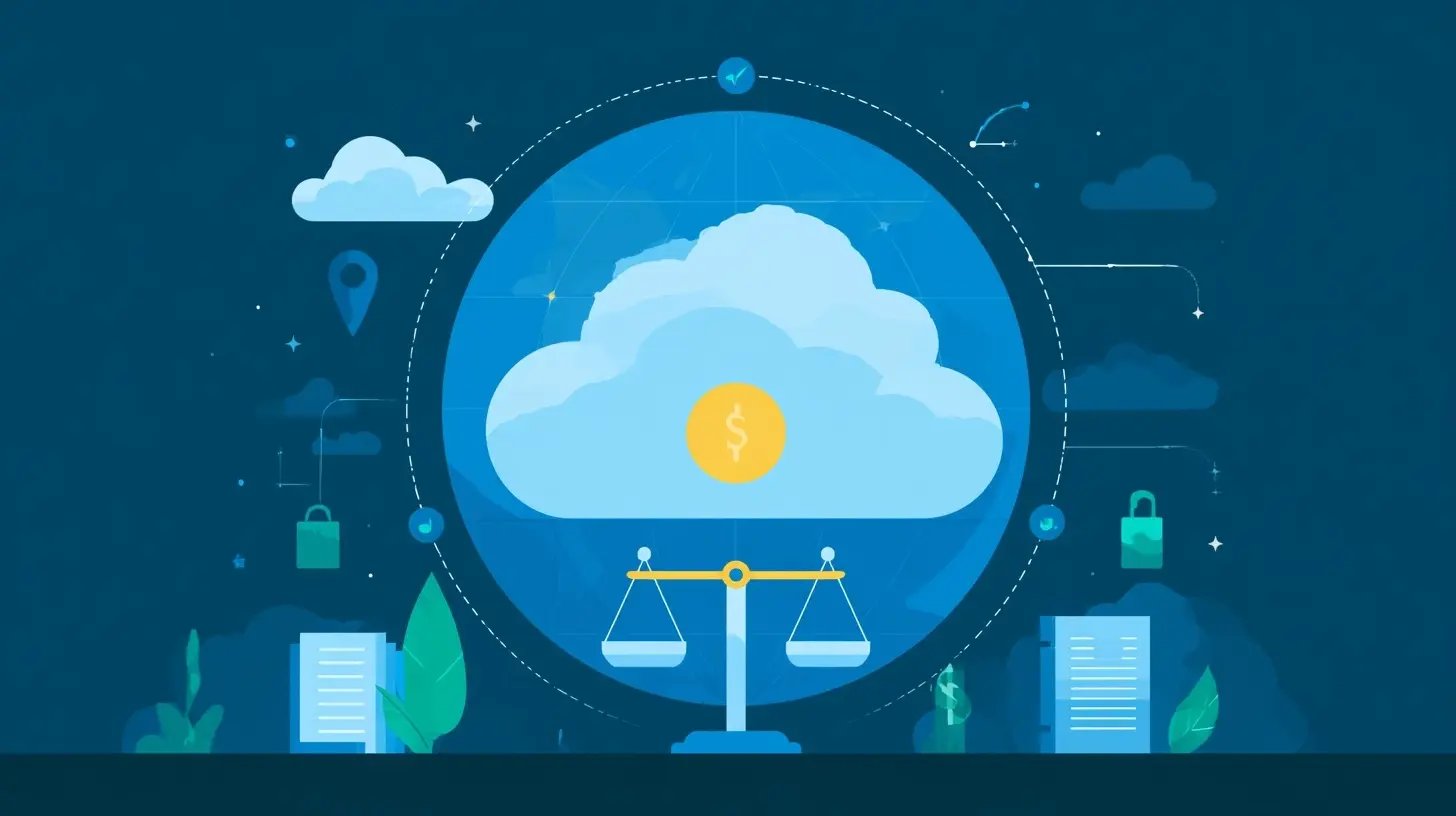
Why Data Privacy Law Is Harder Than It Looks
On paper, most privacy laws share a common vocabulary: consent, purpose limitation, data subject rights, breach notification. In practice, the same word can mean different things in different jurisdictions. "Consent" in one country may require an affirmative opt-in with granular choices. In another, it may be satisfied by a pre-ticked box or an opt-out mechanism. A company that builds a single consent flow for the world is almost always non-compliant somewhere.The deeper difficulty is philosophical. Some legal systems treat privacy as a fundamental right that the state must protect. Others treat it as a consumer protection issue, focused on fair dealing and transparency. Others still regulate privacy primarily as a national security and data sovereignty matter. These starting points produce very different obligations, and understanding them helps you predict how regulators will behave when a law is ambiguous.
There is also an operational reality: privacy law is enforced unevenly. Some regulators are well-funded and aggressive, issuing large fines and public decisions. Others have broad powers on paper but limited capacity, so enforcement is sporadic and often complaint-driven. A global program that treats every jurisdiction as equally risky will waste money. One that ignores low-enforcement jurisdictions will be caught out when a single complaint triggers a formal investigation.

The Major Regulatory Models
The Comprehensive Rights-Based Model
The European Union's General Data Protection Regulation is the reference point for this model. It grants individuals a broad set of rights, imposes detailed obligations on organizations, and is enforced by independent supervisory authorities with the power to levy substantial fines. The GDPR's influence is enormous: many countries have adopted similar frameworks, sometimes called "GDPR-style" or "adequacy-aligned" laws.What makes this model distinctive is not any single rule but the combination of principles. Lawful basis requirements force organizations to justify processing rather than simply disclose it. Data protection impact assessments push risk analysis upstream into product design. The accountability principle means you must be able to demonstrate compliance, not just claim it.
The practical consequence is documentation. Under a rights-based regime, your evidence matters as much as your conduct. If you cannot show why you collected a data field, how long you kept it, and who accessed it, you are exposed even if your intentions were sound.
The Sectoral Model
The United States illustrates a different approach. Rather than one omnibus law, it relies on a patchwork of sector-specific rules and state-level statutes. Health information is governed by one framework, financial data by another, children's data by another, and consumer credit by yet another. State legislatures have added comprehensive consumer privacy laws in recent years, creating overlapping obligations that vary by geography and by the type of data involved.This model has real advantages. Sector-specific rules can be tailored to genuine risks in each industry. The disadvantage is fragmentation. A company handling health, financial, and marketing data may need to reconcile several regimes with different definitions, thresholds, and enforcement bodies. Compliance becomes a mapping exercise before it becomes a control exercise.
The Consent and Localization Model
Several jurisdictions emphasize consent as the primary legitimizing mechanism and pair it with data localization requirements. These laws often require that certain categories of data remain within national borders or be stored on approved infrastructure. The rationale is usually a mix of citizen protection and state access to data for law enforcement or security purposes.For multinationals, localization is often the most expensive requirement to satisfy. It forces architectural decisions, not just policy changes. You may need regional data centers, local processing teams, and separate backup regimes. Before committing, it is worth asking whether the law truly requires localization or merely restricts cross-border transfers subject to conditions. The difference in cost is substantial.
The Emerging and Hybrid Models
Many countries are building frameworks that borrow from multiple traditions. You will find laws that adopt GDPR-style rights but with lighter enforcement, or sectoral rules layered on top of a general privacy statute. Some jurisdictions are still drafting their first comprehensive law, which creates uncertainty for planning.In these environments, the sensible approach is to design to the stricter standard you can reasonably support and document your reasoning. Building to the highest plausible requirement gives you room to adapt when the final text changes. Building to the minimum guarantees rework.
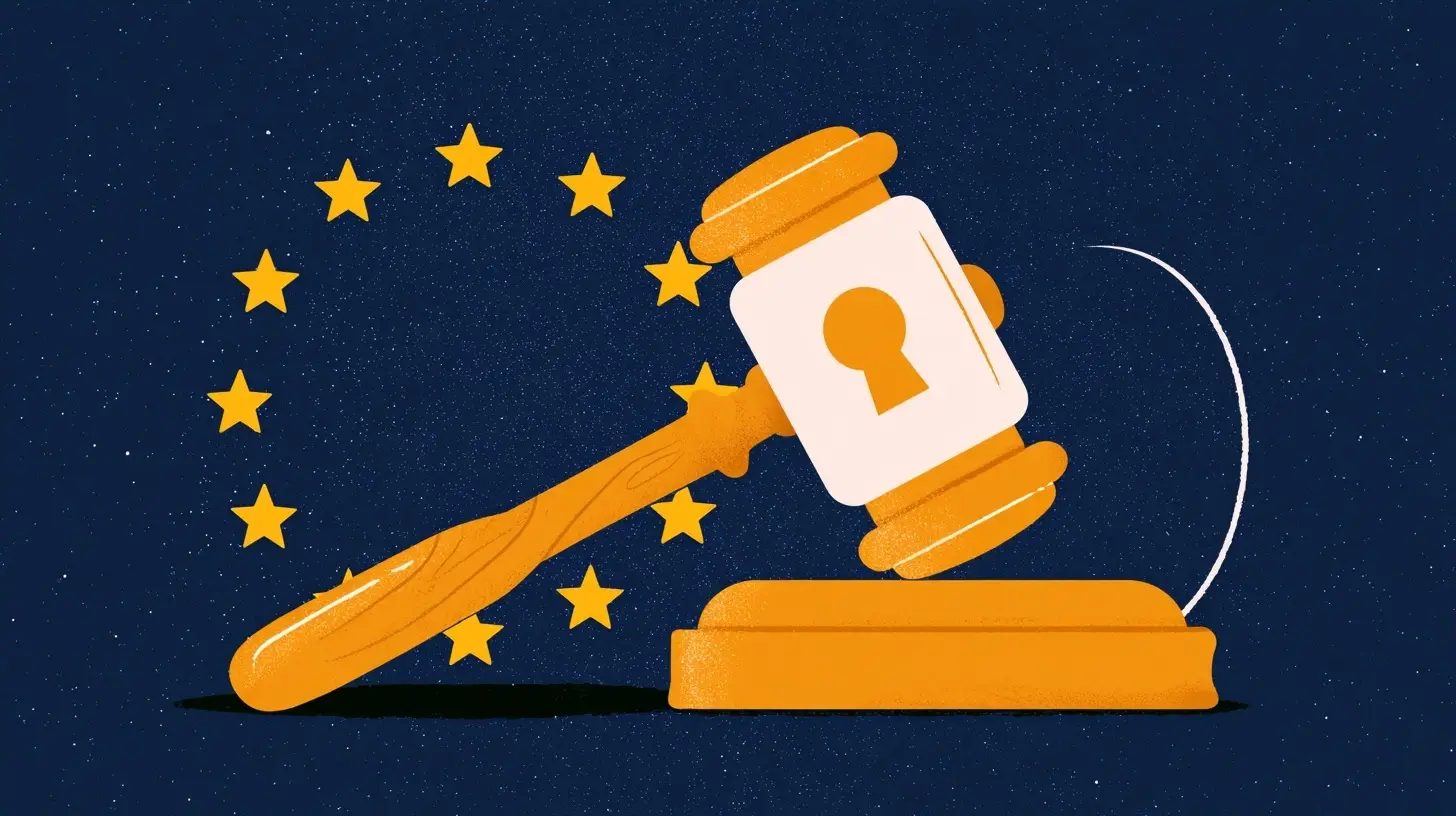
Core Principles That Survive Translation
Despite the differences, a set of principles appears in nearly every modern privacy law. Understanding them deeply is more useful than memorizing article numbers.Lawful basis and purpose limitation. You need a legitimate reason to process personal data, and you must define that reason narrowly. Using data for a purpose that a reasonable person would not expect, without a fresh legal basis, is one of the most common compliance failures. The fix is procedural: require purpose statements at the point of collection and review them when new uses emerge.
Data minimization. Collect only what you need. This sounds obvious and is routinely ignored. Marketing teams request extra fields "for later," engineers log everything "just in case," and analytics tools capture more than anyone reviews. Minimization reduces breach impact, lowers storage cost, and simplifies compliance. It is one of the few privacy controls that pays for itself.
Accuracy. Inaccurate personal data causes real harm, from wrong credit decisions to misdirected medical information. Accuracy obligations usually require reasonable steps rather than perfection, but they imply a process for correction requests and a way to propagate corrections to downstream systems.
Storage limitation. Keep data only as long as necessary. The hard part is defining "necessary" defensibly. A retention schedule tied to business, legal, and regulatory needs, reviewed annually, is far more credible than an informal policy.
Security and confidentiality. Nearly every privacy law requires appropriate technical and organizational measures. The word "appropriate" is doing a lot of work. Regulators generally expect a risk-based approach: stronger controls for sensitive data, weaker for low-risk data, with evidence that you assessed the risk.
Accountability. You must be able to demonstrate compliance. This is where most programs fail. Policies exist, but training records do not. Risk assessments were done, but no one can find them. Build evidence capture into workflows rather than treating it as an afterthought.

Data Subject Rights in Practice
Rights are the most visible part of privacy law and the most operationally demanding. Common rights include access, correction, deletion, restriction, portability, and objection. Some jurisdictions add rights to opt out of targeted advertising or profiling.The mistake many organizations make is treating rights fulfillment as a legal inbox. A request arrives, someone searches manually, and a response goes out weeks later. This works at low volume and collapses at scale. A better approach treats rights as a data architecture problem. If you know where personal data lives, how it is linked to an identifier, and which systems can export or delete it, fulfillment becomes a workflow rather than a project.
Practical steps that consistently help:
- Maintain a data map that links categories of data to systems, owners, and retention rules.
- Build a single intake channel with identity verification proportionate to the sensitivity of the request.
- Define response timelines by jurisdiction and track them centrally.
- Test deletion end to end, including backups and downstream processors, before you need to rely on it.
One nuance worth internalizing: rights are not absolute. Most laws include exceptions for legal obligations, fraud prevention, freedom of expression, or the rights of others. A blanket refusal based on an exception is risky; a documented, case-specific assessment is defensible.
Cross-Border Transfers: The Recurring Headache
Moving personal data across borders is where privacy law meets geopolitics. Several regimes restrict transfers unless specific conditions are met, such as an adequacy decision, standard contractual clauses, binding corporate rules, or explicit consent.The trade-offs are real. Adequacy decisions are convenient but can be challenged or withdrawn, which means your transfer mechanism can change without any action on your part. Contractual clauses are flexible but require diligence, including transfer impact assessments in some jurisdictions. Consent-based transfers are simple in theory but fragile in practice because consent can be withdrawn and may not be valid in employment contexts.
A pragmatic strategy is layered. Use adequacy where available, maintain contractual mechanisms as a fallback, and document your assessment of local law and supplementary measures. Avoid designing products that depend on a single transfer mechanism with no alternative.
Breach Notification: Speed Versus Accuracy
Nearly every modern law requires notification of certain breaches to regulators and, in some cases, to affected individuals. Timelines vary, and some are short enough that investigation and notification must run in parallel.The tension is obvious. You want accurate facts before you notify, but the clock does not wait for certainty. The workable approach is to define a triage process that distinguishes confirmed incidents from suspected ones, assigns a severity level, and triggers notification workflows based on jurisdiction and data type. Pre-drafted templates and pre-identified counsel and communications contacts save critical hours.
A common misconception is that notification is only required for data exfiltration. Many laws cover unauthorized access, loss of availability, and accidental disclosure. Read the definition of a breach in each applicable law rather than assuming a single meaning.
Privacy by Design and the Role of Engineering
Privacy law increasingly expects privacy to be built into systems, not bolted on. This is often framed as privacy by design or by default. In practice, it means engineers make privacy-relevant decisions constantly, often without realizing it.Consider a few examples. Choosing an identifier affects whether data can be linked across systems. Choosing a logging level affects whether sensitive data ends up in logs. Choosing a third-party SDK affects what data leaves your environment. Each decision has privacy consequences.
The most effective programs embed privacy requirements into existing engineering rituals: design reviews, threat modeling, code review checklists, and release gates. A separate privacy review process that engineers experience as bureaucratic will be bypassed. A lightweight checklist integrated into the design review will be used.
Training matters, but specificity matters more. Generic annual training produces awareness without capability. Short, role-specific guidance, such as how to handle deletion requests in a particular service, produces better outcomes.
Vendor and Processor Management
Most organizations share personal data with vendors: cloud providers, analytics platforms, marketing tools, payment processors, support systems. Privacy law generally requires written agreements, security assurances, and some level of oversight.The failure mode is contractual theater. Agreements are signed, filed, and never revisited. Meanwhile, the vendor's subprocessors change, their data practices evolve, and your understanding of the risk goes stale.
A better approach scales due diligence to risk. Classify vendors by data sensitivity and access level. Require deeper assessment for high-risk vendors and lighter checks for low-risk ones. Maintain an inventory that links each vendor to the data categories it handles and the contract terms that govern them. Review periodically, and make offboarding part of the lifecycle so data is returned or deleted when the relationship ends.
Enforcement Trends and What They Signal
Enforcement patterns tell you where regulators are focusing, which is often more useful than the text of the law alone. Across jurisdictions, several themes recur:- Transparency failures. Privacy notices that are vague, buried, or inconsistent with actual practice draw scrutiny.
- Consent defects. Pre-ticked boxes, bundled consent, and dark patterns are frequent targets.
- Security shortcomings. Many enforcement actions follow breaches and focus on whether reasonable safeguards existed.
- Children's data. Regulators treat minors' data with particular seriousness, and penalties can be severe.
- Cross-border transfer violations. These often arise from outdated mechanisms or undocumented assessments.
None of this should be read as a prediction of specific actions. It is a signal about priorities. If your program has weak spots in these areas, they deserve attention regardless of where you operate.
Common Mistakes and Misconceptions
Assuming one law governs everything. Global companies often try to apply a single standard everywhere. This can work as a floor, but it rarely satisfies local requirements and can create false confidence.Treating privacy as a legal problem only. Legal can interpret the law, but engineering, product, marketing, and operations determine whether the organization complies. Programs led solely by legal teams tend to produce policies without controls.
Over-relying on consent. Consent is one lawful basis among several. Using it for everything creates friction for users and fragility for the business, because consent can be withdrawn. In employment and many service contexts, consent is often not the appropriate basis at all.
Ignoring records of processing. You cannot manage what you have not mapped. A current record of processing activities is foundational, not optional paperwork.
Confusing security with privacy. Strong security is necessary but not sufficient. A perfectly secure system can still collect excessive data, retain it too long, or use it for purposes the individual never anticipated.
Underestimating the cost of deletion. Deletion obligations interact with backups, analytics, archives, and legal holds. Design for deletion early; retrofitting it is expensive.
Skipping the transfer assessment. Many organizations sign standard clauses and stop there. Regulators increasingly expect a documented assessment of whether the destination jurisdiction offers adequate protection and whether supplementary measures are needed.
Building a Program That Holds Up
A durable privacy program has a few recognizable traits.It has a clear inventory of data flows, owners, and legal bases. It has policies that reflect actual practice rather than aspiration. It has workflows for rights requests, incident response, vendor onboarding, and product reviews. It has evidence, captured automatically where possible, that these workflows operate. And it has a governance structure that gives someone the authority to say no when a product decision creates unacceptable risk.
Prioritization should follow risk, not geography alone. Ask where a failure would cause the most harm: sensitive data, large volumes, vulnerable populations, or jurisdictions with active enforcement. Fund those areas first.
Finally, treat privacy law as a moving target. Build processes that can absorb change: modular policies, configurable consent flows, documented assumptions, and a habit of reviewing legal developments on a schedule rather than in a panic. The organizations that handle privacy well are rarely the ones with the most elaborate documentation. They are the ones whose systems, people, and evidence align when a regulator or a customer asks a hard question.
all images in this post were generated using AI tools
Category:
Data PrivacyAuthor:

Adeline Taylor
Discussion
rate this article
1 comments
Sloane McLaury
Navigating data privacy laws is like playing a global game of hide and seek. Stay sharp, keep your data close, and don't let it get tagged!
October 23, 2026 at 2:55 AM


