The Smartest Baby Tech Innovations for 2026
23 September 2026
Becoming a parent changes how you think about technology. Suddenly, a monitor is not a gadget. It is a set of eyes when you finally sit down to eat. A sleep tracker is not a novelty. It is a way to answer the question that runs through your head at 3 a.m.: is this normal?
The baby tech market has grown fast, and that growth has produced both genuine breakthroughs and a lot of noise. For 2026, the most interesting shift is not a single product. It is a change in philosophy. The best new tools are quieter, more clinical, and more honest about their limits. They measure specific things well instead of promising to solve parenthood.
This guide walks through the innovations that matter, explains the engineering and physiology behind them, and tells you when each one is worth your money and when it is not.
Why Baby Tech Is Finally Getting Smarter
For years, baby monitors simply streamed audio. Then came video, then apps, then sensors. Each step added convenience, but the underlying intelligence stayed shallow. A motion alert that fires every time a blanket shifts is not smart. It is noisy.Three technical trends changed that in the mid-2020s and are now maturing:
Edge processing. Instead of sending every second of video to a cloud server, devices now run models locally on a small chip inside the camera. This cuts latency, reduces bandwidth, and keeps sensitive footage at home. When a monitor classifies a cry as hunger versus discomfort, that classification often happens on the device itself.
Better sensing hardware. Radar, time-of-flight cameras, and medical-grade pulse oximetry have dropped in cost. Radar in particular can detect breathing motion through a mattress without a wearable, which solves a real problem: babies hate being strapped into things.
Regulatory clarity. The FDA has cleared several consumer sleep and breathing monitors for specific claims, while others remain unregulated wellness devices. That distinction matters enormously, and it is one of the most misunderstood parts of this whole category.
The result is a market split into two tiers: tools with validated clinical value, and tools that are essentially expensive peace of mind. Knowing which tier a product belongs to is the single most important buying skill you can develop.
Smart Sleep Monitoring: The Most Misunderstood Category
What These Devices Actually Measure
Most consumer baby monitors measure one or more of the following:- Movement or motion, usually via radar, piezoelectric pads under the mattress, or camera-based analysis.
- Heart rate and oxygen saturation, typically via a sock or bootie with a pulse oximeter.
- Video and audio, analyzed for crying, wakefulness, or unusual patterns.
Here is the critical nuance. A device that measures movement is not measuring breathing directly. It infers breathing from motion. If a baby is still but fine, or moving but in distress, the inference can be wrong in either direction. A pulse oximeter measures oxygen saturation directly, which sounds better, but consumer-grade oximeters are less accurate than hospital equipment and can produce false alarms from poor contact or motion.
The Alarm Fatigue Problem
This is the mistake that derails the entire experience. Parents buy a monitor to feel calmer. Then the device alarms three times a week for benign reasons. Each false alarm spikes anxiety, disrupts sleep, and eventually leads parents to disable alerts or stop using the device entirely.The research on this pattern comes from hospital settings, where alarm fatigue is a documented patient safety issue. In a nursery, the same psychology applies at smaller scale. A monitor that alarms often is worse than no monitor, because it trains you to ignore the signal.
So when you evaluate a sleep monitor, do not ask how many features it has. Ask how it handles false positives. Look for:
- A stated false alarm rate, or at least transparency about how the company tests.
- A delay before alerting, which filters out brief pauses that are normal.
- Clear guidance on sensor placement, since most false readings come from a loose sock or a pad that slid off center.
- A design that distinguishes a technical fault from a physiological alert.
When a Sleep Monitor Makes Sense
If your baby has a diagnosed condition, a history of breathing issues, or was born premature, a monitor may be recommended by your pediatrician. In that case, follow medical advice and consider a device your clinician trusts.If your baby is healthy, the honest answer is that these devices are optional. They do not prevent Sudden Infant Death Syndrome. No consumer product does. The safest sleep practices remain the ones that have held up for decades: back sleeping, a firm flat surface, a clear crib, room sharing without bed sharing, and a cool room. A monitor can support your peace of mind, but it cannot replace those fundamentals. Any product that implies otherwise deserves your skepticism.
Radar and Contactless Vitals: The Quiet Revolution
Radar-based sensing is the most elegant innovation in this space, and it deserves a closer look because it solves a design problem rather than just adding a feature.The core idea: a low-power radar chip emits a signal and measures the tiny reflections caused by chest movement. Because it works through fabric and mattress material, nothing touches the baby. No sock to lose. No pad to misalign. No adhesive. For parents of a baby who kicks off every wearable, this is a real quality-of-life improvement.
The trade-offs are equally real:
- Placement sensitivity. Radar needs a clear line of sight to the torso. If the baby rolls to the corner of the crib, signal quality drops.
- Motion interference. A mobile, a ceiling fan, or a parent leaning over the crib can introduce noise.
- Interpretation limits. Radar tells you about motion, not oxygenation. It cannot detect a problem that occurs without movement changes.
My recommendation: treat radar as a comfort and convenience technology, not a medical one. It is excellent for knowing whether your baby is stirring before they fully wake, which helps you intervene early and preserve sleep. It is not a substitute for clinical monitoring.
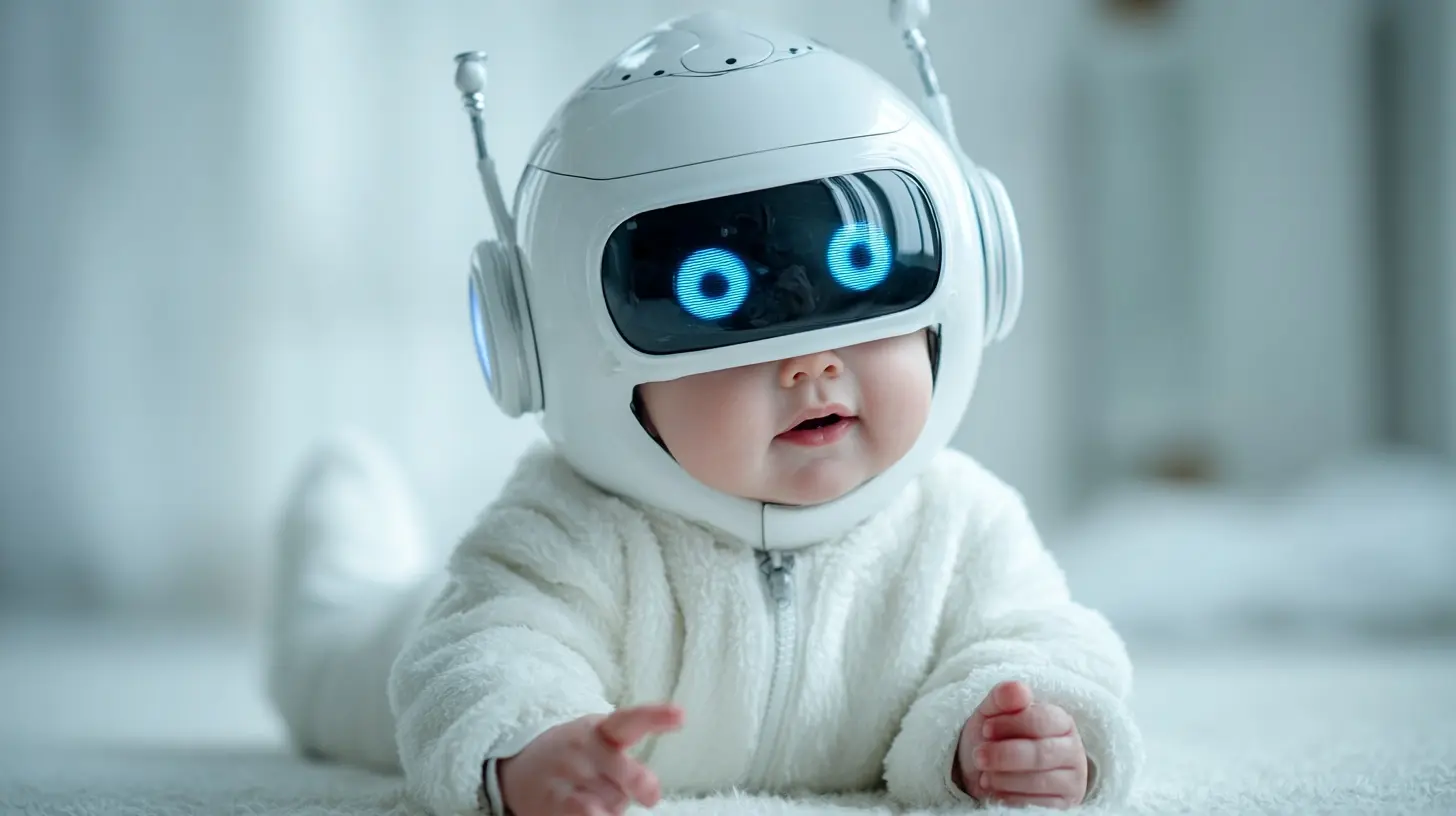
Smart Cribs and Bassinets: Engineering Meets Reality
Responsive bassinets that gently rock or vibrate in response to crying have become more refined. The best versions use accelerometers and microphones to detect arousal, then apply a graduated response: a slow sway first, then a slightly stronger motion, then stop.The physiology here is straightforward. Vestibular stimulation, the gentle rocking motion that activates the inner ear, is soothing to infants because it mimics the motion they felt in the womb. It also promotes the transition from light sleep to deeper sleep. This is why hospitals have used rocking bassinets for decades.
What to watch for:
Motion quality. A jerky or fast motion is stimulating, not soothing. Look for slow, smooth, adjustable speed with a low minimum setting.
Safety testing. Any product that moves a sleeping infant should meet the relevant safety standard for bassinets and be used only with the manufacturer's mattress. Adding a thicker mattress or extra padding can create a suffocation hazard and can also interfere with sensors.
The weaning question. Some babies become dependent on motion to fall asleep, which can make the eventual transition to a stationary crib harder. If you use a responsive bassinet, consider using motion only for the initial settling rather than all night, so the association stays weak.
The price reality. These products cost several times a standard bassinet. The benefit is real but incremental. If your budget is tight, a standard bassinet plus a white noise machine covers most of the value at a fraction of the cost.
Feeding Tech: Where Precision Actually Helps
Feeding is the area where smart technology has the clearest practical payoff, because the data is unambiguous and the feedback loop is short.Smart Bottle Systems
Connected bottle systems track volume, temperature, and timing. The temperature alert is the most immediately useful feature. Overheated milk is a genuine risk, and a sensor that warns you before you hand over a bottle is a straightforward safety win.Volume tracking matters most for parents of premature babies or babies with feeding difficulties, where intake needs to be documented. For a thriving full-term baby, meticulous tracking can become a source of stress rather than reassurance. Some parents find that logging every milliliter turns feeding into a performance metric. If that sounds like you, consider whether the data will calm you or consume you.
Breastfeeding Support Tools
Wearable pumps have improved substantially, with better suction profiles and quieter motors. The innovation worth noting is not the pump itself but the feedback layer: apps that combine output data with session timing and suggest schedule adjustments.Be careful with output comparisons. Pump output is not a reliable measure of milk supply, because a baby removes milk more efficiently than any pump. Apps that show you average output across users can create unnecessary anxiety. Use your baby's weight gain and diaper count as the real indicators, and treat pump numbers as a personal baseline rather than a benchmark.
Smart Formula Preparation
Countertop formula mixers that measure, heat, and dispense on demand have become more accurate. The value is consistency, especially for night feeds when measuring by hand leads to errors. The caution is maintenance. Any device that handles powdered formula needs a cleaning routine that actually gets followed. If the cleaning process takes longer than mixing by hand, the product fails on its own terms.
Wearables for Infants: Small Sensors, Big Questions
Sensor wearables have shrunk to the point where a bootie or band can be genuinely unobtrusive. The engineering achievement is real: miniaturized optical sensors, better battery chemistry, and Bluetooth Low Energy have made all-day wear feasible.But wearables carry a specific set of problems that contactless sensors avoid:
- Fit drift. A sock that fit at 2 a.m. may be loose by 5 a.m. Loose optical sensors produce unreliable readings.
- Skin sensitivity. Adhesives and snug bands can irritate delicate skin.
- Charging logistics. A device that needs a daily charge introduces a failure point. If it dies at 2 a.m., you get no data and, worse, you may not notice.
If you choose a wearable, build a routine: check fit at every wake-up, charge during the day rather than overnight, and set the low-battery alert to a loud, distinct sound.
AI in the Nursery: Useful, Overhyped, and Sometimes Both
Artificial intelligence shows up in baby tech in three forms, and they are not equally valuable.Cry translation. Apps claim to tell you whether a cry means hunger, pain, or tiredness. The honest assessment: cry acoustics do carry some information, and research has found patterns associated with different states. But individual babies vary enormously, and context matters more than acoustics. A cry after a three-hour gap is probably hunger. You do not need an algorithm for that. These apps can be mildly useful for new parents learning to read signals, but they should not override your own observation.
Video event detection. This is genuinely useful. Modern cameras can distinguish a baby climbing out of the crib from a blanket moving, and can alert you to a specific event rather than any motion. This reduces false alerts dramatically compared to older motion detection.
Pattern summaries. Apps that summarize sleep and feeding patterns over weeks can surface trends you would miss day to day. The value depends entirely on how the summary is framed. A tool that says "your baby's longest sleep stretch has gradually lengthened" is reassuring and accurate. A tool that says "your baby is a poor sleeper compared to others" is neither helpful nor scientifically sound, because infant sleep norms span a very wide range.
One more consideration: any AI feature that processes audio or video in the cloud raises privacy questions. Prefer devices that process locally when possible, and read the privacy policy for how long recordings are retained and whether they are used for model training.
Air, Light, and Environment: The Underrated Category
Parents obsess over monitors and overlook the room itself. That is a mistake, because environment has a direct, well documented effect on infant sleep and breathing.Air quality monitors. These track particulate matter, volatile organic compounds, and carbon dioxide. The CO2 reading is the most actionable. A closed nursery with a sleeping adult and infant can accumulate CO2 to levels associated with poorer sleep quality. Cracking a door or running a filter can fix it. This is one of the few smart devices where the data leads to an obvious, cheap intervention.
Smart humidifiers with hygrometers. Dry air irritates nasal passages and can worsen congestion. A humidifier that reads the room and holds a target range prevents the two common errors: too dry, or so humid that condensation and mold become a risk. Keep the target moderate, and clean the tank on a strict schedule. A dirty humidifier aerosolizes contaminants, which is worse than dry air.
Adaptive lighting. Light exposure shapes circadian development. A nursery lamp that shifts from brighter, cooler light during daytime feeds to dim, warm light at night supports the gradual emergence of day-night rhythms. The key rule: keep night feeds boring and dim. Bright light at 3 a.m. tells a developing brain that it is daytime.
White noise, done correctly. White noise genuinely helps many babies sleep, likely by masking household sounds that would otherwise trigger arousal. Two cautions. Place the machine away from the crib, not inside it, and keep the volume moderate. Prolonged exposure to high volume can affect hearing, and the risk is entirely avoidable.
How to Choose Without Regret
Here is a decision framework that cuts through the marketing.Start with the problem, not the product. Write down the specific issue you want to solve. Is it that you cannot hear the baby from the kitchen? That you wake at every small sound? That you worry about breathing? Each problem has a different, often cheaper, solution.
Match the tool to the risk level. For a healthy baby, the goal is convenience and reassurance. For a baby with medical needs, the goal is clinical accuracy, and that conversation belongs with your pediatrician, not a product page.
Check the safety certification. Look for compliance with the relevant US safety standard for the product category. This is not glamorous, but it is the single most reliable filter.
Evaluate the maintenance burden honestly. Any device that touches milk, water, or skin needs cleaning. If you will not do it consistently, the device creates risk instead of reducing it.
Prefer local processing and clear data policies. Your nursery footage is among the most sensitive data you will ever generate. Know where it goes.
Buy for the next six months, not the next six years. Babies change fast. A device that is perfect for a newborn may be useless for a crawler. Resale value and subscription requirements matter more than they seem.
Common Mistakes and Misconceptions
Mistake: believing a monitor prevents SIDS. No consumer monitor has been shown to prevent SIDS. Safe sleep practices do the heavy lifting.Mistake: chasing the highest sensor count. More sensors often means more alerts, not more insight. A well designed single-purpose device usually beats a feature-stuffed one.
Mistake: ignoring subscription costs. Some devices require a monthly plan for core features, including video history. Add three years of subscription to the sticker price before you decide.
Misconception: that more data means more confidence. Data without interpretation produces anxiety. A number you cannot act on is not information. It is noise.
Misconception: that smart devices replace parental instinct. Your ears, your eyes, and your knowledge of your own baby remain the best monitoring system ever built. Technology is a supplement, not a substitute.
Final Thoughts
The smartest baby tech in 2026 is not the product with the longest feature list. It is the one that fits a specific need, works reliably, and does not manufacture anxiety. Contactless radar sensing, locally processed video intelligence, accurate environmental monitoring, and thoughtful feeding tools all earn their place. Wearables and cry translation apps can help, but they demand more caution.Buy less, but buy well. Solve the problem in front of you. Read the safety documentation. Keep the crib simple. And remember that the most advanced system in the nursery is still you.
all images in this post were generated using AI tools
Category:
Technology ReviewsAuthor:

Adeline Taylor