The Road to General AI: Deep Learning’s Contribution
30 August 2026
The phrase "General AI" conjures images of machines that think, reason, and adapt across any domain, much like a human. It is the kind of intelligence that can write a novel, debug a kernel, negotiate a contract, and then cook dinner, all without being specifically trained for each task. For decades, this was the stuff of science fiction. Today, it is the stated goal of major research labs, and the single most significant force pushing us toward that goal has been deep learning.
But here is the uncomfortable truth: deep learning is not the destination. It is the most powerful engine we have ever built for a narrow kind of intelligence, and understanding exactly what it contributes, where it fails, and what it leaves unfinished is critical for anyone trying to make sense of the AI landscape.
The Core Contribution: Representation Learning at Scale
Before deep learning, the dominant approach to AI was feature engineering. You had to hand-craft rules or mathematical transformations that told the machine what to look for. If you wanted to recognize a face, you wrote code to detect edges, then eyes, then a nose. It was brittle, labor-intensive, and it broke the moment the lighting changed or the face tilted.Deep learning changed the contract. Instead of you telling the machine what to see, the machine learns what to see from raw data. This is called representation learning. A deep neural network starts with pixels or words and, through layers of nonlinear transformations, builds its own hierarchy of features. The first layer might detect edges, the next layer textures, the next one parts of objects, and so on. Crucially, this hierarchy is not designed by a human. It is discovered from the data.
This shift is the single greatest contribution of deep learning to the road to General AI. It solved the "garbage in, garbage out" problem that plagued symbolic AI. It allowed machines to handle the messiness of the real world, where no two images of a cat look alike and no two sentences mean exactly the same thing.
The practical implication is enormous. It means that progress in AI is no longer bottlenecked by human intuition about what features matter, but by data and compute. That is why deep learning has scaled so aggressively. Every time we add more data and more parameters, the system gets better at representing the underlying structure of that data. This scaling law is not a coincidence. It is a direct consequence of representation learning: more capacity means more room to model more nuanced patterns.
The Rise of the Transformer: A New Kind of Generalization
If representation learning is the foundation, the Transformer architecture is the current skyscraper. Introduced in 2017 for machine translation, the Transformer introduced the attention mechanism, which allows a model to weigh the importance of every element in a sequence relative to every other element. This was a radical departure from recurrent neural networks (RNNs) and convolutional networks (CNNs), which processed data in a fixed, sequential or local manner.The Transformer's contribution to the road to General AI is twofold.
First, it unified the processing of different data types. Text, images, audio, and even time-series data can all be tokenized into sequences and fed into the same Transformer architecture. This is why we see models like GPT for text, ViT for vision, and Whisper for audio, all sharing the same underlying machinery. This unification is a stepping stone toward a single model that handles multiple modalities, which is a prerequisite for general intelligence. A general AI cannot be blind or deaf to the world; it needs to integrate sight, sound, and language into a single coherent understanding.
Second, the Transformer enabled a new form of learning called in-context learning. Large language models (LLMs) built on Transformers can perform tasks they were never explicitly trained for, simply by being given a few examples in the prompt. This is not the same as true reasoning, but it is a form of few-shot generalization that was unheard of before. It suggests that the model has internalized not just the data, but the patterns of how tasks are structured, which is a prerequisite for flexible behavior.
The trade-off, however, is the cost. Transformers are notoriously compute-hungry. Their attention mechanism scales quadratically with sequence length, which means processing long documents or high-resolution images is expensive. This has led to a split in the field: some researchers push for even larger Transformers, while others explore alternatives like state-space models or linear attention to break the quadratic bottleneck. The best practice right now is to choose your architecture based on your sequence length and latency budget, not on hype.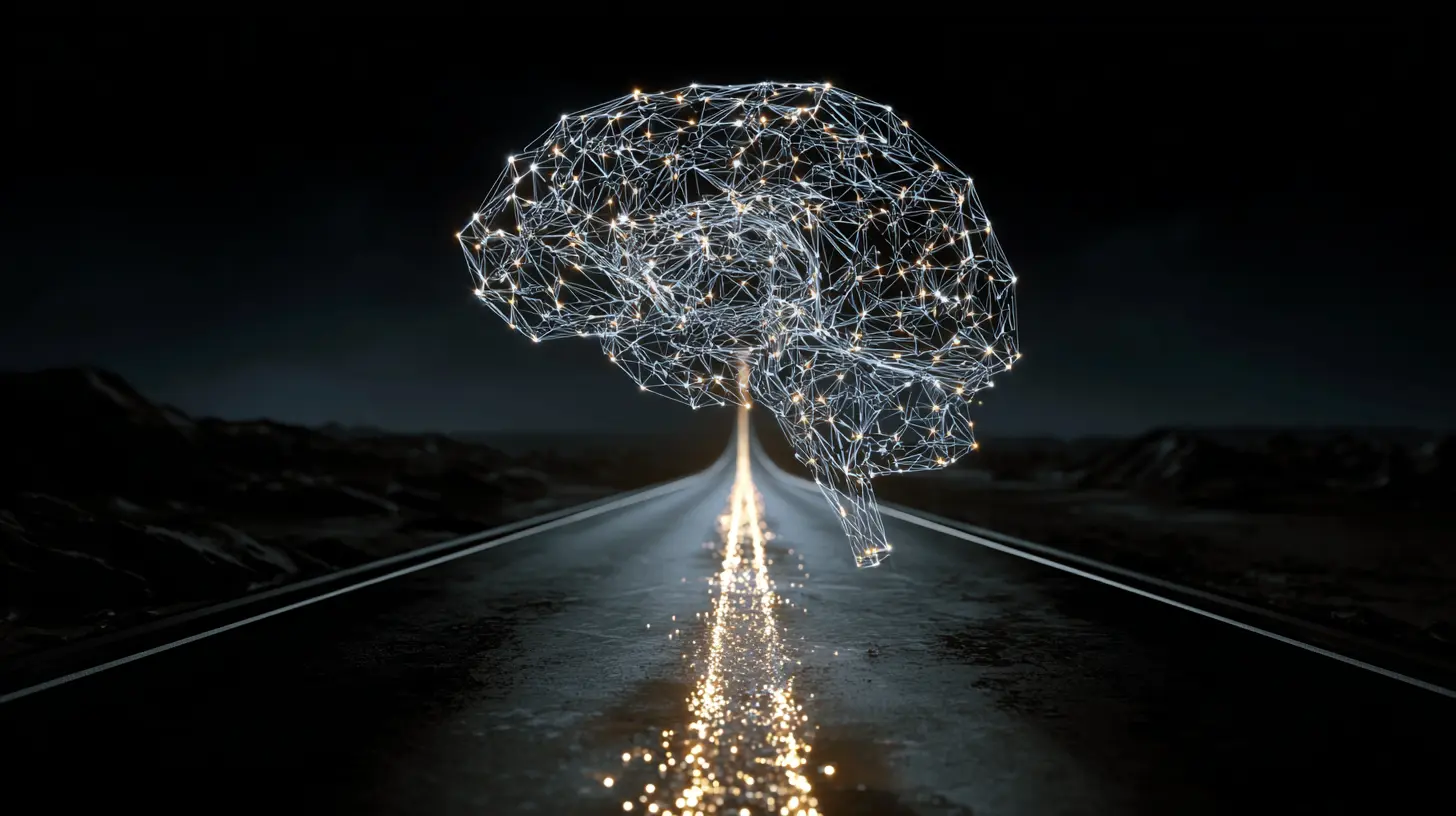
The Illusion of Understanding
Here is where the road gets rocky. Deep learning has given us models that are extraordinarily good at predicting the next word or the next pixel. But prediction is not understanding.A language model can write a compelling essay about the causes of World War II, but it has no lived experience of the war, no concept of suffering, and no ability to verify its claims against a factual database. It is a statistical mimic of human text. The model does not know what a "cause" is in the philosophical sense. It just knows that in its training data, certain words tend to follow certain other words.
This is not to diminish the achievement. The fact that a machine can produce coherent, contextually relevant prose is a staggering feat of pattern recognition. But it is a critical distinction for anyone building on these systems. If you treat a deep learning model as a source of truth, you will be burned. If you treat it as a highly sophisticated pattern completer, you can use it effectively.
The misconception that deep learning models "understand" leads to a common mistake: using them for tasks that require causal reasoning or factual verification without any guardrails. For example, asking a model to debug a complex piece of software by reasoning about the root cause of a bug is risky. The model might suggest a fix that looks plausible but is actually wrong. The correct approach is to use the model to generate hypotheses, and then use traditional testing tools to verify them. The model is a brainstorming partner, not an oracle.
This illusion of understanding also creates a false sense of progress toward General AI. When a chatbot passes a Turing-style test, people are quick to claim that it is conscious or self-aware. But passing a test designed to measure human-like conversation is not the same as possessing human-like cognition. The model has no goals, no desires, and no internal model of the world that is separate from its training data. It is a reflection of the data, not an independent mind.
What Deep Learning Does Not Do: The Missing Pieces
To understand deep learning's contribution, we must also understand its limits. There are at least four major capabilities that deep learning, in its current form, has not delivered.First, causality. Deep learning is correlation-based. It learns statistical associations between variables. But correlation is not causation. A model might learn that ice cream sales and drowning incidents rise together, but it does not know that a third variable, hot weather, causes both. For general intelligence, the ability to reason about cause and effect is essential. You cannot plan, run experiments, or make counterfactual decisions without a causal model of the world.
Second, continuous learning. Deep learning models are typically trained on a fixed dataset and then deployed. They do not learn from new experiences in real time. If you want to teach a model a new fact, you have to retrain it on a combination of old and new data, which is expensive and can lead to catastrophic forgetting, where the model loses previously learned knowledge. A general AI would need to learn continuously, like a human, accumulating knowledge over a lifetime without forgetting the past.
Third, common sense. Deep learning models are notoriously bad at reasoning about physical reality. They do not know that a glass will break if it falls off a table, or that a person cannot be in two places at once. They can generate text about these things because they have seen such text in their training data, but they cannot reason about novel physical situations. This is a major gap. Common sense is the foundation of human intelligence, and without it, AI systems remain brittle in the real world.
Fourth, long-horizon planning. A general AI needs to be able to set a goal, break it down into subgoals, and execute a sequence of actions that may take hours, days, or years. Deep learning models are good at immediate next-step prediction, but they struggle with tasks that require maintaining a consistent state of mind over long periods. They lose track of context, they get distracted, and they cannot hold a complex, multi-step plan in their heads.
These missing pieces are not just technical details. They are fundamental aspects of intelligence. And they suggest that deep learning, while necessary, is not sufficient for General AI.
The Scaling Debate: Is Bigger Always Better?
One of the most contentious issues in the field is the role of scaling. The dominant paradigm for the last few years has been to throw more data and more compute at larger models, and to trust that the models will get smarter. This has worked remarkably well. GPT-3 was a step change over GPT-2, and GPT-4 was a step change over GPT-3.But there are reasons to be skeptical that scaling alone will lead to General AI. First, the data is running out. We have already scraped most of the internet, and the rate of new high-quality text and image data is slowing down. Synthetic data, where models generate their own training data, is a possibility, but it risks amplifying existing biases and errors.
Second, the compute costs are becoming prohibitive. Training a frontier model costs millions of dollars, and the energy consumption is significant. This is not sustainable for most organizations, and it creates a concentration of power in a handful of companies. If the road to General AI requires ever-larger models, it will be a road that only a few can travel.
Third, there is evidence of diminishing returns on some tasks. While performance on benchmarks continues to improve, the rate of improvement is slowing for certain tasks, particularly those that require reasoning, as opposed to pattern matching. This suggests that simply adding more parameters is not unlocking fundamentally new capabilities. We might be hitting the ceiling of what scale can buy, and we may need new architectures or new learning paradigms.
The best practice for practitioners is to be pragmatic. Do not assume that a bigger model is always better. For many business applications, a smaller, fine-tuned model will be cheaper, faster, and easier to maintain. Start with a model that is just big enough to handle your task, and only scale up if you have clear evidence that the larger model provides a meaningful improvement.
The Hybrid Future: Combining Deep Learning with Symbolic AI
Given the limitations of deep learning, a growing number of researchers believe that the road to General AI will require a hybrid approach. This means combining the pattern recognition power of deep learning with the explicit reasoning capabilities of symbolic AI, the field that dominated before deep learning.Symbolic AI uses rules, logic, and knowledge graphs to represent facts and relationships. It is transparent, interpretable, and good at causal reasoning. Its weakness is that it is brittle and requires manual knowledge engineering. Deep learning is the opposite: it is flexible and learns from data, but it is opaque and bad at reasoning.
A hybrid system would use deep learning to perceive and understand the world, and symbolic AI to reason about it. For example, a deep learning model could recognize the objects in a scene, and then a symbolic reasoner could use rules to infer that the glass on the edge of the table will fall if pushed. This combines the best of both worlds.
There are already signs of this trend. Neuro-symbolic AI is a growing field. Some language models are being augmented with external knowledge bases and reasoning modules. For example, a model can be given access to a calculator for arithmetic, or a search engine for factual queries. This is a form of hybrid AI, where the deep learning model is the interface, and the symbolic system is the brain.
The trade-off is complexity. Hybrid systems are harder to build and maintain. They require careful engineering to integrate the neural and symbolic components. But they offer a more robust path to General AI because they address the fundamental gaps in deep learning.
For anyone building AI systems, the practical advice is to not put all your eggs in the deep learning basket. Consider whether your problem requires causal reasoning, explainability, or exact logic. If it does, think about how you can supplement a deep learning model with rules or external tools. The most successful AI systems of the future will likely be hybrids.
The Role of Reinforcement Learning and World Models
Another critical contribution that is often overlooked is the role of reinforcement learning (RL) and world models. Deep learning is primarily about perception and prediction. RL is about action and decision-making. A general AI must be an agent, not just a predictor. It must act in the world, observe the results, and adjust its behavior.RL has been successful in games like Go and chess, where the rules are clear and the feedback is immediate. But applying RL to real-world tasks is much harder because the feedback is delayed and the state space is enormous. This is where world models come in. A world model is an internal simulation of the environment that an agent can use to plan ahead. If the agent can predict the consequences of its actions, it can choose actions that lead to desired outcomes.
Deep learning is essential for building world models, because the real world is too complex to be described by explicit rules. A deep neural network can learn a compressed representation of the environment from data, and this representation can be used for planning. This is the direction that many researchers believe will lead to more general intelligence: an agent that has a learned world model, and uses it for planning and decision-making.
The challenge is that world models are difficult to train. They require a lot of data, and the predictions can be inaccurate. There is also a risk of compounding errors, where a small mistake in the model leads to a large mistake in the plan. Nevertheless, this is a promising avenue, and it highlights the fact that deep learning is not just about perception, but also about building the internal representations necessary for action.
Practical Guidance for Navigating the AI Landscape
For professionals and organizations, the key takeaway is to understand what deep learning is good at and what it is not. Use it for tasks that involve pattern recognition, classification, generation, and translation. These are its strengths. Do not use it for tasks that require deep reasoning, factual accuracy, or long-term planning, unless you are willing to build additional systems to compensate.A common mistake is to assume that a large language model can replace a team of analysts or engineers. It cannot. It can augment them, but it will hallucinate facts, make logical errors, and be confidently wrong. The correct practice is to use these models as tools, not as employees. Always have a human in the loop for critical decisions. Always verify the output.
Another misconception is that deep learning is a solved problem. It is not. It is still an active area of research, and there are many open questions. The field is evolving rapidly, and what is true today may not be true tomorrow. Stay informed, but be skeptical of hype. If someone claims that a model is "almost human," ask for specific evidence of its performance on tasks that require reasoning, planning, and common sense.
Finally, remember that General AI is not a single breakthrough away. It is a complex, multi-faceted problem that will require advances in multiple areas: causality, continuous learning, common sense, and planning. Deep learning has made an immense contribution by providing a powerful foundation for representation learning. But the road ahead is long, and the next steps will require a combination of new ideas, new architectures, and a willingness to question the current paradigm.
The best thing you can do today is to build with deep learning, but keep an eye on the horizon. Use its strengths, compensate for its weaknesses, and be ready to adapt as the field moves forward. The road to General AI is not a straight line. It is a winding path with many branches, and deep learning is the vehicle that has taken us further than anyone thought possible. The question is not whether it will reach the destination, but what new vehicles we will need to build to get there.
all images in this post were generated using AI tools
Category:
Deep LearningAuthor:

Adeline Taylor
Discussion
rate this article
1 comments
Lila McIlroy
Deep learning is paving the way for a future where machines can think and learn like us. The journey to General AI is exciting, and each step brings new possibilities. Keep exploring!
September 15, 2026 at 2:50 AM
Adeline Taylor
I appreciate your enthusiasm! Deep learning indeed opens up fascinating avenues for AI. Exciting times ahead as we explore these possibilities together.