The Rise of Biometric Data and What It Means for Your Privacy
22 August 2026
Walk into any modern airport, and you will see it. A camera scans your face as you approach the gate. You place your thumb on a small sensor at the immigration kiosk. You glance at your phone, and it unlocks instantly because it recognizes your eyes. None of this feels futuristic anymore. It feels normal. That is exactly the problem.
Biometric data has moved from the realm of spy movies and science fiction into the fabric of daily life. It is in your pocket, on your laptop, at your gym, and increasingly in your workplace. The convenience is undeniable. The trade-off, however, is far more complex than most people realize. Once your fingerprint is stolen, you cannot change it. You cannot get a new face. Your iris does not come with a reset button.
This article is not about scaring you into throwing away your phone. It is about understanding what biometric data actually is, how it is being collected, where it goes, and what you can do to protect yourself without living like a hermit. The stakes are higher than you think, and the decisions you make today will echo for decades.
What Exactly Counts as Biometric Data?
Biometric data is any physical or behavioral characteristic that can be used to identify you. The most common types are fingerprints, facial geometry, iris scans, and voice patterns. But the category is expanding quickly. Gait recognition analyzes the way you walk. Keystroke dynamics measure how you type, including rhythm and pressure. Heart rate patterns, vein structures in your hand, and even the shape of your ear are all being used in various systems.The key distinction is between physiological biometrics and behavioral biometrics. Physiological traits are things you are born with. They are stable over time. Behavioral traits, like the way you sign your name or how you hold your phone, can change and are easier to imitate with practice. This distinction matters because it affects how reliable the biometric is and how easily it can be spoofed.
A fingerprint is a physiological trait. It is highly unique, but it is also static. Once someone copies it, they have it forever. A voice pattern is behavioral in part, because your voice changes with age, stress, and even the time of day. That makes it less reliable but also less catastrophic if compromised.
The real issue is not just the biometric itself. It is the template. When you register a fingerprint, the system does not store a picture of your finger. It creates a mathematical representation, a template, based on specific features like ridge endings and bifurcations. This template is what gets compared every time you authenticate. If that template is stolen, the attacker does not need your physical finger. They have the digital equivalent.
The Convenience Paradox
The rise of biometrics is driven by one simple truth: passwords are terrible. They are hard to remember, easy to steal, and routinely reused across multiple accounts. According to years of breach data, the most common passwords remain things like "123456" and "password." People do not want to manage dozens of unique complex passwords, so they do not. Biometrics offer a way out.Your face is always with you. Your fingerprint is always on your hand. There is nothing to forget, nothing to write down, nothing to reset. This is why Apple, Google, and Microsoft have all pushed biometric authentication so hard. It is not just a feature. It is the foundation of their security model going forward.
But here is the paradox. Biometrics are convenient because they are always available. They are dangerous for the exact same reason. A password that is stolen can be changed. A password that is compromised only affects one account if you practiced good hygiene. A biometric that is stolen affects every system that uses that biometric, and you cannot revoke it.
Consider your face. You use it to unlock your phone. You use it to board a plane. You use it to verify your identity at a bank. You use it to enter your office building. All of those systems might be using different vendors with different security standards. If one of them gets breached, the attacker has a high-quality template of your face. They can then try to replay that template against other systems. Even if the template is encrypted, the risk of cross-matching is real.
Where Is Your Biometric Data Going?
The most obvious place is your phone. Apple's Face ID and Touch ID store templates in a secure enclave, a dedicated chip that is isolated from the rest of the processor. The data never leaves the device. That is the gold standard for biometric privacy. Google does something similar with the Titan M chip on Pixel phones. Microsoft's Windows Hello uses a trusted platform module.The problem starts when biometrics move beyond the device. Many apps and services now offer biometric login as an option. When you use your fingerprint to log into a banking app, the bank is not just checking the fingerprint on your phone. They are receiving a cryptographic proof that your fingerprint matched, but they are also collecting metadata about that authentication. When did you log in? How many times? From what location? That metadata is a behavioral biometric in itself.
Then there are the systems that collect raw biometric data and store it centrally. Some employers use fingerprint scanners for time and attendance. Gyms use them for entry. Apartment buildings use them for access. In many cases, this data is stored on a local server, sometimes without strong encryption, and sometimes on a cloud service that the vendor controls. You rarely sign a clear consent form. It is buried in a terms of service agreement that you clicked through without reading.
Government databases are another huge concern. Many countries now use facial recognition in passport control. Some use it for driver's licenses. A few are building centralized national ID systems that tie your face to your criminal record, your health data, and your financial history. The convenience of a single unified identity is real, but so is the surveillance potential. Once a government has your biometric data, they do not need a warrant to identify you in a crowd. They just need a camera.
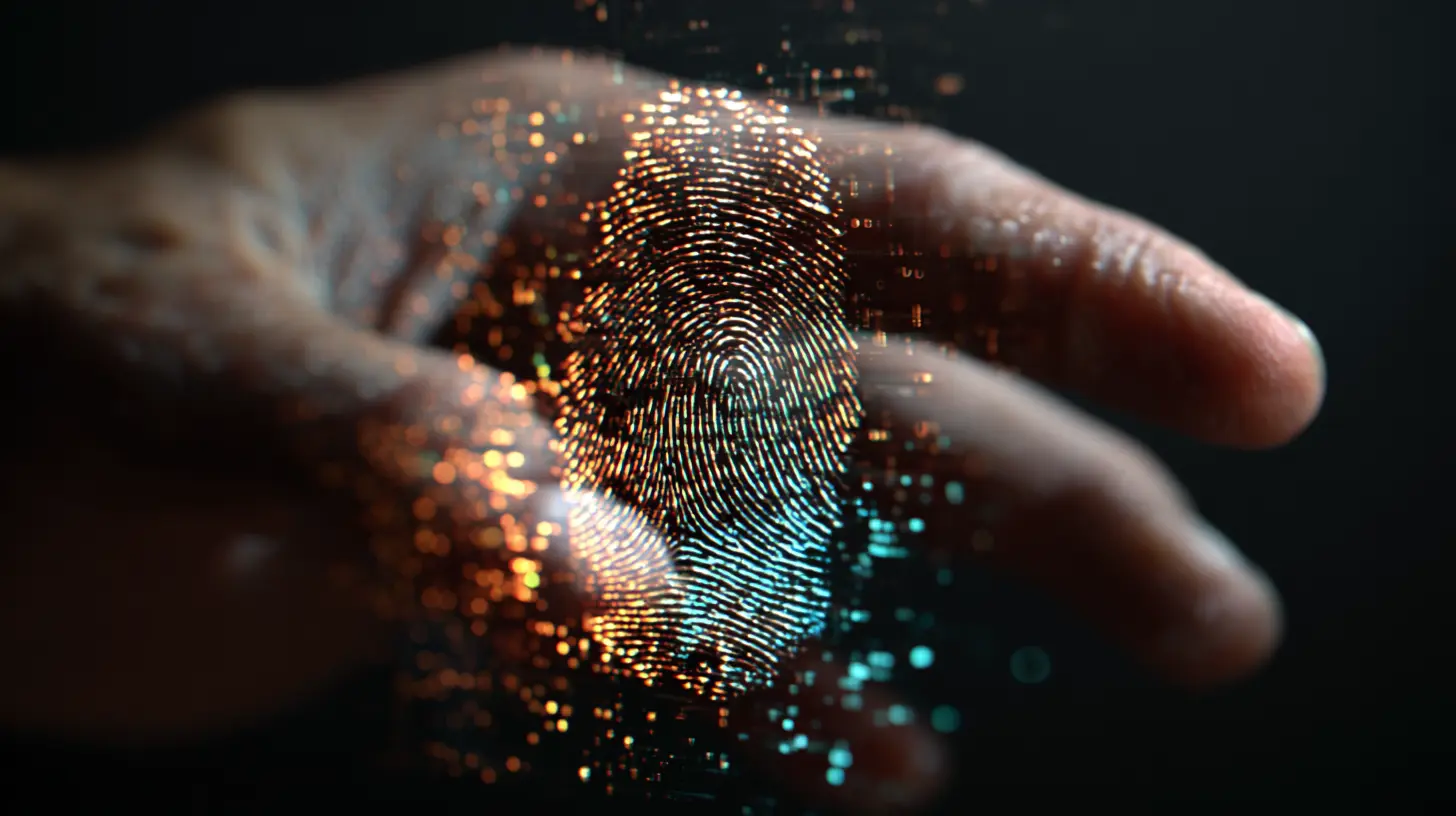
The Irreversibility Problem
This is the single most important concept to understand. Biometric data is not like a password. A password is a secret string of characters. If it leaks, you generate a new one. A biometric is a physical attribute that is permanently attached to you. If it leaks, you are stuck.Think about a credit card breach. Your card number gets stolen, the bank cancels it, and you get a new one with a different number. No lasting harm. Now think about a fingerprint breach. The attacker has your fingerprint template. They can use it to unlock your phone, access your bank account, or impersonate you at border control. You cannot cancel your fingerprint. You cannot get a new one issued.
There are real-world examples of this happening. In 2015, the Office of Personnel Management in the United States suffered a massive breach that included fingerprint data of over five million people. Those people will never get those fingerprints back. In 2019, a database belonging to a biometric security company called BioStar 2 was found to be publicly accessible, exposing fingerprints and facial recognition data of millions of users. The company was selling security products. Their own security was a disaster.
The solution that some vendors promote is cancelable biometrics. This is a technique where the biometric template is mathematically transformed before storage. If the transformed template is stolen, you can change the transformation function, effectively creating a new template from the same biometric. It sounds promising, but it is still an emerging field. Many existing systems do not use it, and the standards are not mature.
Misconceptions About Accuracy and Spoofing
People often assume that biometrics are foolproof. They are not. Fingerprint sensors can be fooled with a high-resolution print and a bit of silicone. Facial recognition can be tricked with a printed photo, a 3D mask, or even a pair of glasses with specially designed patterns. Voice authentication has been defeated with recordings and, in some cases, with synthesized speech that mimics the target's voice.The accuracy of biometric systems is measured in false acceptance rate (FAR) and false rejection rate (FRR). A high FAR means the system lets the wrong person in. A high FRR means it locks out the right person. These two rates are in tension. If you make the system more lenient to reduce false rejections, you increase false acceptances. If you make it stricter, you frustrate legitimate users.
For consumer devices like phones, the FAR is usually set very low, because the cost of a false acceptance is high. But for convenience, the system may allow multiple attempts, which increases the chance of a lucky guess. For high-security environments like bank vaults or military installations, the FAR is set to near zero, but the FRR becomes significant. Users may have to try several times, and the experience is not pleasant.
Another misconception is that biometrics are always more private than passwords. That is false. A password is something you know. A biometric is something you are. When you authenticate with a password, you are proving that you know a secret. When you authenticate with a biometric, you are revealing a part of yourself. The system learns something about you every time you use it. That information can be used to track you, profile you, or discriminate against you.
The Role of AI and Machine Learning
The rise of biometrics is inseparable from advances in artificial intelligence. Machine learning models have become incredibly good at recognizing faces, voices, and even subtle behavioral patterns. This has enabled biometric systems to work in real time, on low-power devices, and in noisy environments.But AI also makes biometric data more dangerous. Deepfakes, which are AI-generated videos and audio that mimic real people, are now sophisticated enough to fool many biometric systems. A well-crafted deepfake voice can bypass voice authentication. A deepfake video can potentially fool facial recognition systems that rely on liveness detection, which is the ability to tell whether the face is a real person or a recording.
The arms race between spoofing and detection is ongoing. For every new defense, attackers develop a new workaround. This is why biometric systems should never be the sole factor for high-value transactions. They should be combined with something you know (a PIN) or something you have (a physical token). This is called multi-factor authentication, and it is the only way to mitigate the weaknesses of any single method.
AI is also used to analyze biometric data after it is collected. For example, a system might analyze the way you walk to identify you in a crowd. This is called gait recognition, and it works from a distance, without your knowledge. You cannot opt out because you do not know you are being observed. This is a profound shift from the traditional model of consent.
Legal and Regulatory Landscape
The legal framework for biometric data is fragmented and inconsistent. The European Union's General Data Protection Regulation (GDPR) treats biometric data as special category data, which means it requires explicit consent and has strict processing rules. The California Consumer Privacy Act (CCPA) gives California residents some rights over their biometric data, but it is less comprehensive than GDPR.In the United States, there is no federal law specifically governing biometric data. Instead, a patchwork of state laws applies. Illinois has the Biometric Information Privacy Act (BIPA), which is the strictest in the country. It requires companies to obtain written consent before collecting biometric data, and it allows individuals to sue for violations. Several high-profile class action lawsuits have been filed under BIPA, resulting in substantial settlements.
Other states, like Texas and Washington, have their own biometric laws, but they are less stringent. For most of the country, biometric data is treated like any other personal information, which means it is subject to general data breach notification laws but not to specific protections.
This legal fragmentation creates a confusing environment for both companies and consumers. A company might collect your face scan in one state and process it under completely different rules in another. If your data is breached, you might have strong legal recourse in Illinois but almost none in Alabama. This is not sustainable. The pressure for a federal law is growing, but progress is slow.
What You Can Do to Protect Yourself
You do not need to abandon biometrics entirely. That would be impractical. But you can make informed choices about when and where to use them.First, use biometrics for local device authentication whenever possible. Unlocking your phone with your face or fingerprint is safe if the template stays on the device. Apple and Google have implemented this well. The risk is low, and the convenience is high.
Second, avoid using biometrics as a replacement for passwords on cloud services. If an app offers biometric login, ask yourself what happens if the server is breached. If the answer is unclear, use a strong unique password instead. Many password managers now support biometric unlock, which is a good compromise. The biometric unlocks the local vault, and the vault contains your passwords.
Third, be wary of biometrics in public or semi-public spaces. A fingerprint scanner at your gym is collecting data that you have no control over. A facial recognition camera in your office building is tracking your movements. These systems may be convenient, but they are also creating a permanent record of your physical presence. Ask questions. Who operates the system? Where is the data stored? How long is it kept? If you do not get clear answers, do not participate.
Fourth, use multi-factor authentication for anything important. A biometric plus a password plus a physical token is far stronger than any single factor. This is especially important for financial accounts, email, and cloud storage. The inconvenience is minor compared to the cost of identity theft.
Fifth, keep your software updated. Biometric systems are constantly being improved to defend against new spoofing techniques. Updates often include security patches that close vulnerabilities. Running an outdated operating system or app is like leaving your front door unlocked.
The Future of Biometric Privacy
The trend is clear. Biometrics are becoming more common, more accurate, and more integrated into everyday life. The question is not whether to use them, but how to use them responsibly.One promising development is the concept of decentralized biometrics. Instead of storing your biometric template on a central server, the template stays on your device, and authentication happens locally. The server only receives a cryptographic proof that the authentication succeeded. This is how FIDO2 and WebAuthn standards work. They are designed to eliminate passwords and reduce the risk of server-side breaches.
Another development is continuous authentication. Instead of checking your identity once at login, the system continuously monitors your behavior. It looks at how you type, how you hold your phone, and how you move. If the behavior changes dramatically, the system locks the session. This is more secure than a single point of authentication, but it also means the system is constantly watching you. The privacy implications are significant.
There is also the question of algorithmic bias. Biometric systems are trained on data sets that may not be representative of the entire population. Studies have shown that facial recognition systems have higher error rates for people with darker skin tones and for women. This can lead to false matches, wrongful arrests, and discrimination. When biometrics are used in law enforcement, the stakes are not just privacy. They are liberty.
Making an Informed Choice
Biometric data is a powerful tool. It can make our lives easier, our transactions safer, and our identities harder to steal. But it is not a magic bullet. It comes with real risks, and those risks are not evenly distributed. The people who are most likely to be harmed by biometric failures are often the people who have the least choice in whether to use them.You have more agency than you think. You can choose which apps to trust, which devices to buy, and which systems to opt into. You can demand transparency from companies and governments. You can support legislation that protects biometric privacy. You can also make small daily choices, like covering your laptop camera or using a PIN instead of a face scan for banking.
The rise of biometrics is not going to reverse. The technology is too convenient and too profitable. But the way it is deployed is still being decided. That is where your voice matters. The more you understand about what biometric data is, how it is collected, and what happens when it is compromised, the better equipped you are to protect yourself and to push for a future where privacy is not an afterthought.
Your face is yours. Your fingerprints are yours. The question is whether the systems that read them will respect that.
all images in this post were generated using AI tools
Category:
Digital PrivacyAuthor:

Adeline Taylor
Discussion
rate this article
1 comments
Rina McClary
Biometric data is becoming a crucial part of our digital lives, but its rise raises significant privacy concerns. As we embrace technologies like facial recognition and fingerprint scanning, we must consider how our personal information is collected and used. Striking a balance between convenience and privacy is essential.
August 30, 2026 at 11:22 AM
Adeline Taylor
You raise an important point. While biometric data offers convenience, we must stay vigilant about how it's used and protected. Balancing innovation with privacy is key.