The Promise and Perils of Quantum Computing in the Age of Big Data
1 December 2025
Remember when computers were the size of entire rooms and had the computing power of a pocket calculator? Fast forward a few decades, and we’ve reached a point where classical computers are hitting their limits. Enter quantum computing—often hailed as the next frontier of computational power.
But before you start dreaming of a world where your computer boots up in the blink of an eye and processes data faster than you can say "Schrödinger's cat," let’s talk about the promises and (yes, unfortunately) the perils of this futuristic tech in the age of big data.

The Quantum Leap: Why Everyone’s Talking About It
What Even Is Quantum Computing?
Alright, let’s break this down. Classical computers—the ones you use every day—process information using bits, which can be either 0 or 1. Quantum computers, on the other hand, use qubits. And qubits don’t play by the same rules. Thanks to quantum mechanics, they can exist in multiple states at the same time (a phenomenon known as superposition).Imagine you’re flipping a coin. In classical computing, the coin lands on either heads (0) or tails (1). But in quantum computing, it can be both heads and tails simultaneously—until you check, of course. Spooky, right? That’s quantum mechanics for you.
The Magic of Superposition and Entanglement
Another mind-blowing concept is entanglement. This means two qubits can be linked in such a way that changing one instantly changes the other—no matter how far apart they are. Einstein himself called this “spooky action at a distance,” and honestly, who are we to argue with Einstein? This property allows quantum computers to solve problems at speeds that classical computers can only dream of.Why Should We Care?
In a world drowning in data (hello, big data), analyzing massive datasets and solving complex problems is an uphill battle. Quantum computing could be the knight in shining armor, helping us:- Process vast amounts of data effortlessly.
- Optimize logistics, finance, and even drug discovery.
- Supercharge artificial intelligence and machine learning.
- Break (or perhaps, secure) encryption methods.
Sounds like a dream, right? Well, hold onto your qubits—because it’s not all sunshine and quantum rainbows.
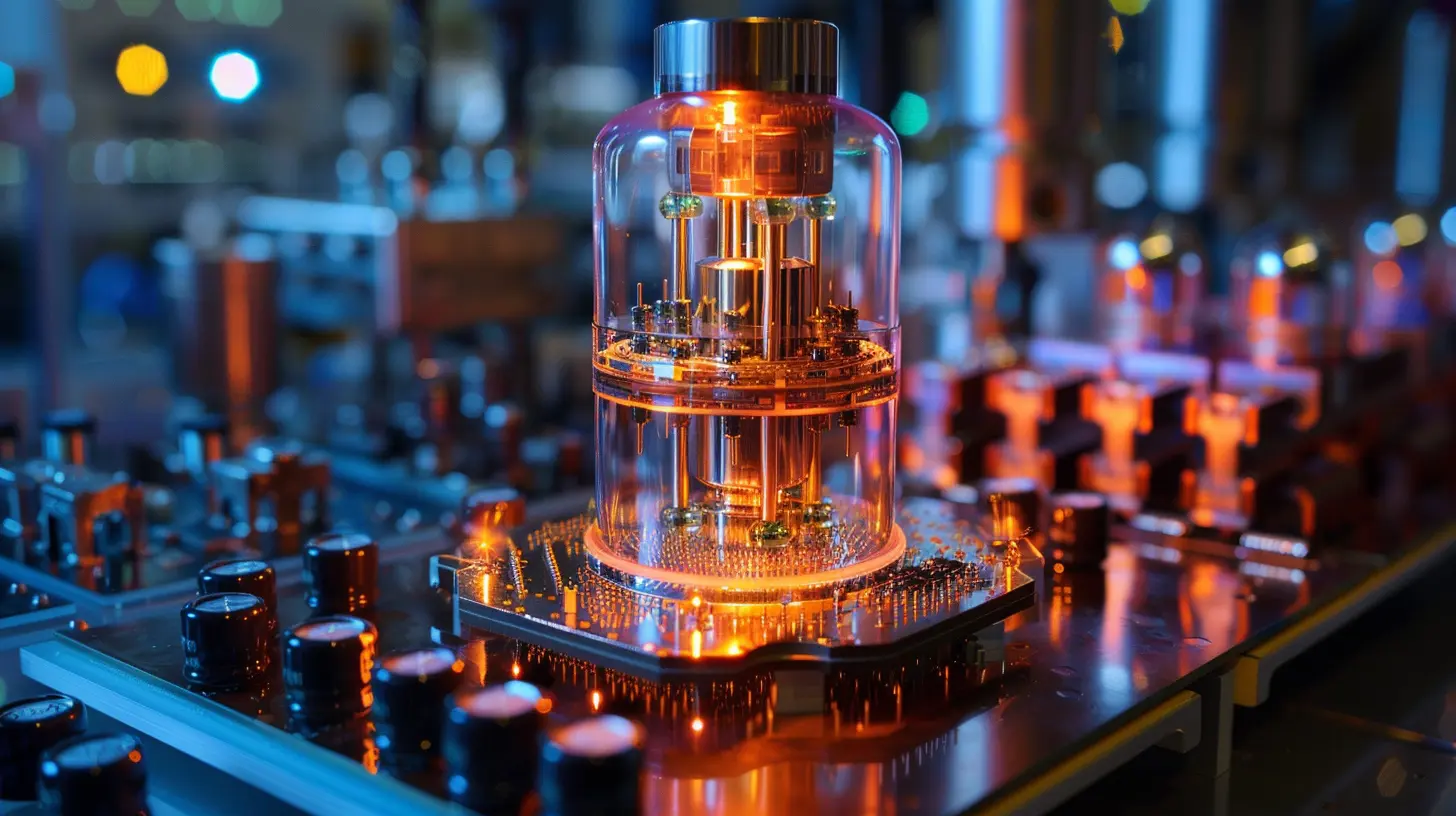
Big Data + Quantum Computing = A Match Made in Heaven?
Right now, big data is like trying to drink from a firehose—there’s just too much of it. Companies, governments, and researchers rely on classical computers to sift through oceans of information, but there’s a limit to how efficiently they can do it.Quantum computing, with its ability to process multiple possibilities at once, could revolutionize industries such as:
Healthcare & Drug Discovery
Imagine developing new drugs for diseases in days instead of years. Quantum algorithms could simulate molecular interactions with a level of precision that classical computers simply can’t achieve.Financial Services
Banks and financial institutions deal with mind-boggling amounts of data. Quantum computing could help in fraud detection, risk analysis, and investment optimization—basically, making Wall Street even crazier than it already is.Artificial Intelligence
AI and machine learning require immense computational power. Quantum computing could take AI to another level, making algorithms smarter, faster, and potentially even more human-like. (Okay, that might be a little scary!)
The Dark Side of Quantum Computing
Let’s not get carried away just yet. While quantum computing promises some jaw-dropping benefits, it also comes with a shadowy side.1. Encryption May Become Useless
Most online security today relies on encryption techniques that classical computers struggle to crack. Quantum computers, however? They could break these encryptions in seconds. Goodbye, online banking security. Goodbye, privacy. It's a hacker’s paradise.2. They’re Ridiculously Hard to Build
Your laptop uses transistors. A quantum computer? It needs subatomic particles, near-absolute-zero temperatures, and an environment free from external interference. In short, they make rocket science look easy.3. They’re Expensive (Like, REALLY Expensive)
Right now, building and maintaining a quantum computer costs millions. Until we figure out how to mass-produce stable quantum chips affordably, don't expect to have a quantum laptop in your backpack anytime soon.4. Quantum Errors Are a Nightmare
Quantum computers are notoriously unstable. A tiny disturbance (like a stray electromagnetic wave or a curious cat walking too close) can cause errors in computations. Scientists are working on quantum error correction, but let’s just say—we’re not there yet.5. Who Controls the Power?
Governments and tech giants are pouring billions into quantum research. But here’s the million-dollar question: Who’s going to regulate this tech? With quantum supremacy (the point where quantum computers outpace classical computers) looming, we need some serious ethical discussions before things get out of hand.
The Road Ahead: Where Do We Go From Here?
So, what does the future hold for quantum computing and big data? A few things are certain:- More breakthroughs: Scientists are making advances every year. Companies like Google, IBM, and Microsoft are in a quantum arms race.
- Better error correction: If we can solve the stability and error challenges, quantum computing will be more practical.
- Regulation & security concerns: Expect governments to step in before hackers start having too much fun.
For now, though, quantum computing remains largely experimental. We're still at the "crawling before walking" stage. But when (not if) it becomes practical, it’s going to change everything.
Final Thoughts: Should We Be Excited or Terrified?
A little bit of both! Quantum computing is like opening Pandora’s box—you can’t unsee what’s inside. On one hand, it could revolutionize the way we handle big data, medicine, AI, and finance. On the other, it could render modern encryption useless, make cybersecurity a nightmare, and widen the gap between tech haves and have-nots.One thing’s for sure: Quantum computing is no longer just sci-fi—it’s coming, whether we’re ready or not. So, buckle up, folks. The quantum revolution is just beginning!
all images in this post were generated using AI tools
Category:
Quantum ComputingAuthor:

Adeline Taylor
Discussion
rate this article
2 comments
Rosalind Butler
This article effectively highlights the transformative potential of quantum computing, emphasizing its capacity to revolutionize big data analysis. However, it also rightly addresses the significant challenges and ethical considerations that accompany this groundbreaking technology. Great read!
December 7, 2025 at 4:38 AM
Adeline Taylor
Thank you for your insightful comment! I'm glad you found the article's discussion on both the potential and challenges of quantum computing valuable.
Blaze Love
Quantum computing presents transformative potential for big data analytics, accelerating complex problem-solving. However, challenges such as error rates and ethical implications must be addressed to harness its full capabilities responsibly.
December 6, 2025 at 9:06 PM
Adeline Taylor
Thank you for your insightful comment! You're absolutely right; while quantum computing holds great promise for enhancing big data analytics, it's crucial to navigate the challenges of error rates and ethical concerns to fully realize its potential.