The Next Generation of Smart Homes Powered by Deep Learning
28 November 2026
Your smart home is not as smart as the box claimed. That fancy hub that turns on the porch light when the sun goes down? It is running a timer with extra steps. The thermostat that "adapts to your schedule"? It is a glorified calendar with a temperature sensor. And the camera that "understands" your front yard? It mostly understands motion, and it will happily alert you about a raccoon at 3 a.m. with the same urgency as a human being.
The next wave of smart homes is supposed to fix all of that. Deep learning is the engine behind those promises, and this time the hype has some substance behind it. But "powered by deep learning" has become a marketing sticker slapped on everything from doorbells to light bulbs, and most of it is nonsense. So let us separate what actually works, what is coming, and what you should ignore while the industry figures itself out.
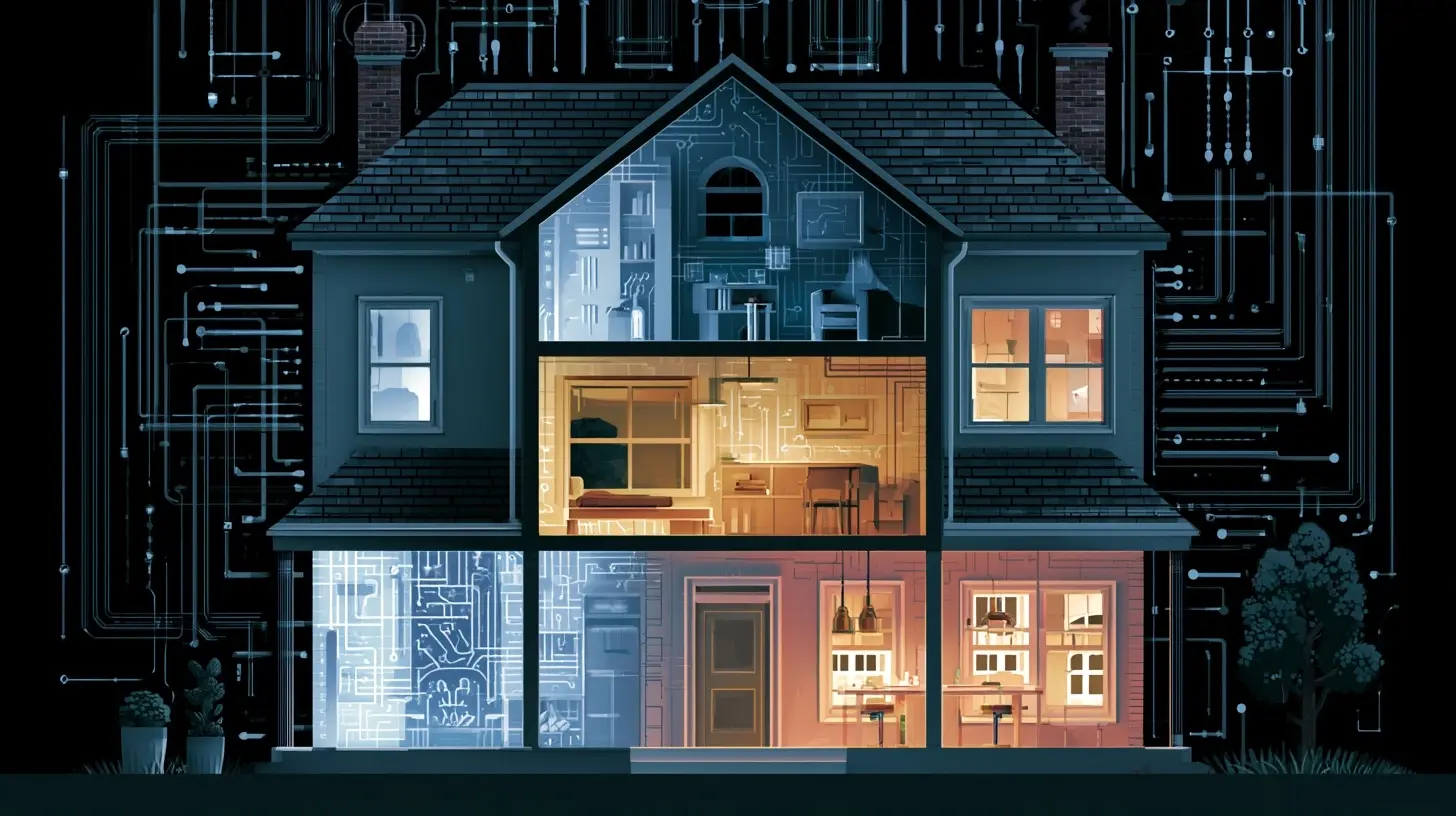
What Deep Learning Actually Changes in a Home
Traditional home automation runs on rules. If motion is detected between sunset and sunrise, turn on the porch light. If the temperature drops below 68 degrees, fire the furnace. Rules are deterministic, cheap, and easy to debug. They are also brittle. A cat triggers the porch light. A houseguest who keeps different hours breaks the thermostat schedule. A rule-based system has no way to tell the difference between a person, a pet, and a swaying branch, because it was never given the ability to understand anything.Deep learning changes the game by replacing hand-written rules with learned patterns. A neural network trained on thousands of hours of audio can distinguish a window breaking from a dog barking from a car door slamming. A vision model can tell a delivery driver from a prowler from a neighbor's cat. A sequence model can learn that you wake up around 6:40 on weekdays, that you run the dishwasher after dinner, and that you turn the heat down when you leave, without anyone programming a schedule.
The distinction matters more than it sounds. Rules encode what a product manager guessed about your life. Deep learning encodes patterns from actual data, ideally your data, and that is why the results feel less like automation and more like anticipation. The catch, as we will see, is that this only works when the data is good, the model is appropriate, and the system has a way to handle the inevitable wrong guess.

The Anatomy of a Deep-Learning Smart Home
Before you can evaluate any product or plan a build, you need a mental model of how these systems fit together. A deep-learning smart home has four layers, and most failures trace back to someone misunderstanding one of them.The sensing layer
This is where raw data enters the system: cameras, microphones, radar sensors, thermostats, energy monitors, door and window contacts, and increasingly, cheap microcontrollers with tiny models running directly on them. The sensing layer determines the ceiling for everything downstream. A 720p camera with a bad lens will never support reliable person recognition, no matter how clever the cloud model is. A microphone with poor noise handling will produce garbage audio embeddings.The inference layer
Inference is where the model runs. It can happen in three places, and the choice has real consequences:- On-device (edge) inference. The model runs on the camera, hub, or sensor itself. Latency is low, privacy is strong because raw data never leaves the house, and it keeps working when the internet does not. The trade-off is compute: edge chips are constrained, so you get smaller models and sometimes lower accuracy.
- Local hub inference. A small server or a capable hub on your network runs the models. You get more compute than an edge device while keeping data local, at the cost of a device to maintain and power.
- Cloud inference. The heavy lifting happens in a data center. You get the biggest models and the easiest updates, but you also get latency, subscription fees, and the uncomfortable reality that your living room audio is being uploaded somewhere.
The orchestration layer
This is the decision engine that turns predictions into actions. It is where most "smart home" products quietly fall apart. A model that predicts "the homeowner is about to arrive" is useless if the orchestration layer cannot decide whether to unlock the door, turn on the lights, or both, and in what order. Good orchestration includes confidence thresholds, fallback rules, and conflict resolution. Bad orchestration produces the classic smart home experience: lights flickering because two automations disagree about whether you are home.The actuation layer
Lights, locks, blinds, HVAC, speakers, and plugs. Boring, but it is where trust is won or lost. A deep-learning system that is 95 percent accurate sounds great until you remember that 5 percent of the time it is wrong about your front door lock. Actuation is where you decide which decisions deserve autonomy and which need a human in the loop.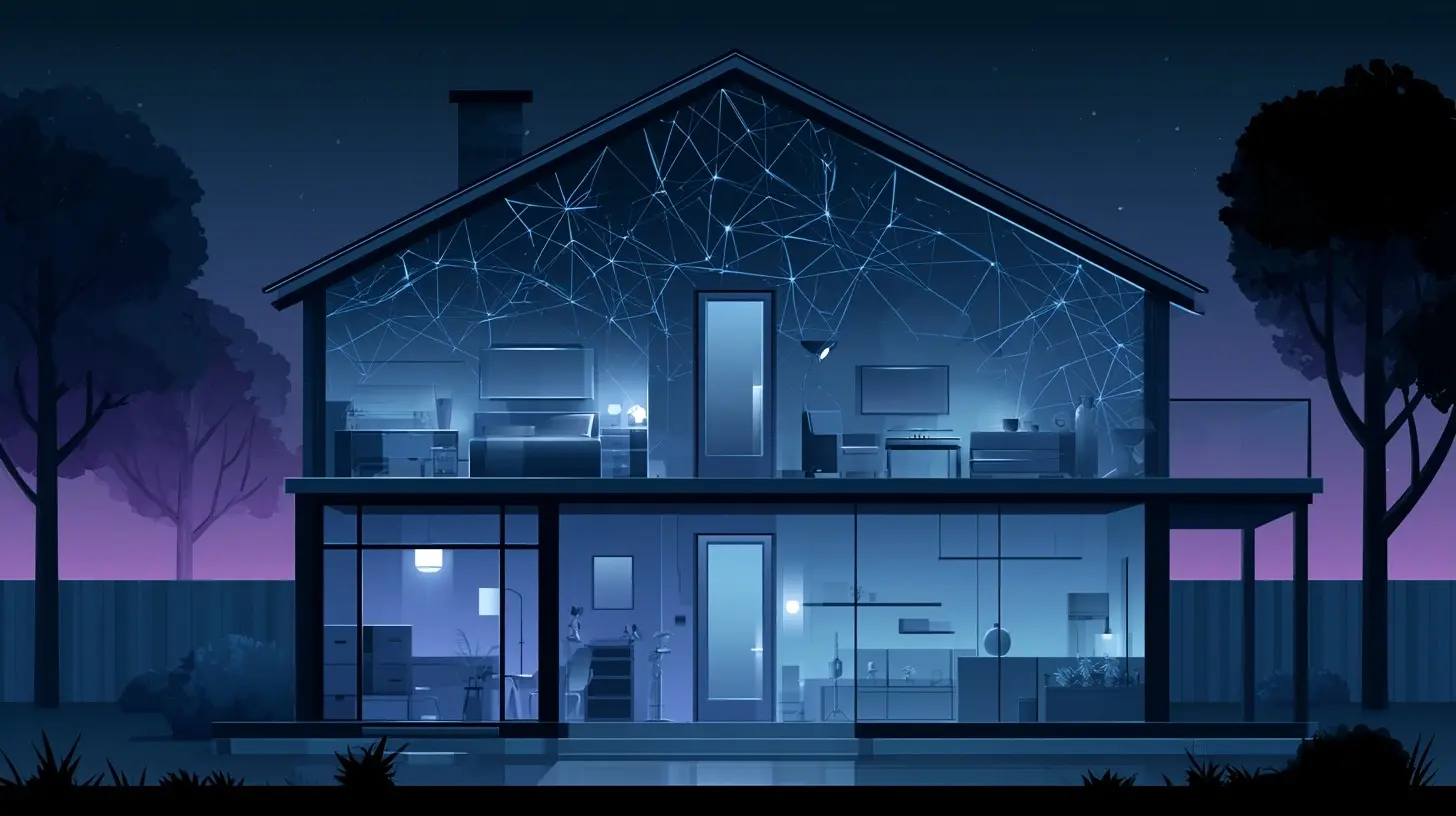
Where Deep Learning Genuinely Shines
Let us get concrete. These are the areas where deep learning has moved from demo to dependable, and why.Vision: from motion to meaning
Person detection is table stakes now. The interesting shift is fine-grained classification: distinguishing residents from strangers, delivery couriers from visitors, packages from porch decor, and animals from people. Convolutional networks and vision transformers trained on diverse datasets handle this well, and on-device versions have gotten good enough that mid-range cameras can run them without shipping frames to the cloud. The practical win is a massive reduction in false alerts, which is the number one reason people abandon their security cameras.Audio: the underrated channel
Sound classification is quietly one of the most useful applications. Glass breaking, smoke alarms, water running, doors opening, pets in distress, and the difference between "someone is in the house" and "the HVAC just kicked on" are all learnable. Audio models are also cheap to run, which makes them a good fit for always-on edge devices. The failure mode to watch for is acoustic drift: a model trained on one home's noise profile can behave differently in another, so per-home calibration matters.Energy and HVAC optimization
This is where deep learning earns its keep in purely financial terms. Sequence models can forecast occupancy and thermal behavior better than fixed schedules, and reinforcement learning has shown promise for HVAC control in research settings. The caveat is that results vary enormously by building, climate, and equipment. A model tuned for a well-insulated house in a mild climate will not transfer cleanly to a drafty apartment in a cold one. If a vendor promises "AI that cuts your energy bill by 30 percent," ask for the conditions under which that number was measured.Predictive maintenance
Appliances fail in patterns. Motors draw slightly more current before they seize. A pump's vibration signature changes weeks before it dies. Deep learning can catch these signals from energy monitoring and vibration data, and the payoff is real: fewer emergency repairs and longer equipment life. The catch is that you need sensors and a baseline, which means this works best for expensive equipment (heat pumps, pool pumps, well systems) rather than a $40 toaster.
The Hard Problems Nobody Puts on the Box
Here is where the marketing gets quiet. Deep learning in homes is not just "train a model and ship it." Several problems are genuinely hard, and how a product handles them tells you more about its quality than any spec sheet.Data scarcity and the cold start
A new home has no history. A model that learns your routines needs weeks of data before it is useful, and during that period it will make confident, wrong predictions. Good products handle this with sensible defaults, explicit "learning mode" transparency, and a way for you to correct mistakes that actually feeds back into the model. Bad products just guess and hope you do not notice.Distribution shift
Your home changes. You get a new couch, a new pet, a new roommate, a new job with different hours. Models trained on old data degrade silently. This is why continuous or periodic retraining matters, and why "set it and forget it" is a lie for any learning system. Ask vendors how their models stay current and whether you can trigger a reset when your life changes.Privacy and the cost of convenience
Cloud inference means your data leaves the house. On-device inference keeps it local but limits model size. There is no free lunch, and the right answer depends on what is being sensed. Audio and video deserve local processing by default; energy and environmental data are lower risk. Be skeptical of any product that requires cloud processing for something a local model could plausibly handle, and read the privacy policy with the assumption that "anonymized" means less than you hope.Reliability and the cost of being wrong
A recommendation engine that is wrong 5 percent of the time is fine. A lock that is wrong 5 percent of the time is a security incident. This asymmetry should drive your architecture: use deep learning for perception and prediction, and keep deterministic rules for safety-critical actuation. A good pattern is "model suggests, rules decide, human confirms" for anything involving locks, alarms, or appliances that can cause damage.Edge vs. Cloud: A Decision Framework, Not a Religion
The edge-versus-cloud debate generates more heat than light. The honest answer is that most mature systems are hybrid, and the split should follow a few practical questions.| Question | Points to edge | Points to cloud |
|---|---|---|
| Does the data include audio or video of people? | Yes | No |
| Does it need to work during an internet outage? | Yes | No |
| Is sub-100ms latency required? | Yes | No |
| Does the model need frequent retraining? | No | Yes |
| Is the device power-constrained? | Sometimes | Often |
A sensible default: perception on the edge, heavy training and cross-home learning in the cloud, orchestration on a local hub, and cloud only for features that genuinely need it. If a vendor cannot explain where their model runs and why, that is a red flag, not a detail.
Common Mistakes and Misconceptions
A few patterns show up again and again, and avoiding them will save you money and frustration.Mistake one: buying the label, not the capability. "AI-powered" on a product page means nothing. Look for specifics: what task, what accuracy, what data, where it runs, and what happens when it is wrong. A product that clearly states "person detection on-device, 30-foot range, works offline" is worth ten that say "revolutionary AI."
Mistake two: letting the model own the lock. Autonomy should scale with reversibility. Turning on a light is reversible. Unlocking a door is not. Keep humans in the loop for irreversible actions, at least until you have months of evidence that the system is reliable in your specific home.
Mistake three: ignoring the feedback loop. If correcting a wrong prediction does nothing, the system will keep making it. Prefer products where corrections are first-class, not buried in a settings menu.
Mistake four: assuming transferability. A model that works in a demo apartment may not work in your house. Different acoustics, lighting, layouts, and routines all matter. Buy from vendors with generous return windows and test in your actual home.
Misconception: deep learning means no rules. The best systems are hybrids. Models handle perception and prediction; rules handle safety and policy. The magic is in the combination, not in replacing everything with a neural network.
Misconception: more sensors always help. More data can help, but it also raises cost, complexity, and privacy exposure. Start with the sensors that answer specific questions, and add more only when you have a use for them.
Practical Guidance for Building One
If you want a deep-learning smart home that actually works, here is a sequence that avoids the usual traps.1. Start with a local hub. Pick a platform that can run models locally and integrate with your devices. This gives you a fallback when the cloud is down and keeps sensitive data at home.
2. Choose sensors with local processing. Cameras and mics that run detection on-device reduce bandwidth, latency, and privacy risk. Verify that the local features work without an account.
3. Separate perception from actuation. Let models classify and predict. Let rules decide. Keep a manual override for everything.
4. Instrument before you automate. Run sensors for a few weeks and look at the data before you build automations. You will discover patterns you did not know existed, and you will avoid automating a routine that was never real.
5. Set confidence thresholds deliberately. High-confidence predictions can trigger actions; low-confidence ones should notify or wait. Tune this per device, not globally.
6. Plan for drift. Schedule periodic reviews of your automations. When your life changes, retrain or reset. Treat your smart home like a garden, not a appliance.
7. Test failure modes. Unplug the internet. Cover a camera. See what happens. A system that fails safe is worth more than one that fails clever.
What to Expect Next
The trajectory is clear even if the timeline is not. Models are getting smaller and more capable, which pushes more intelligence to the edge. Federated learning, where devices improve a shared model without sharing raw data, is moving from research to product. Multimodal models that combine vision, audio, and sensor data will make context understanding much better, which is the missing piece for truly anticipatory homes. And standards work on local device interoperability will determine whether this stays a collection of siloed apps or becomes an actual ecosystem.The realistic near-term picture is not a house that reads your mind. It is a house that makes fewer dumb mistakes, alerts you less often, and quietly handles the boring stuff. That is a modest promise, but it is one deep learning can actually keep, which is more than most smart home marketing can say.
all images in this post were generated using AI tools
Category:
Deep LearningAuthor:

Adeline Taylor