The Intersection of AI and Gaming: A New Era of Play
29 May 2026
Imagine a world where your video game learns how you play, reacts to your emotions, creates quests just for you, and gives you opponents that feel eerily human. Sounds like something out of a sci-fi movie, right? Well, we’re already stepping into that world. Welcome to the amazing, ever-evolving intersection of Artificial Intelligence (AI) and gaming — where tech meets fun, and the future of play is being rewritten, pixel by pixel.
When Gaming Meets Intelligence
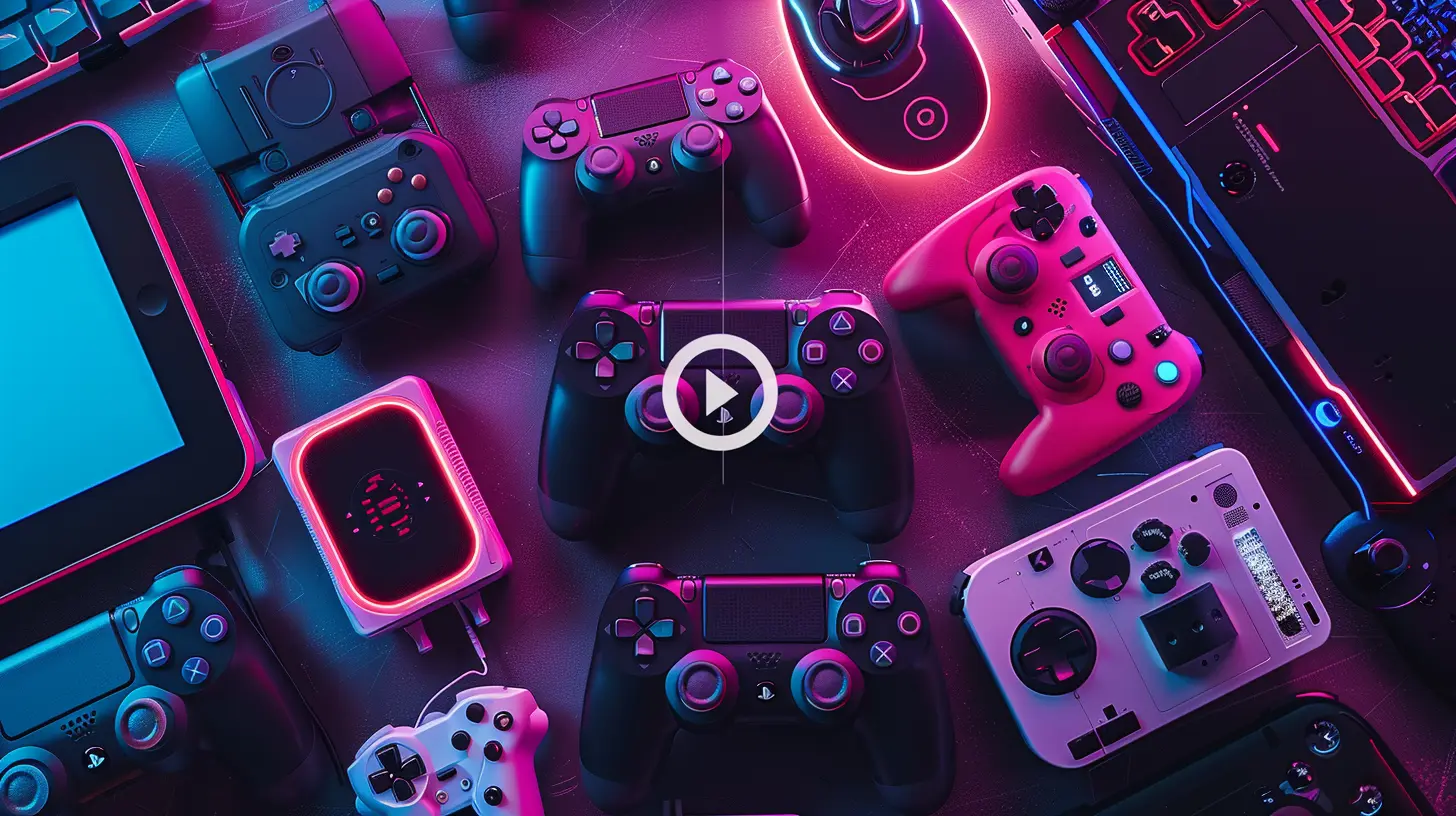
Let’s be real — gaming has always been at the cutting edge of technology. From 8-bit graphics to stunning open worlds, we’ve seen it all. But the latest revolution? That’s AI. It’s not just a buzzword anymore — it’s transforming how games are made, played, and even how stories within them unfold.Gone are the days when enemies just followed pre-set patterns or when characters repeated the same three lines. Now, the NPCs (non-player characters) can adapt, learn, and respond to what you do. It's like you're not just playing a game — you're part of a living, breathing digital world.

Smarter NPCs: Play With (And Against) Intelligence
Who hasn’t yelled at a dumb NPC before? You know the type — the sidekick that walks into walls or the enemy that ignores you until you're standing two feet away. Well, AI is changing that.Thanks to machine learning algorithms, NPCs can now behave more naturally. They can adapt to your strategies, remember past encounters, and develop counter-tactics. It’s like playing chess with someone who gets smarter every time you make a move.
And let’s talk enemies. AI-driven opponents can now mimic human behavior so well that it’s hard to tell whether you’re playing against a bot or a real person. Creepy? Maybe. Impressive? Absolutely.

Procedural Content Generation: Infinite Worlds, Unique Experiences
If you’ve ever played games like Minecraft or No Man’s Sky, you're already familiar with the concept of procedural generation. But AI takes things a step further.Now, developers are using AI to generate levels, dungeons, and even entire universes that are unique to every player. It's like each time you fire up the game, the world is built just for you.
Think about it — no more cookie-cutter quests or identical maps. AI is giving games the ability to invent new challenges and narratives on the fly. It’s like having an endless bag of tricks that keeps pulling out surprises.
Personalization: Games That Know You
AI doesn’t just make games smarter. It makes them yours. Imagine a game that knows when you’re bored, when you’re stuck, or when you’re on a winning streak. It adjusts the difficulty, changes the music, offers you new tools — all in real time.Some games are even experimenting with AI that can read your facial expressions or voice to assess your emotional state. Feeling frustrated? The game might ease up. Crushing it? It throws in tougher challenges to keep things spicy.
It’s like having a personal game master inside your console, constantly tweaking the experience to keep you in that sweet spot of flow — not too hard, not too easy.
AI as a Creative Partner: Tools for Developers
But hey, AI isn’t just helping players. It’s becoming a powerful tool for game developers too. Game studios are using AI to automate tedious tasks like animation, bug-testing, and even coding. That frees up creative minds to focus on storytelling, design, and innovation.Some developers are even using AI to co-write storylines or design characters. Think of AI as a digital co-writer, one that can spit out hundreds of ideas in seconds. Sure, not all of them are gold, but sometimes all you need is a spark.
This collaboration speeds up the development process and lets smaller indie studios create experiences that once required massive teams and budgets. That means more games, more diversity, and more creativity for us players.
The Rise of AI-Powered Companions
Remember how we used to dream of having a true in-game buddy? One that acts like a real person, chats with you, understands context, and actually helps? Thanks to natural language processing (yep, AI again), that dream is turning into reality.AI companions can now engage in realistic conversations, learn from your dialogues, and respond in ways that feel deeply personal. We’re seeing prototypes where characters remember what you said hours ago, recall your past adventures together, and change their behavior accordingly.
In simple terms, your virtual friend might actually start acting like a friend. That’s both cool and a little mind-blowing.
AI in Game Testing and Quality Assurance
Let’s not forget behind the scenes. Game testing is one of the unsung heroes of the industry — it's tedious but crucial. Traditionally, QA testers had to play through every level, click every button, and try to break every system.Now, AI bots can play through games thousands of times faster than humans. They can test every scenario, find glitches, and even predict where players might get stuck or lose interest.
This not only speeds up development but also ensures a smoother, less buggy experience for players. So the next time your game doesn’t crash mid-boss fight, you might have AI to thank.
AI-Driven Storytelling: Interactive Narratives Like Never Before
You know those games where your choices “matter”? Well, AI is making them actually matter.Dynamic storytelling AI can track your decisions across the game, evolve the plot, and even generate new story arcs in response to how you play. We’re talking about narratives that aren’t just branching paths but blooming story ecosystems.
Imagine a detective game where every clue you miss or every suspect you interrogate changes everything — not just a line of dialogue, but who lives, dies, or betrays you. That’s where AI storytelling is headed.
And get this: some AI engines are now experimenting with auto-generated dialogues and quests that fit the player’s preferred style. It’s like the video game is writing a book with you as the main character — and the co-author.
Ethics, Challenges, and The Road Ahead
Okay, let’s pump the brakes for a sec. As exciting as this AI-powered future sounds, it does raise some important questions.How much control should AI have? Could it lead to manipulative game mechanics? Should AI companions have limits to avoid emotional manipulation? And what about data privacy — like, who owns the info AI collects about how you play or feel?
These aren’t easy questions, but they’re worth asking. As we get closer to hyper-personalized gaming, developers and players alike will need to navigate these ethical waters together.
The good news? Many studios are already having these conversations. Transparency, consent, and user control are being built into the tech from the ground up. Because a future where AI powers play should still be fun, respectful, and safe.
What's Next? The Limitless Potential
So, where are we headed next? The sky’s the limit — or rather, the code is.We could see games that write themselves in real-time based on your dreams (yes, dream journaling AI is a thing!), VR environments that talk to you like a therapist or friend, or even multiplayer games with AI-generated players that fill in for your squadmates when they’re offline.
5G, cloud computing, and next-gen consoles are further supercharging what AI can do. Faster processing means more data, better learning, and smoother gameplay. It’s like fueling a sports car with jet fuel — things are about to get wild.
Final Thoughts: A Game-Changing Combo
AI and gaming might just be the ultimate power couple. One brings brains, the other brings heart. Together? They're creating experiences that are smarter, deeper, and way more personal.Whether you’re a gamer, a developer, or just someone curious about where tech is going, this intersection is one worth watching — and playing in.
So next time you're immersed in a game that feels almost too real, remember: there's some seriously smart tech behind that magic. And trust me, we're just getting started.
all images in this post were generated using AI tools
Category:
Tech InnovationsAuthor:

Adeline Taylor
Discussion
rate this article
2 comments
Katie Anderson
Exciting and game-changing innovations ahead!
July 15, 2026 at 2:25 AM
Adeline Taylor
Absolutely! The future of gaming with AI is full of possibilities... Can't wait to see what comes next!
Easton Snyder
Exciting insights on AI's impact in gaming. Well done!
June 3, 2026 at 2:32 AM
Adeline Taylor
Thank you! I'm glad you found the insights engaging.