The Hidden Cost of Free Apps in 2026
9 September 2026
It starts with a simple download. A weather app, a note-taking tool, a mobile game that promises hours of offline fun. No credit card required. No trial period. Just a button that says "Install" and a moment later, you are in. This is the economy of free, and by 2026, it has become the default gateway to almost everything we do on our phones.
But "free" has never meant "without cost." It means the bill is simply paid somewhere else, often in ways that are difficult to see and even harder to avoid. The difference in 2026 is that the old models of monetization, namely selling ads and harvesting personal data, have matured into something far more sophisticated and far more invasive. The hidden cost of free apps is no longer just your attention or your personal information. It is your behavioral future, your device's performance, and your ability to make independent choices.
To understand this, we have to look past the surface of the app store and examine the machinery that keeps these services running. We have to ask not what the app does for us, but what we are doing for the app.
The Evolution of the Free Model
For over a decade, the standard trade was simple: you got software for free, and the developer sold access to your data to advertisers. This was the foundation of the surveillance economy. It worked because most users did not feel the immediate pain of the transaction. The data was abstract, the ads were mildly annoying, and the convenience of a free tool outweighed the vague discomfort of being tracked.By 2026, that model has collapsed under its own weight. Not because users revolted, but because the data itself became less valuable in raw form. Advertisers no longer just want to know your age and location. They want to know your mood, your indecision points, and your likely response to a stimulus before you even see it. This has pushed app developers to move away from passive data collection and toward active behavioral engineering.
The modern free app is not a product. It is a psychological instrument. The core utility, whether it is photo editing or language learning, is the bait. The real product is the behavior modification system built around it. This is the first hidden cost: your autonomy is being slowly traded for algorithmic convenience.
Consider the free navigation app that suggests a slightly longer route because a partner business pays for the detour. You are not paying with money, but you are paying with time and fuel. Consider the free fitness tracker that nudges you to share your achievements on social media, not for your benefit, but to bring new users into the funnel. Every feature that seems slightly "off" from a pure user experience standpoint is often a revenue mechanism in disguise.
The New Currency: Attention as a Subscription
We used to think of subscriptions as monthly fees. In 2026, the most successful free apps have turned attention itself into a subscription model. You are not paying with a credit card; you are paying with a constant, low-level engagement that the app monetizes in real time.The mechanics are subtle. A free reading app might offer a "premium" experience without ads for a fee, but the free tier is not just ad-supported. It is interruption-engineered. The ads are placed at moments of high cognitive load, such as right after you finish a chapter or before you start a new task. This is not accidental. It is designed to make the ads more memorable and more likely to convert, which increases ad revenue per impression.
The cost to you is not just the wasted seconds. It is the cognitive disruption. Research in attention science has consistently shown that it takes up to twenty minutes to fully regain deep focus after an interruption. If a free app interrupts you every five minutes, you are never reaching a state of deep work. Over a day, this adds up to a significant loss of productivity. You are paying for the app with your ability to concentrate on other things.
This is the hidden cost that most users miss because it is not itemized. You do not see a receipt that says "Lost Focus: 45 minutes." You just feel vaguely tired and unable to concentrate after using your phone. The free app is not stealing your money. It is stealing your flow state.
Data Collection Beyond the Screen
The most alarming development by 2026 is the expansion of data collection beyond the boundaries of the app itself. Free apps are no longer content with knowing what you do inside their interface. They want to know what you do around their interface.This is achieved through a combination of device permissions, background processing, and cross-app tracking frameworks. A free flashlight app should not need access to your location. A free calculator app should not need access to your microphone. Yet, many still request these permissions under the guise of "improving user experience." In practice, they are building a secondary profile of you based on your physical movements and ambient environment.
For example, a free weather app might use your location data not just to give you a forecast, but to infer whether you are at work, at home, or in a shopping district. It then sells this contextual inference to advertisers who want to target you with time-sensitive offers. The app is free, but you are paying with a detailed map of your daily life.
The danger here is not just privacy in the abstract sense. It is the potential for manipulation based on physical context. If an app knows you are in a low moment, such as late at night or in a stressful location, it can serve you ads for products that promise relief. This is the intersection of data collection and behavioral psychology, and it operates entirely without your conscious consent.
The Storage and Performance Tax
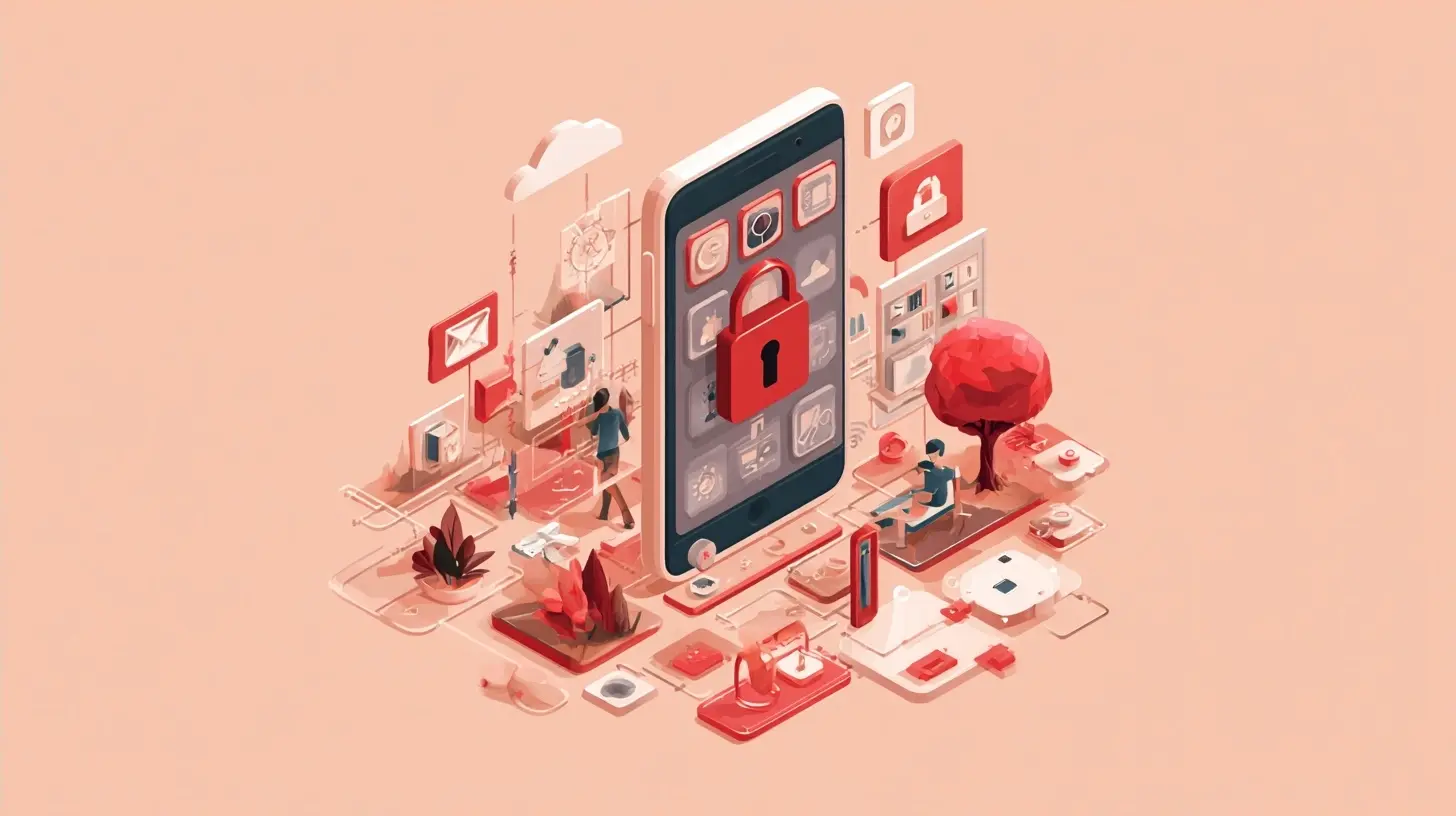
There is a more tangible cost that users feel every day but rarely attribute to the apps themselves: the degradation of device performance. Free apps are notoriously resource-hungry. Because they rely on ad networks and analytics frameworks, they need to constantly communicate with remote servers. This drains battery, consumes data, and fills your phone's storage with cache files.By 2026, the average free app is significantly heavier than its paid counterpart. The paid version of a note-taking app might be 20 megabytes. The free version, with all its tracking libraries and ad components, might be 150 megabytes. Over time, the cache grows. The phone slows down. The storage fills up. Users blame the hardware, but the real culprit is the software bloat.
This is a regressive tax. People who cannot afford to pay for apps are the ones who suffer the most from the performance hit. They are forced to buy new phones more often because their current devices become unusable, not because the hardware failed, but because the free software they rely on is so inefficient. The free app economy is literally shortening the lifespan of lower-end devices.
Consider a family that uses free video calling apps to stay in touch. The app is excellent in terms of functionality, but it runs background processes that constantly check for ads, update tracking identifiers, and upload usage statistics. On a budget phone, this can cause overheating and rapid battery drain. The user replaces the battery or the phone, an expense that is never attributed to the "free" app.
The Dark Pattern of the "Upgrade"
One of the most common misconceptions in 2026 is that you can simply pay to escape the hidden costs. Many free apps offer a premium tier that promises no ads and better privacy. But the design of these upgrades is often a dark pattern in itself.The free version is deliberately crippled, not just in terms of features, but in terms of usability. Buttons are placed to be accidentally clicked. Confusing pop-ups appear to pressure you into subscribing. The "X" button to close an ad is intentionally tiny or misaligned. This is not poor design. It is hostile design.
The cost here is not just frustration. It is the slow erosion of trust in software interfaces. When every free app is trying to trick you into a subscription, you become cynical about all software. You start to hesitate before downloading anything, even from reputable developers. This friction has a real economic cost because it slows down the adoption of genuinely useful tools.
The best practice in this area is to be extremely selective about which free apps you allow on your device. A good rule of thumb is to ask: does the developer have a credible business model that does not rely on selling my attention or behavior? If the app is from a large company that also sells hardware or enterprise software, the free version might be a loss leader designed to build brand loyalty. If the app is from a small startup with no clear revenue source, you are likely the product.
The Social Cost: The Gamification of Everything
By 2026, gamification has moved beyond fitness apps and language learning. It is now embedded in tools where it has no business being, such as expense trackers, calendar apps, and even email clients. The free version of these apps uses gamified elements to keep you engaged, not because engagement improves your life, but because engaged users generate more data and see more ads.The hidden cost here is the trivialization of your goals. When your budgeting app gives you "badges" for saving money, it turns a serious financial discipline into a game. This can be motivating for some, but for others, it creates a false sense of accomplishment. You feel good about the badge, but you have not actually changed your spending habits. The app is providing the dopamine hit that comes from progress, without requiring the actual progress.
This is a psychological trick known as "progress theater." It makes you feel productive while you are being productive for the app. The cost is that you become dependent on external validation for tasks that should be internally motivated. Over time, this can reduce your intrinsic motivation to do things well. You start to optimize for the app's rewards rather than for your own real-world outcomes.
What You Can Actually Do About It
The situation is not hopeless, but it requires a shift in mindset. The first step is to accept that nothing is truly free. Everything has a cost, and your job is to decide what you are willing to pay.One practical strategy is to treat free apps like a trial period. Download them with the intention of evaluating their true cost over a week. Notice how often you are interrupted. Check your battery usage in the system settings. Look at how much storage the app is using after seven days. If the app is consuming more than 10 percent of your battery or taking up more than 100 megabytes of storage for no apparent reason, delete it. The convenience is not worth the tax.
Another approach is to use the browser-based version of a service whenever possible. Many free apps are nothing more than wrappers around a website. The website does not have access to your microphone, your location, or your contact list. By using the mobile web instead of the app, you cut off the majority of the data collection vectors. This is not always possible, but it is a viable option for many services like social media, news, and even some productivity tools.
You should also regularly audit your permissions. Go into your phone's settings and look at which apps have access to your microphone, camera, location, and motion sensors. Revoke anything that seems unnecessary. The app will still work, but it will be blind. This does not stop all tracking, but it significantly reduces the depth of the data profile that can be built about you.
The Role of Regulation and App Stores
In 2026, regulators have begun to catch up, but the pace is slow. New privacy laws in various regions have forced apps to show more transparent consent screens. However, these screens are often designed to be confusing. The default option usually favors the app, not the user.App stores have also introduced "nutrition labels" that show what data is collected. But these labels are self-reported by the developers, and they are often vague or misleading. An app might say it collects "usage data" without specifying that this data is sold to third-party brokers.
The real change needs to come from the business model. As long as free apps rely on advertising and data monetization, they will always have an incentive to extract as much value from you as possible. The only structural solution is to support alternative funding models, such as open-source software, one-time purchases, or community-supported subscriptions.
This does not mean you have to pay for everything. It means you should be willing to pay for the tools that are essential to your life. If you rely on a note-taking app every day, paying five dollars a year to remove the tracking is a bargain. The hidden cost of the free version is likely far higher than five dollars in terms of lost focus and data leakage.
A Final Word on Digital Minimalism
The most effective defense against the hidden costs of free apps is not a specific tool or a setting. It is a philosophy of digital minimalism. This means being intentional about the software you allow into your life. It means asking not "Is this app useful?" but "Is this app useful enough to justify the cost it is extracting from me?"In 2026, the average smartphone user has over eighty apps installed, but only uses about nine on a daily basis. The other seventy are likely draining battery, collecting data, and slowing down the device. The act of deleting unused apps is not just about decluttering. It is about reclaiming your resources.
The free app economy has given us incredible access to technology that would have been unaffordable just a generation ago. But it has also created a system where the most vulnerable users are exploited the most. By understanding the hidden costs, you can make better decisions. You can choose to pay with money when the value is worth it. You can choose to refuse the transaction entirely when it is not.
The next time you are about to download a free app, pause for a moment. Look at the developer's website. Look at their privacy policy. Search for news about their data practices. If you cannot find clear answers, that is an answer in itself. The app might be free to install, but the true cost is paid in ways that are not printed on the download page. You just have to decide if you are willing to foot the bill.
all images in this post were generated using AI tools
Category:
Digital PrivacyAuthor:

Adeline Taylor