The Digital Privacy Battle Between Governments and Tech Giants
16 August 2026
The relationship between governments and large technology companies has shifted from cautious cooperation to open confrontation. What started as a debate about law enforcement access to data has grown into a global struggle over encryption, surveillance, data localization, and the very architecture of the internet. This is not a simple story of good versus evil. Both sides operate from legitimate but conflicting positions, and the outcome will shape how every person on the planet communicates, transacts, and thinks for decades.
To understand this battle, you have to look past the headlines about court orders and angry congressional hearings. The real conflict is about control over information infrastructure. Governments want visibility into digital communications to enforce laws, protect national security, and collect taxes. Tech companies want to protect user trust, avoid legal liability, and maintain the free flow of data that powers their business models. These goals are not inherently incompatible, but the technical and legal mechanisms used to achieve them have created a zero-sum dynamic.
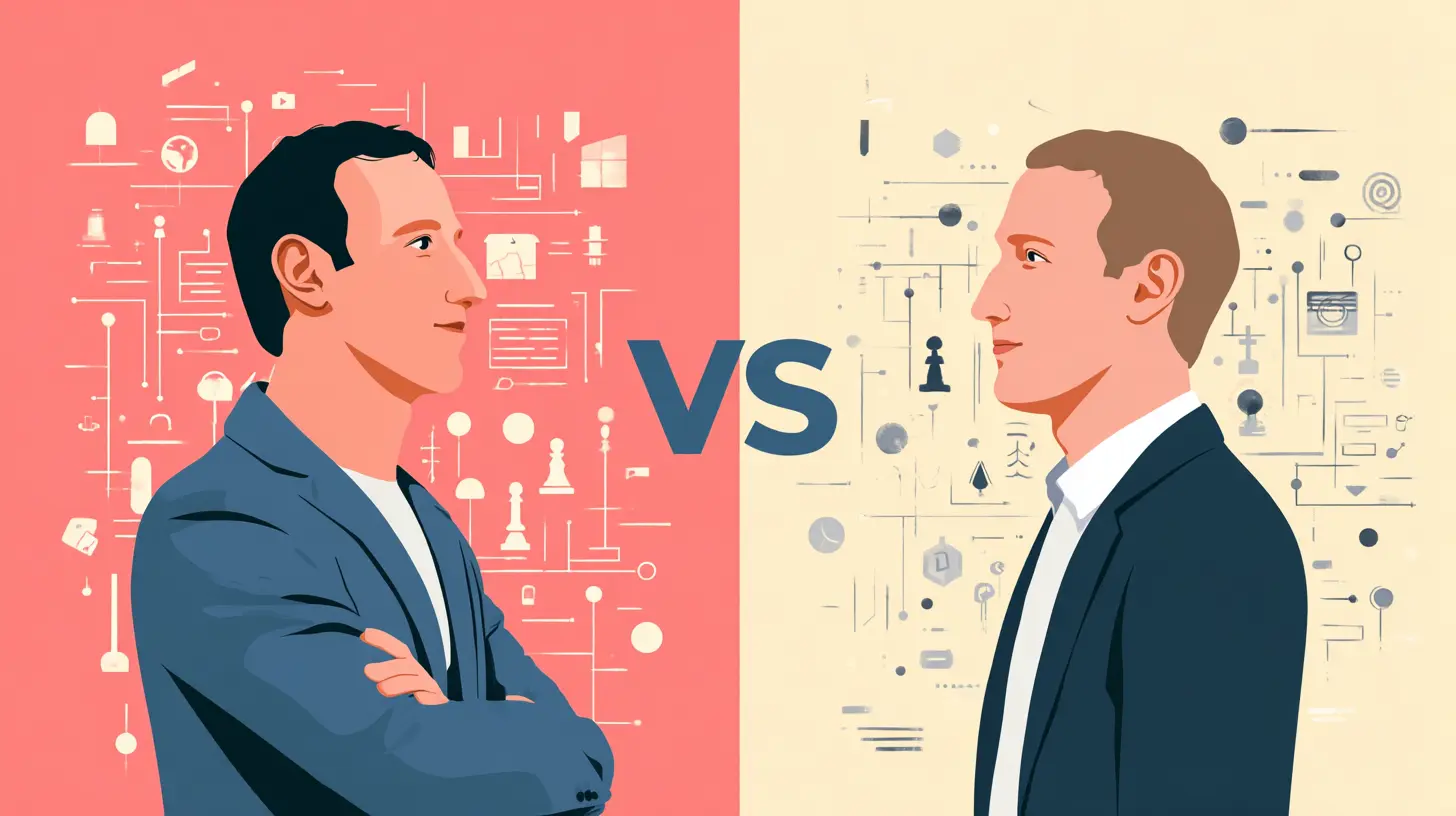
The Core Conflict: Encryption vs. Lawful Access
The most visible front in this war is encryption. End-to-end encryption means that only the sender and recipient can read a message. The service provider holds the encrypted data but cannot decrypt it. This is a massive problem for law enforcement agencies that have built their investigative methods around wiretaps and data requests.The FBI and similar agencies across the world argue that strong encryption creates "warrant-proof" spaces where criminals, terrorists, and child predators can operate without fear of detection. They have pushed for backdoors, or exceptional access mechanisms, that would allow law enforcement to decrypt communications with a valid court order. Tech companies, led by Apple and Signal, have refused, arguing that any backdoor is a vulnerability that will eventually be exploited by hostile actors.
This is not a theoretical concern. In 2016, the FBI demanded that Apple create a special version of iOS that would bypass the passcode lock on an iPhone used by a terrorist in San Bernardino. Apple refused, citing the risk that such a tool would leak and undermine the security of every iPhone user. The FBI eventually found another way in, but the precedent was set. Since then, governments in the UK, Australia, and India have passed or proposed laws that compel tech companies to provide access to encrypted communications, often without specifying how that should be done technically.
The technical reality is that a backdoor for "good guys only" does not exist. If you create a master key, someone will steal it. If you build a flaw into the encryption algorithm, someone will find it. The debate is often framed as privacy versus security, but it is more accurately a trade-off between the security of millions of ordinary users and the investigative convenience of law enforcement. The tech companies have a strong point, but they also have a credibility problem. They collect massive amounts of user data for advertising purposes and hand it over to governments all the time when it is not encrypted. So when they claim to be champions of privacy, it rings hollow to many policymakers.

Data Localization and National Sovereignty
Another major battleground is where data lives. The European Union's General Data Protection Regulation (GDPR) was the first major attempt to give individuals control over their personal data. It requires companies to get explicit consent before collecting data, to allow users to access and delete their data, and to transfer data across borders only under strict conditions. This has created a compliance headache for global tech firms, but it has also set a global standard that other countries are copying.Beyond the EU, countries like Russia, China, India, and Brazil have pushed for data localization. This means that data about their citizens must be stored on servers within their borders. The stated reasons are national security, law enforcement access, and economic development. The unstated reasons are often political control and the desire to protect domestic tech industries.
For tech giants, data localization is a nightmare. It breaks the economies of scale that make cloud computing affordable. It forces them to build expensive data centers in every jurisdiction. It complicates their ability to provide seamless global services. And it often leads to conflicting legal requirements. For example, a company might be required by the US government to hand over data stored on a server in Ireland, while the EU says that data cannot leave the EU without proper authorization. The company is caught between two legal systems, and no matter what it does, it violates one of them.
The practical advice for companies operating internationally is to treat data localization as a business risk, not just a legal issue. You need to map where your data flows, understand the legal regimes in every jurisdiction where you operate, and build systems that can adapt to changing rules. This is expensive and complex, but it is the cost of doing business in a fragmented digital world.

The Role of the Cloud and Third-Party Infrastructure
A lot of the public debate focuses on consumer apps like WhatsApp and iMessage, but the real action is in the cloud. Most government agencies, banks, hospitals, and even tech companies themselves rely on cloud infrastructure provided by a handful of firms: Amazon Web Services, Microsoft Azure, and Google Cloud. These providers hold the keys to vast amounts of sensitive data, and they are subject to government pressure in ways that consumer apps are not.When a government wants data from a cloud provider, it does not need a backdoor. It can simply serve a legal order on the provider. The provider must comply or fight in court. This has led to a strange situation where the most sensitive data in the world is stored on infrastructure that is legally accessible to the US government, even if the data belongs to a European company or a foreign government.
This is why many countries are trying to build their own cloud infrastructure or at least ensure that their data is stored on servers operated by domestic companies. The EU has been pushing for a "European cloud" for years, with mixed results. The problem is that building a competitive cloud provider requires enormous capital investment and technical expertise. Most countries simply do not have the resources to compete with Amazon or Microsoft.
For organizations that care about data sovereignty, the practical approach is not to try to build your own cloud, but to carefully negotiate the terms of your cloud contract. You should know exactly where your data is stored, what legal jurisdiction applies, and what happens if a government demands access. You should also consider using encryption and key management tools that ensure only you can decrypt your data, even if the cloud provider is forced to hand over the encrypted files.

The Surveillance Economy and Government Complicity
It is easy to paint tech companies as the victims in this battle, but that is only half the story. Many of the largest tech companies have built their fortunes on surveillance. They track users across the internet, build detailed profiles of their interests, behaviors, and relationships, and sell that information to advertisers. Governments have taken advantage of this by simply buying data from data brokers instead of going through the legal process of obtaining a warrant.This is a massive loophole. Law enforcement agencies can purchase location data, browsing history, and even messaging metadata from commercial data brokers without any judicial oversight. The Supreme Court has ruled that the government needs a warrant to access cell phone location data directly, but if the government buys the same data from a third party, the Fourth Amendment does not apply. This has created a shadow surveillance system that operates outside the legal framework.
Tech companies are complicit in this because they sell data to brokers who then sell it to the government. They also run advertising networks that collect data on users who never visit their websites. The result is that the "privacy battle" is often a distraction. While governments and tech giants argue about encryption, the actual surveillance is happening through the back door of the data economy.
For individuals, the practical takeaway is that you cannot rely on tech companies to protect your privacy. You need to take active steps to reduce your digital footprint. Use a VPN, use privacy-focused browsers like Firefox with strict tracking protection, and avoid using services that are funded by advertising. This is not about being paranoid. It is about recognizing that the business model of the internet is based on data collection, and the government is a major customer of that data.
The Legal Framework is Outdated
The laws that govern digital privacy were written in the 1970s and 1980s, long before the internet became a global communication platform. The Electronic Communications Privacy Act (ECPA) in the US, for example, was passed in 1986. It does not adequately address cloud computing, social media, or encryption. The result is that courts are forced to apply outdated laws to new technologies, leading to inconsistent and unpredictable outcomes.The EU has been more proactive with GDPR and the Digital Services Act, but these laws are also struggling to keep up. They focus on data protection and content moderation, but they do not address the fundamental question of government access to data. The proposed ePrivacy Regulation, which would update the rules on electronic communications, has been stuck in negotiations for years.
The lack of clear legal rules creates uncertainty for both governments and tech companies. Governments often overreach because they are unsure of their authority. Tech companies often resist legitimate requests because they are afraid of setting a precedent. The result is a constant cycle of litigation, with cases bouncing between courts for years.
A better approach would be for governments to pass clear, specific laws that define exactly when and how they can access digital data. These laws should require a warrant for content, but allow easier access to metadata. They should require transparency, so that users are notified when their data is accessed. And they should require tech companies to publish transparency reports, so that the public can see how often governments request data and how often they comply.
The International Dimension and the Race to Regulate
This is not just a domestic issue. The US, EU, China, and Russia are all trying to export their digital privacy models to the rest of the world. The US model is based on free markets and minimal regulation, with a focus on national security. The EU model is based on human rights and strong data protection. The Chinese model is based on state control and surveillance. The Russian model is similar to China, but less sophisticated.Developing countries are caught in the middle. They want to attract investment from US tech giants, but they also want to protect their citizens from surveillance and data exploitation. They are increasingly adopting GDPR-style laws, but they lack the enforcement capacity to make them effective. They are also concerned about the dominance of US tech companies and are looking for ways to support domestic alternatives.
The result is a fragmented global internet. Data flows freely between some countries but is heavily restricted in others. This fragmentation is bad for everyone. It raises costs for businesses, limits access to information for individuals, and makes it harder for law enforcement to cooperate across borders. But it is also a natural response to the concentration of power in a few US tech companies.
For multinational companies, the only viable strategy is to build a compliance framework that can adapt to different legal regimes. This means having a data protection officer, conducting regular privacy impact assessments, and using contractual clauses that protect data transfers. It also means being prepared to make difficult choices about which markets to enter. Some companies, like Apple, have chosen to comply with Chinese data localization requirements, while others, like Google, have chosen to exit the Chinese market. There is no right answer. It depends on your business model, your risk tolerance, and your values.
The Future: What Comes Next
The battle between governments and tech giants is not going to end with a decisive victory for either side. It is more likely to result in a messy, ongoing negotiation that shifts with each new technology and each new political crisis. But there are some trends that are worth watching.First, the rise of artificial intelligence is going to make this battle much harder. AI systems can analyze vast amounts of data and identify patterns that humans cannot. This gives governments unprecedented surveillance capabilities, but it also gives tech companies unprecedented power to shape what people see and believe. The question of who controls AI is going to be the defining issue of the next decade.
Second, the decline of the cookie and the rise of privacy-preserving technologies like differential privacy and federated learning could reduce the amount of personal data that is collected in the first place. This would take the wind out of the surveillance economy and make the government's data-buying loophole less useful. But these technologies are still in their infancy, and they can be implemented in ways that are either privacy-preserving or privacy-invasive.
Third, the legal landscape is going to continue to evolve. The EU is working on the AI Act, which would regulate high-risk AI applications. The US is considering a federal privacy law, although it is unlikely to pass anytime soon. China has already implemented its Personal Information Protection Law, which is similar to GDPR but with more state control. These laws will create new obligations for tech companies and new tools for governments.
For individuals, the most important thing is to stay informed and to make conscious choices about the services you use. Do not assume that your data is safe just because a company says it cares about privacy. Look at their business model. If they are free, you are the product. If they are funded by advertising, your data is being sold. If they are funded by subscriptions, they have a stronger incentive to protect your data, but they are not immune to government pressure.
Practical Recommendations for Different Stakeholders
For tech companies, the best strategy is to be transparent and proactive. Do not wait for a court order to tell users about government requests. Publish transparency reports. Fight unreasonable demands in court. Build end-to-end encryption into your products by default. And do not collect data that you do not need. The less data you have, the less you have to lose.For government agencies, the best strategy is to be honest about what you need and why. Do not ask for backdoors that cannot be built safely. Instead, work with tech companies to develop lawful access mechanisms that are technically feasible and legally sound. This might include requiring tech companies to provide metadata, or to decrypt data that is stored on their servers but not data that is end-to-end encrypted. It also means being willing to accept that some data will be inaccessible, and that this is the price of living in a free society.
For individuals, the best strategy is to be skeptical and to take control of your own security. Use a password manager, enable two-factor authentication, and be careful about what you post online. Do not share sensitive information on platforms that you do not trust. And support organizations that advocate for digital rights, like the Electronic Frontier Foundation, even if you do not agree with everything they do.
Common Misconceptions and Mistakes
One common misconception is that encryption is only useful for criminals. In reality, encryption protects everyone. It protects your bank transactions, your medical records, your private messages, and your business communications. Without strong encryption, the internet would be a playground for hackers and identity thieves. Weakening encryption to help law enforcement would do far more harm than good.Another misconception is that tech companies are all the same. Some companies, like Apple and Signal, have a genuine commitment to privacy. Others, like Facebook and Google, have a business model based on data collection. You need to evaluate each company on its own merits, not lump them all together.
A common mistake that companies make is to treat privacy as a compliance issue rather than a business strategy. If you only do the minimum required by law, you will always be behind. If you make privacy a core part of your product, you can differentiate yourself from your competitors and build trust with your customers. This is not just about avoiding fines. It is about building a sustainable business in a world where people are increasingly aware of how their data is used.
Conclusion
The digital privacy battle between governments and tech giants is not a simple story with a clear hero and villain. It is a complex, ongoing negotiation about the balance of power in the digital age. Governments have legitimate needs for law enforcement and national security. Tech companies have legitimate needs for innovation and user trust. The challenge is to find a way to meet both sets of needs without sacrificing the fundamental rights of individuals.The current situation is unsustainable. The legal framework is outdated, the technical solutions are imperfect, and the public is losing trust in both institutions. The only way forward is through honest dialogue, clear laws, and technical innovation that respects human rights. This will not be easy, and it will not happen quickly. But it is the only path that leads to a future where the internet remains open, secure, and free.
all images in this post were generated using AI tools
Category:
Digital PrivacyAuthor:

Adeline Taylor