How Machine Learning Will Evolve Video Editing
14 August 2026
For decades, video editing has been a battle against time and tedium. The core workflow has remained surprisingly static since the digital revolution: you import clips, you cut them down, you arrange them on a timeline, you adjust audio, and you render. The tools got faster, the resolution got higher, but the fundamental act of editing was still a manual, frame-by-frame slog. Machine learning is about to change that in ways that go far beyond a few automated filters.
We are not just talking about a smarter "auto-cut" feature. We are talking about a fundamental shift in the relationship between the editor and the software. The editor will move from being a direct manipulator of footage to being a director of an intelligent system that understands intent, context, and narrative. This article will break down exactly how that evolution will happen, what it means for your workflow, and where the pitfalls lie.
The Shift from Tools to Agents
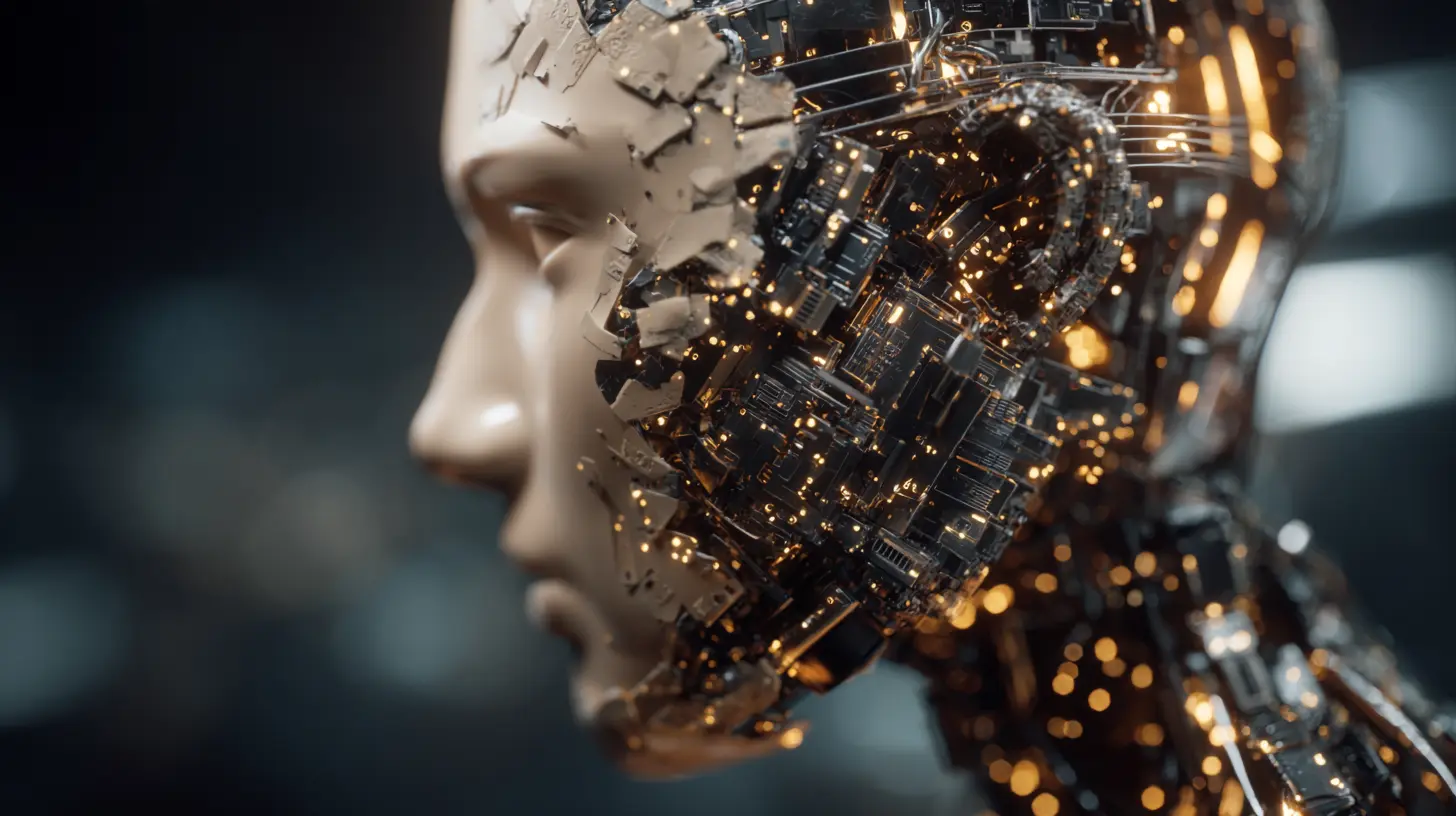
The most significant conceptual change is the move from software as a tool to software as an agent. A tool requires you to know exactly what you want. A hammer does not build a house; it drives a nail. Current editing software is a collection of hammers. You have a razor tool, a trim tool, a color wheel. You are the carpenter.Machine learning introduces the agent. An agent is a system that can perceive its environment (your footage), reason about a goal (the story you want to tell), and take actions to achieve it. This does not mean the software will edit the film for you. It means the software will understand the context of your actions.
Consider the mundane task of a J-cut or an L-cut, where the audio from one clip continues under the video of the next. Currently, you do this by manually splitting the audio and video tracks. A machine learning model that has been trained on thousands of professionally edited sequences will recognize the rhythm of your conversation. It can predict when you are likely to want an overlap based on the pacing of the dialogue and the pause patterns of the speakers. It will not do it without your say-so, but it will offer the edit before you ask for it. That is the evolution. The software becomes proactive, not reactive.
Automating the Brutal Grind: Transcription and Search
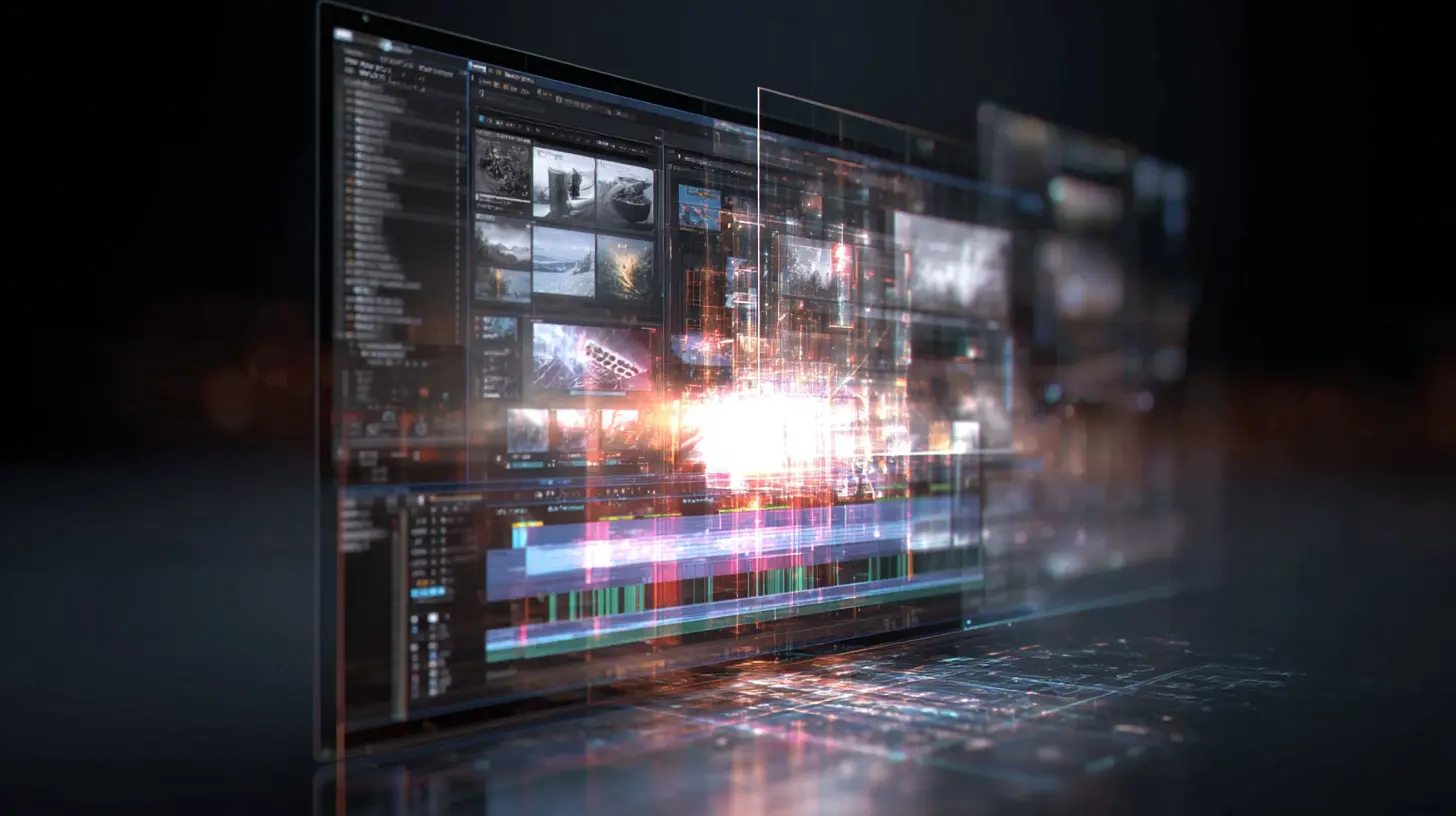
The first major wave of ML integration, which we are already seeing, is in the realm of transcription and search. This is the low-hanging fruit, but it is far more powerful than most people realize.Currently, you might have an hour-long interview. To find a specific quote, you scrub through the timeline, watching the waveforms or the video, hoping to spot the moment. With ML, the audio is transcribed in real time. This is not just a simple speech-to-text conversion. The model is trained on context. It understands that "their" and "there" are different, even if they sound the same. It can distinguish between different speakers, attribute quotes correctly, and even identify emotional tone.
The evolution here is not just about search. It is about semantic search. You will be able to type "the moment where she talks about the failed launch" and the system will find that exact clip. It will not just match keywords like "failed" and "launch." It will understand that the speaker is discussing a specific event, even if they use words like "the disaster" or "the setback."
This changes the ingestion phase of editing. You no longer have to watch everything first. You can let the machine index the footage, then you can start your edit by asking questions of your own footage. For a documentary editor, this is not a convenience; it is a superpower. It turns a three-day logging process into a three-hour one.
The Intelligence of the Timeline
The timeline is the editor's canvas. It is also where ML will have its most profound and subtle impact. The current timeline is a dumb container. It holds clips, but it has no understanding of the content within those clips.The next generation of editing software will have a "contextual timeline." Imagine a timeline that understands the spatial relationship between objects in your shots. If you have a shot of a person looking to the right, followed by a shot of a landscape, the software can suggest a match cut based on the direction of the gaze. It can analyze the motion vectors in a clip and suggest a cut point where the motion in the outgoing shot matches the motion in the incoming shot. This is a known technique called "match on action," but it is currently done by eye. ML can do it with mathematical precision.
More importantly, the timeline will understand the "energy" of a sequence. A model trained on action movie trailers will understand what "pacing" means. It can analyze the average shot length, the intensity of the audio, and the brightness of the frames. If your edit is dragging, the software can suggest trimming a few frames here and there to increase the tempo. It is not telling you the story is wrong; it is telling you the rhythm is off, based on a statistical analysis of what works in similar genres.
This leads to a crucial distinction: ML is excellent at understanding syntax but terrible at understanding semantics on a high level. It knows the rules of pacing, but it does not know why your story is about loss. The editor must still provide the narrative soul. The machine provides the structural intelligence to make sure that soul is communicated effectively.
Color and Sound: From Manual to Intentional
Color grading is a highly technical and subjective art. Currently, you spend hours using scopes and wheels to achieve a specific look. ML is changing this in two ways.First, it automates the technical baseline. The software can analyze a shot and automatically balance the white balance and exposure to a neutral standard. It can do this in a fraction of a second, and it is often more accurate than the human eye, which is easily fooled by the surrounding environment. This gives you a perfect starting point, saving you an hour of technical cleanup before you can start the creative work.
Second, ML enables "reference-based" grading. You can feed the system a still image from a film like "Blade Runner 2049" and say, "Make my footage look like this." The model will analyze the color palettes, the luminance ranges, and the contrast ratios of the reference image and apply them to your footage. This is not a simple LUT (Look-Up Table) overlay. The model will intelligently map the tonal ranges of your footage to match the reference, preserving skin tones and avoiding the muddy artifacts that come from a lazy LUT.
The trade-off here is one of control. A LUT is a fixed transformation. ML-based grading is dynamic. It might make decisions about which shadows to crush or which highlights to protect that you would not have made. The best practice is to use ML to get you 80% of the way to the look you want, and then manually adjust the final 20% to ensure it fits your specific narrative context.
Audio is undergoing a similar revolution. The ability to isolate dialogue from background noise (source separation) has improved dramatically. You can now clean up a noisy clip with a single click, removing the hum of an air conditioner without affecting the voice. This is not just a noise gate; it is a neural network that has learned to distinguish between human voice frequencies and the harmonic patterns of a machine hum.
The evolution will move toward "intelligent mixing." The software will listen to your dialogue, music, and sound effects, and suggest levels based on a standard mix. It will understand that dialogue should be prominent, music should be under it, and sound effects should be clear but not overpowering. This will not replace the sound designer, but it will make the basic mix sound professional before the sound designer even starts working.
The Generative Editing Problem
The most controversial and misunderstood area is generative AI. There is a lot of hype about "text-to-video" tools. The reality is that for professional editing, generative AI will not be about creating footage from scratch. It will be about extending and filling gaps.Imagine you have a shot that is 3 seconds too short. You need it to be 5 seconds to fit the narration. Currently, you would either stretch the shot (which looks bad) or cut to another shot (which might not exist). Generative ML can create "in-between" frames. It can analyze the motion of the subject and the camera in the existing frames and synthesize new frames that continue that motion seamlessly. This is called frame interpolation, and it is already getting very good.
The problem is that it is not perfect. It can create artifacts, especially with complex motion like hair blowing in the wind or water splashing. The ethical and practical mistake here is to rely on this as a primary solution. The correct approach is to use it as a last resort to salvage a shot, not as a crutch to avoid shooting more coverage.
Another generative use case is upscaling. If you have a 720p clip that needs to be part of a 4K timeline, ML can upscale it. The model will predict what the missing detail is likely to be, based on the patterns it has seen in millions of other videos. The result is a clip that looks sharper than a simple resize. However, it is a prediction of detail, not the actual detail. It can make faces look slightly waxy or textures look synthetic. For archival footage, this is a miracle. For new footage that you shot poorly, it is a band-aid.
The best practice is to treat generative AI as a "fix-it" tool for the final mile, not as a creative engine. The creative engine is still you. The moment you start relying on the machine to create content, you lose the specific perspective that makes your work unique.
The New Role of the Editor
This evolution forces us to reconsider what an editor does. The job title might not change, but the skills required will undergo a massive shift.If the machine handles the technical execution, the editor's value shifts to curation and intent. The editor becomes the person who defines the problem for the machine. You are no longer spending 4 hours cutting a scene. You are spending 1 hour setting up the parameters, 30 minutes letting the machine process, and 2.5 hours reviewing the suggestions and making high-level decisions.
This requires a different skill set. You need to be more articulate about your creative vision. You need to be able to say, "The scene should feel tense," and then know how to translate that into the parameters the software understands. You need to understand the limitations of the models more deeply than the software developers do, because you are the one who has to deal with the output.
There is a common misconception that ML will make editing easier. It will make it faster, but it will not make it easier. In fact, it might make it more mentally demanding. You will be making more decisions per minute because you are not wasting time on manual tasks. The bottleneck will shift from your hands to your brain. Editors who thrive in this new environment will be those who can think strategically and conceptually, not just those who are fast with a mouse.
Practical Workflows and Considerations
So, how do you prepare for this? It is not about waiting for the perfect tool. It is about changing your workflow now.First, start using transcription tools in your current software. Even if they are not perfect, they will force you to think about your footage in terms of searchable text. This habit will pay off as the technology improves.
Second, learn the concept of "metadata." The more information you attach to your clips, the better the ML system can work. Tag your shots with descriptive keywords. The models cannot read your mind, but they can read your tags. This is a collaborative process.
Third, do not trust the machine blindly. Always review the output of any ML tool. The model is a highly educated intern, not a senior editor. It will often be wrong in subtle ways that you can only catch if you are paying close attention.
Fourth, consider the hardware implications. ML processing is compute-intensive. The rendering times might go down, but the analysis times will go up. You will need a powerful GPU, not just for rendering, but for the neural network inference. This is a cost that many freelance editors do not consider.
The Misconception of the "One-Click" Edit
The biggest hype is the "one-click" edit, where you upload your footage and the software gives you a finished film. This is a fantasy for professional work. It might work for a wedding video or a vlog, where the goal is to summarize events. But for narrative storytelling, advertising, or documentary, it is a disaster.The reason is that a "good" edit is not about a sequence of well-composed shots. It is about juxtaposition. It is about the meaning that is created when you put shot A next to shot B. This is a semantic, emotional, and intellectual act. The machine can analyze the visual and auditory data of the shots, but it cannot understand the relationship between them. It does not know that a shot of a child laughing is more powerful when placed after a shot of a war-torn street, because the contrast creates the meaning.
The one-click edit will produce a technically competent but narratively hollow piece. It will have good pacing, clean cuts, and proper color, but it will lack a soul. The editors who will survive the AI revolution are not the ones who can click the fastest, but the ones who can articulate why a specific juxtaposition is powerful.
The Future of Collaboration
Finally, ML will change the collaboration process between editors, directors, and clients.Currently, a client might say, "I don't like this scene." That is a vague instruction. In the future, the editor can use ML to generate multiple variations of the scene instantly. They can change the pacing, the music, or the color grade to see which one the client responds to. This is not about automating the creative process; it is about facilitating communication.
The editor becomes a conductor of possibilities. They can present the client with a menu of different emotional tones for the same sequence. The client can then say, "I like the pacing of version 2, but the color of version 1." The editor can then use ML to merge those two attributes into a new version in minutes. This creates a more iterative and collaborative environment, but it also risks creating decision paralysis. The editor's role will include managing this process and guiding the client toward a final decision, rather than just offering endless options.
The evolution is not about replacing the editor. It is about removing the barriers between the editor's vision and the final product. The drudgery will disappear. The technical skill will become less important. The creative and conceptual intelligence will become the only thing that matters. This is a scary prospect for those who rely on their speed, but it is an incredible opportunity for those who have a story to tell. The machine will give you the power to tell it with more precision and less friction than ever before. The question is whether you are ready to stop being a technician and start being a true author.
all images in this post were generated using AI tools
Category:
Tech For CreatorsAuthor:
Adeline Taylor
Discussion
rate this article
1 comments
Greta Duffy
This article presents a fascinating look at how machine learning will reshape video editing. The potential for AI to streamline workflows and enhance creativity is exciting. I'm particularly interested in how these advancements will impact accessibility for amateur editors. Great insights, looking forward to seeing these developments unfold!
August 22, 2026 at 4:12 AM
Adeline Taylor
Thanks for your thoughts! I'm glad you found the insights useful. The impact on accessibility for amateur editors is definitely an exciting aspect to watch. Stay tuned for more updates!