How Deep Learning Will Revolutionize Content Creation
6 August 2026
For the past decade, we have been promised that artificial intelligence would change the way we work. For most of that time, the reality lagged far behind the hype. We got spam filters that got slightly better, recommendation algorithms that kept us scrolling, and voice assistants that still struggle with basic accents. Then something shifted. Deep learning models stopped being parlor tricks and started becoming actual creative partners. Not just tools that autocomplete a sentence, but systems that can draft a script, compose a score, generate photorealistic images, and edit video with a level of nuance that rivals a junior professional.
The shift is not incremental. It is structural. Content creation has always been a pipeline: ideation, drafting, editing, production, distribution. Deep learning is now touching every single stage of that pipeline, and the implications are both exhilarating and uncomfortable. This article is not a list of futuristic predictions. It is a practical examination of what is already happening, what is about to happen, and what you should actually do about it.
The Core Shift: From Tools to Collaborators
The first wave of digital content tools were amplifiers. A word processor did not write your essay; it just made typing easier. Photoshop did not design your poster; it made pixel manipulation faster. These tools were dumb. They did exactly what you told them, no more, no less.Deep learning changes that fundamental relationship. Modern models do not just execute commands. They generate. They suggest. They complete. They make decisions about tone, structure, and style based on patterns drawn from millions of examples. This is the difference between a hammer and an apprentice. A hammer never tells you that your nail is bent. An apprentice will point it out, and if you are lucky, they will also tell you a better way to drive the nail.
This is why the term "AI writer" or "AI artist" is misleading. It implies a replacement for human creativity, which misses the point. The real revolution is in the interaction layer. You are no longer staring at a blank page. You are staring at a page that already has a rough draft, a set of variations, a structural outline, or even a full video storyboard. Your job shifts from generating raw material to curating, guiding, and refining.
The most successful content creators in the next five years will not be the ones who resist these tools. They will be the ones who develop a taste for what good output looks like and learn to steer the model toward it. Taste becomes the bottleneck. Technical skill becomes secondary.
Why Traditional Content Pipelines Are Breaking
Consider the typical content marketing workflow at a mid-sized company. A strategist writes a brief. A writer produces a draft. An editor revises it. A designer creates visuals. A video editor cuts a promo. A social media manager repurposes the text into threads and posts. That workflow takes days, sometimes weeks, and costs thousands of dollars in human hours.Deep learning collapses that timeline. A single model can now take a brief and produce a first draft in seconds. Another model can generate matching images. A third can turn the text into a voiceover. A fourth can assemble a video with transitions, captions, and background music. The bottleneck is no longer production speed. It is strategic direction and quality control.
This is not a hypothetical scenario. It is happening right now in newsrooms, marketing agencies, and independent creator studios. The ones who are thriving are not using these tools to produce more garbage faster. They are using them to explore more variations, test more angles, and iterate on ideas that would have been too expensive to prototype before.
The mistake most organizations make is treating deep learning as a replacement for a single step in the pipeline. They ask, "Can AI write our blog posts?" and get mediocre results. The better question is, "Can AI help us produce a week's worth of content across multiple formats from a single strategic brief?" The answer to that question is a resounding yes, and it changes the economics of content entirely.
From Generation to Curation: The New Role of the Creator
Let us be clear about what deep learning does well and what it does poorly. It is excellent at pattern recognition and recombination. It can write a competent email, a serviceable product description, a plausible news summary, or a catchy hook. It can generate an image that looks like a photograph of a person who does not exist. It can compose a melody that sounds like a particular genre.But it does not have intent. It does not have a point of view. It does not know what is true, what is important, or what is original. It knows what is statistically likely given the prompt. This is the single most important thing to understand.
That means the value of the human creator shifts from execution to judgment. You become a curator of possibilities. You provide the context, the constraints, and the ethical boundaries. You decide which of the ten generated headlines actually aligns with your brand voice. You choose which of the five video thumbnails will not mislead your audience. You catch the subtle factual error that the model inserted with complete confidence.
This is harder than it sounds. It requires a deep understanding of your subject matter, your audience, and your own creative intent. A person who does not know anything about a topic cannot effectively evaluate an AI-generated article on that topic. They will be fooled by the confident tone and the polished prose. This is why domain expertise becomes more valuable, not less, in the age of deep learning.
Content Personalization at Scale
One of the most profound changes is in personalization. Traditional content is created for an average audience. A blog post is written once and read by thousands. A video is shot once and watched by millions. The assumption is that one message fits all.Deep learning destroys that assumption. It is now possible to generate multiple versions of the same content, each tailored to a specific segment, or even to an individual. The same product description can be rewritten for a technical buyer, a budget-conscious consumer, and a sustainability-focused shopper. The same educational video can have different pacing, different examples, and different levels of detail depending on the viewer's prior knowledge.
This is not just about changing a few words. It is about restructuring the entire narrative. A model can analyze a user's past behavior, their stated preferences, and their current context, then generate a version of the content that is most likely to resonate. The result is content that feels almost telepathic.
The trade-off is significant. Personalization at this level requires data, and data collection raises privacy concerns. It also risks creating filter bubbles, where users only see content that reinforces their existing beliefs. The best practice is to use personalization for surface-level adjustments, like tone and examples, while keeping the core facts and arguments consistent. You want to adapt the delivery, not the truth.
The Visual Revolution: Beyond Stock Photos
Visual content has always been the bottleneck for smaller creators. Good photography is expensive. Custom illustration is even more expensive. Stock photos are cheap but generic, and they often feel soulless.Deep learning has already changed this. Text-to-image models can generate custom visuals in minutes that match a specific brand aesthetic, a specific mood, or a specific composition. You no longer have to settle for a photo of a handshake when you want a photo of two robots shaking hands in a futuristic office with a view of a neon city.
But the real power is not in generating images from scratch. It is in editing and manipulating existing images with natural language. You can take a real photograph from your event and ask the model to remove a person in the background, change the lighting, or extend the frame to fit a different aspect ratio. This used to take hours in Photoshop. Now it takes seconds.
The danger is the erosion of trust. When images can be generated and manipulated so easily, the line between real and synthetic blurs. Content creators have a responsibility to be transparent about when an image is authentic and when it is generated. This is not just an ethical consideration. It is a practical one. Audiences are getting better at detecting synthetic content, and a single deceptive image can destroy trust in an entire publication.
Video: The Final Frontier
Video is the most engaging form of content, and it is also the most expensive to produce. Deep learning is attacking this on multiple fronts. Text-to-video models are improving rapidly, and while they are not yet at the level of a professional production, they are good enough for explainer videos, social media clips, and internal communications.More importantly, deep learning is enabling new forms of video editing. You can now edit a video by editing the transcript. You can remove filler words, reorder sentences, and even change the words spoken, all while preserving the speaker's voice and lip movements. This is a game-changer for podcasts, interviews, and talking-head content.
There is also the rise of synthetic avatars. These are digital characters that look and sound like real people. They can read a script in any language, with realistic facial expressions and gestures. This is already being used for corporate training videos, news broadcasts, and customer support. The quality is good enough that many viewers cannot tell the difference.
The implications for creators are mixed. On one hand, the cost of video production drops dramatically. On the other hand, the market becomes more crowded. When everyone can produce a polished video, the differentiator is not production quality. It is the quality of the ideas and the authenticity of the perspective.
The Hidden Cost: Homogenization
There is a dark side to deep learning that is rarely discussed. These models are trained on vast amounts of existing content. That means they are, by definition, backward-looking. They learn what has worked in the past. They do not know what will work in the future.The result is a tendency toward homogenization. AI-generated content often has a certain sameness. It is well-structured, grammatically correct, and perfectly reasonable. It is also often bland. It lacks the idiosyncrasies, the rough edges, and the unexpected twists that make human content memorable.
This is a real competitive threat. If everyone uses the same models to generate content, the content will start to look and sound the same. The early adopters will benefit. The late adopters will be stuck in a sea of mediocrity.
The counter-strategy is to use deep learning as a starting point, not an endpoint. Use the model to generate a dozen variations, then pick the one that has the most personality. Or feed the model your own writing samples and your own voice, so it learns to mimic you rather than the generic internet. The goal is to use the tool to amplify your uniqueness, not to replace it with statistical averages.
Practical Advice for Getting Started
If you are a content creator, a marketer, or a business owner, the question is not whether to adopt these tools. It is how to adopt them wisely. Here are some practical recommendations.Start small. Pick one repetitive task that takes up your time. It could be writing
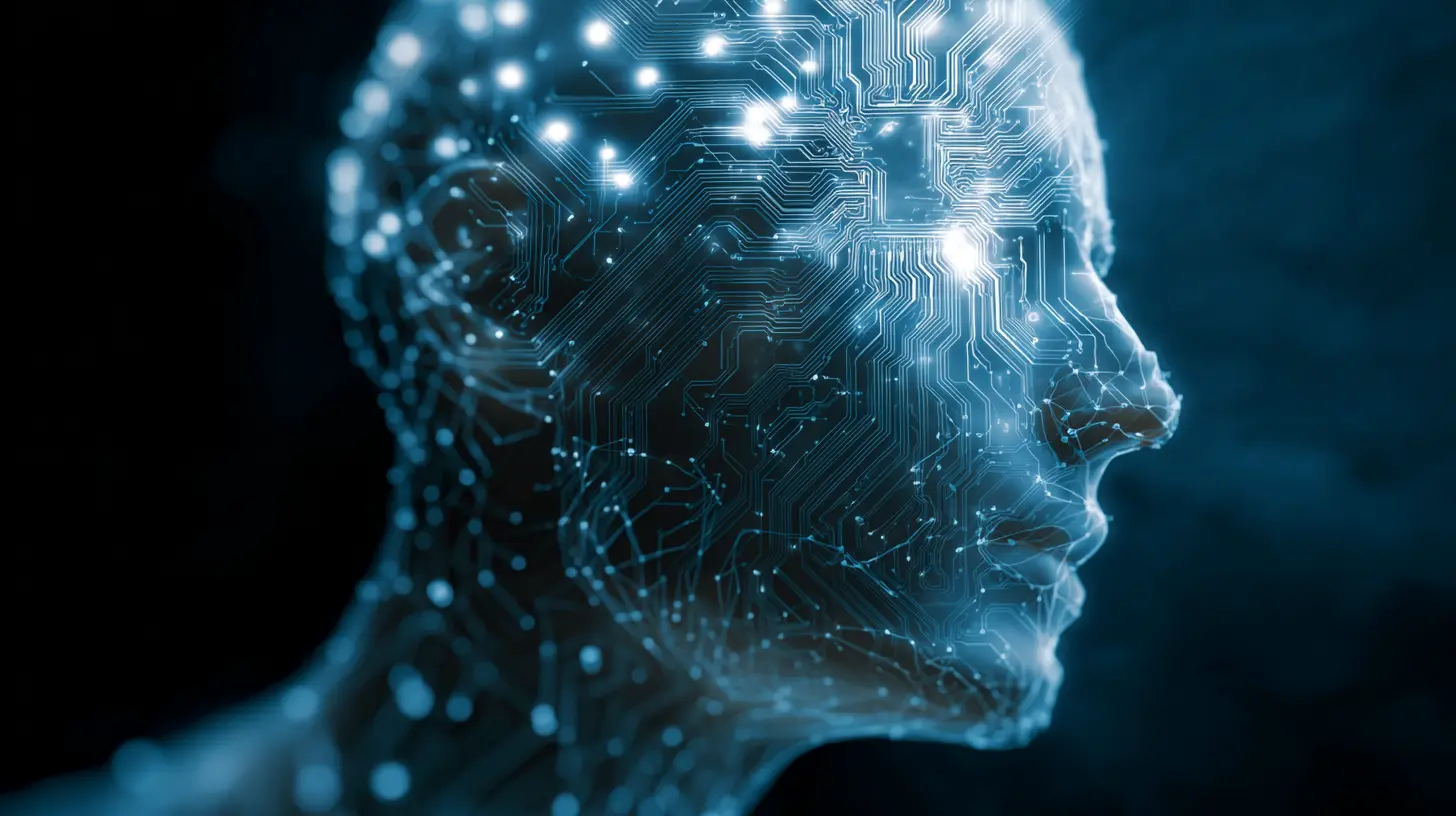
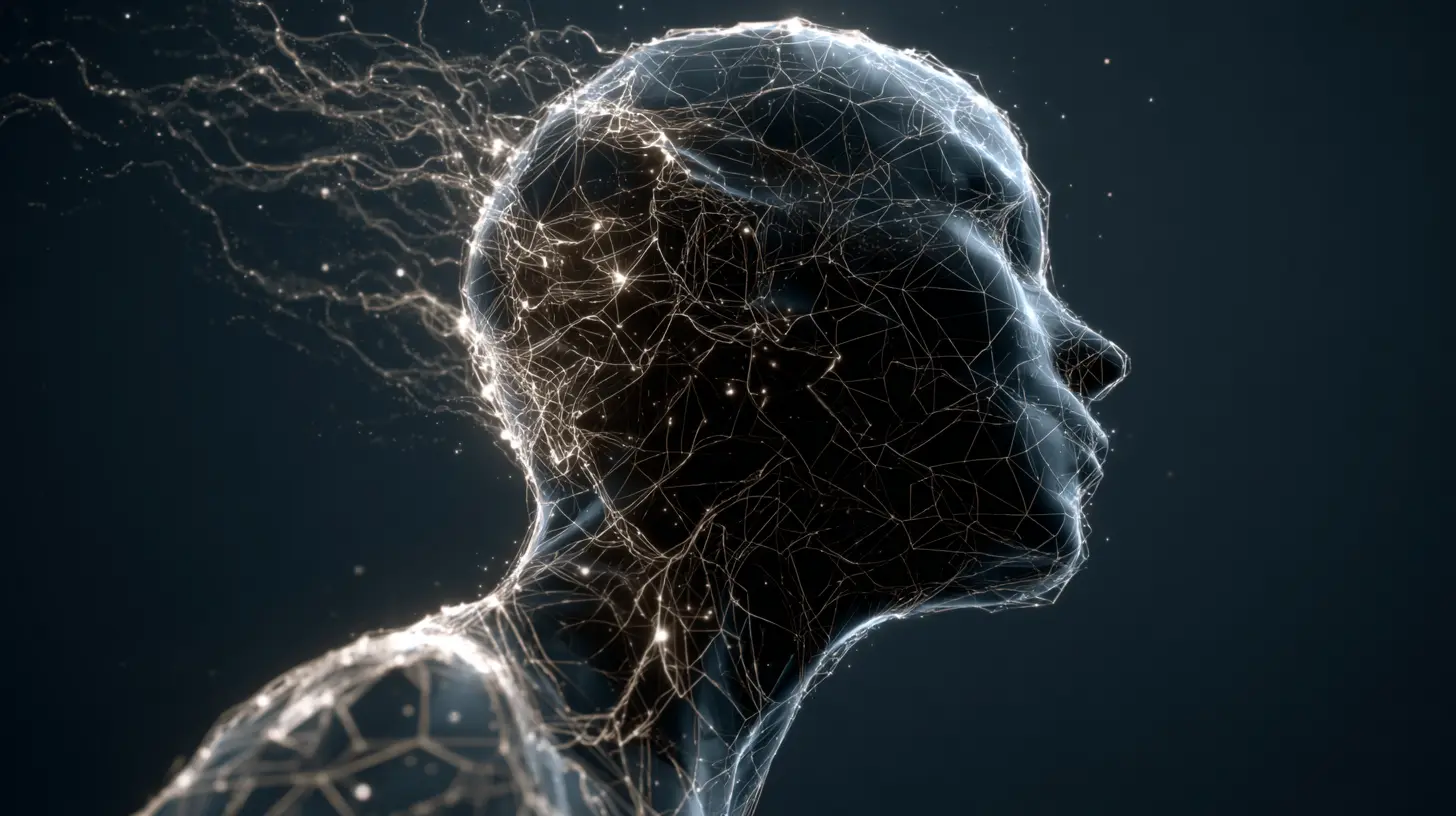
all images in this post were generated using AI tools
Category:
Deep LearningAuthor:

Adeline Taylor
Discussion
rate this article
1 comments
Mistral Luna
Deep learning is set to transform content creation by enabling more personalized and engaging experiences. With its ability to analyze vast amounts of data, it can generate innovative ideas and streamline the creative process. Exciting times ahead!
August 10, 2026 at 5:08 AM