How AI Is Reshaping Personal Privacy in the Next Decade
13 August 2026
Privacy used to be about locking your door, closing your curtains, and keeping your diary hidden under the mattress. That version of privacy is gone. We traded it for convenience, connection, and the ability to ask a phone a question and get an answer in half a second. The trade was quiet, and most of us didn't read the terms. Now, artificial intelligence is accelerating that exchange in ways that feel less like a transaction and more like a slow erosion of the boundary between your inner life and the outside world.
The next ten years will not be about whether AI touches your personal data. It already does. The real question is how much control you will retain over what AI knows, what it infers, and what it decides about you without your involvement. This is not a dystopian warning. It is a practical map of what is coming, what you can do about it, and where the real dangers hide.

The Shift from Data Collection to Data Inference
For the past twenty years, the privacy conversation centered on collection. Companies gathered your name, email, location, browsing history, and purchase records. Regulators responded with consent banners, cookie notices, and the right to request deletion. That framework is now obsolete.AI does not need to collect more data about you. It needs to infer more from the data it already has. This is the single most important shift to understand.
Consider a simple example. You browse a few articles about running shoes, watch a video about marathon training, and search for local races. A traditional advertising system sees your interests and shows you shoe ads. An AI system goes further. It estimates your income based on your neighborhood and job title, predicts your likelihood of injury based on your age and activity patterns, and guesses your stress levels from the time you spend reading health articles at night. It does not ask you anything. It builds a model of you that is more detailed than anything you have ever written down about yourself.
This inference engine is the core of the next decade's privacy problem. You cannot delete what was never collected. You cannot opt out of a conclusion. The data points are scattered across dozens of services, but AI stitches them together into a portrait you never agreed to sit for.
The practical consequence is that privacy will shift from a matter of hiding information to a matter of managing interpretation. You will need to think not just about what you share, but about what patterns your behavior reveals when aggregated and analyzed.

The End of the Anonymity Illusion
For years, companies promised that your data was anonymized before being used for analysis. The promise was always shaky. Researchers repeatedly showed that supposedly anonymous datasets could be re-identified by cross-referencing with public records. AI makes this trivial.Modern machine learning models can identify individuals from behavioral patterns alone. The way you type, the rhythm of your scrolling, the time gaps between your clicks, the specific words you mistype and correct, the order in which you visit pages, your mouse movement trajectories. These are as unique as a fingerprint. An AI trained on enough behavioral data can recognize you across different devices, browsers, and even after you clear your cookies.
This is not science fiction. It is already happening in fraud detection, where banks use behavioral biometrics to verify your identity. The same technology is available to advertisers, data brokers, and anyone willing to pay for it.
The illusion of anonymity will collapse entirely within the next few years. Even if you use a VPN, browse in incognito mode, and refuse to log into any service, your behavioral signature remains visible. The only real protection is to behave in ways that do not produce a consistent signature, which is nearly impossible for a normal person to sustain.
The uncomfortable truth is that anonymity is not a feature you can request. It is a state that must be engineered into the systems you use, and most systems are not built that way.
AI-Powered Surveillance in Everyday Life
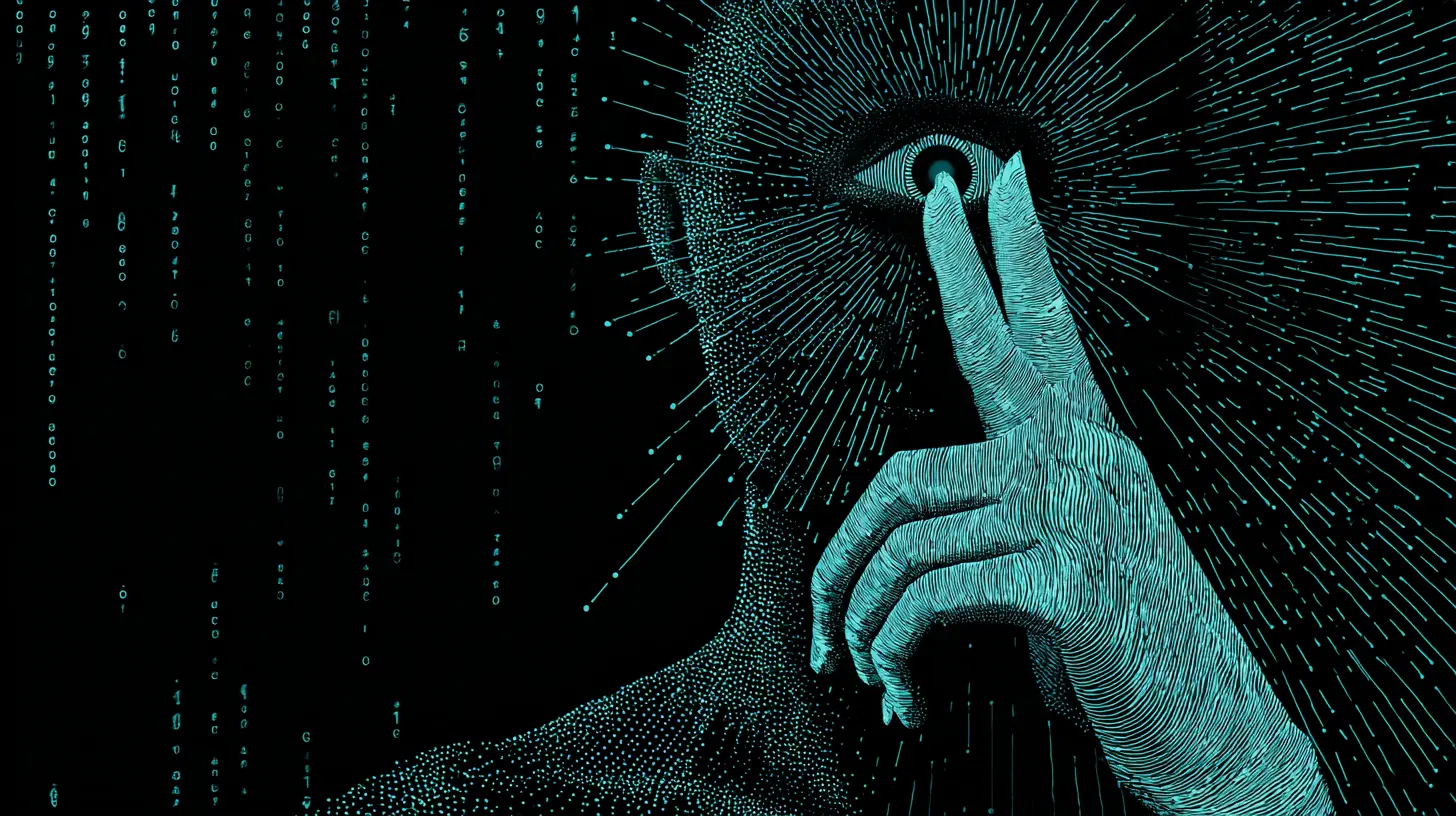
Surveillance used to mean cameras on street corners and microphones in interrogation rooms. Now it means your smart speaker listening for keywords, your car recording your driving habits for insurance scoring, your smart TV monitoring what you watch and when you pause, and your fitness tracker logging your heart rate during arguments with your partner.The next decade will bring AI that interprets all of this data in real time. Your insurance company will not just know that you drive at night. It will know that you drive faster when you are stressed, because your heart rate and driving patterns correlate. Your employer will not just know when you log in. It will know when you are productive, when you are distracted, and when you are likely to quit, based on your communication patterns and work rhythms.
The most concerning part is not the data itself. It is the asymmetry of understanding. The AI knows you better than you know yourself, because it can detect patterns across thousands of variables that your conscious mind never notices. You might think you are a careful driver. The AI knows you brake harder when you listen to podcasts, and it prices your insurance accordingly.
This creates a new kind of power imbalance. You cannot argue with an inference you cannot see. You cannot contest a decision you do not understand. The AI does not tell you why it denied your loan application or raised your premium. It just does, and the law has not caught up with the reality that these decisions are being made by opaque systems.
The Rise of Predictive Privacy Harms
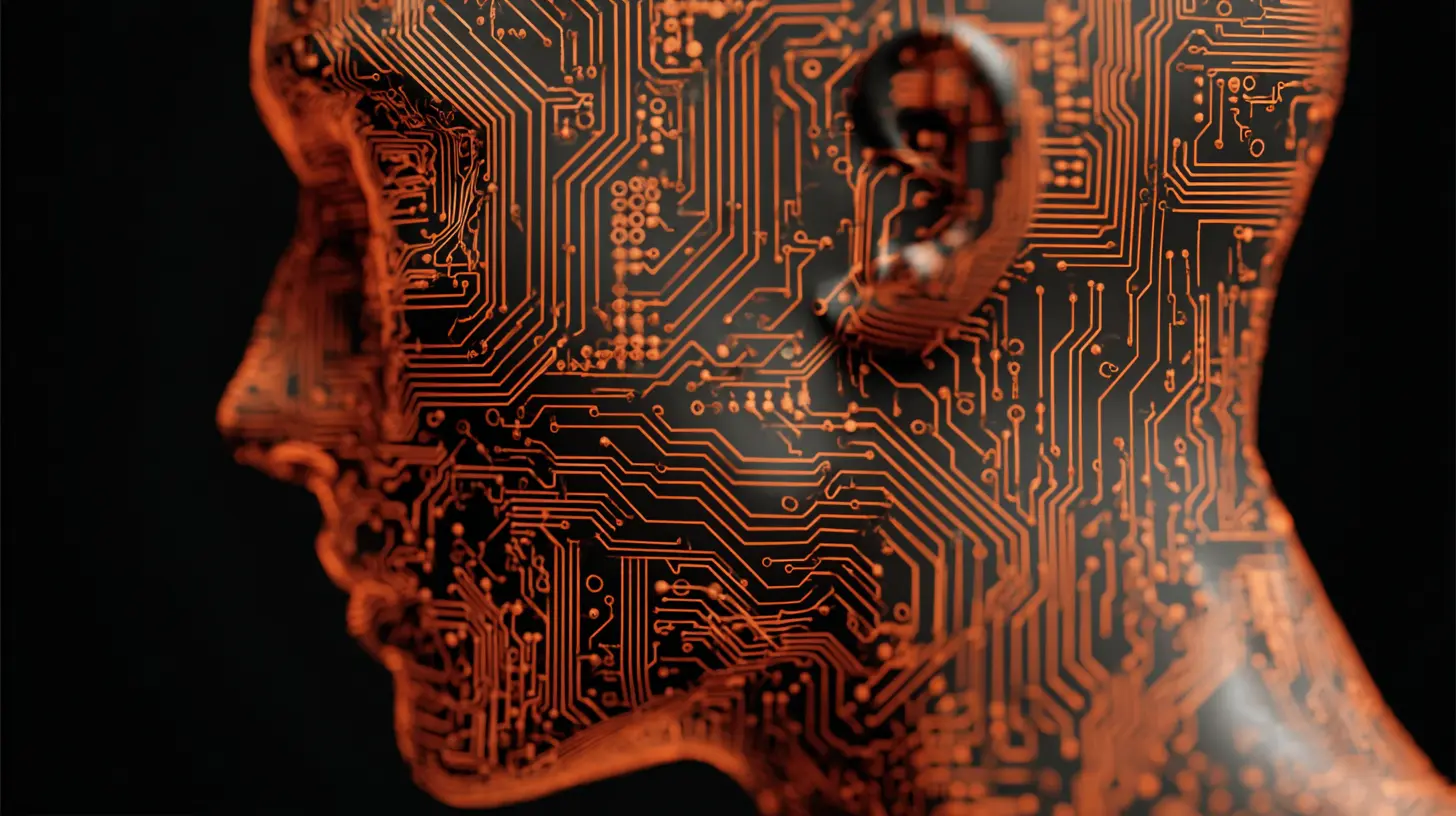
Privacy harms used to be concrete. A data breach exposed your credit card number. A stalker found your address. A hacker leaked your private photos. These are still real, but AI introduces a new category of harm that is more subtle and harder to remedy.Predictive harms occur when AI anticipates something about you before it happens, and that prediction is used against you. A health insurer might infer from your social media posts and purchasing patterns that you are at high risk for depression, and quietly adjust your coverage. A landlord might use an AI model that predicts you will break your lease based on your credit history, your job stability, and the demographic profile of your neighborhood. A police department might flag you as a potential repeat offender based on your location data and social connections.
These predictions are often wrong. They are built on statistical correlations, not causal understanding. But they are acted upon as if they were facts. You never see the prediction. You never get a chance to correct it. You just experience the consequence, usually in the form of a denial, a higher price, or increased scrutiny.
The next decade will bring a wave of litigation around this issue. Courts will struggle with fundamental questions. Is a prediction about your future behavior a form of personal data? Do you have a right to know what AI thinks about you? Can you demand that a model be retrained without your data if it produces a false prediction about you?
These questions have no clear answers yet. The law is decades behind the technology. In the meantime, the burden falls on individuals to understand how these systems work and to take steps to reduce their exposure.
The New Economics of Personal Data
The current data economy is based on a simple model. Companies collect data, aggregate it, and sell access to it. You are the product, and your attention is the currency. AI changes this model in two fundamental ways.First, AI increases the value of data. A single data point about you is worth almost nothing. But when combined with millions of other data points and processed through a sophisticated model, it becomes part of a predictive engine that can generate billions of dollars. This means companies have an even stronger incentive to collect everything they can, because they never know which data points will become valuable when combined with future AI capabilities.
Second, AI creates new markets for synthetic data. Instead of selling your actual data, companies can sell models trained on your data. These models do not contain your raw information, but they encode your patterns and behaviors. You cannot request deletion of a model. You cannot opt out of a statistical representation. The model exists independently of any individual data point, which makes it nearly impossible to regulate under current privacy laws.
This leads to a strange situation. You might stop using a service entirely, delete your account, and demand that all your data be erased. The company complies. But the AI model that was trained on your data remains, and it continues to make predictions about people who are similar to you. Your influence persists even after your data is gone.
The practical implication is that you should assume that anything you share with an AI-powered service will permanently influence the models that service uses. There is no undo button for training data.
Consent Is Broken. Here Is What Replaces It.
The current consent model is a joke. You click "I agree" without reading the terms. The terms are written by lawyers to protect the company, not you. The options are binary. Accept or leave. There is no middle ground.AI makes this worse because the consequences of consent are unpredictable. When you agree to let a company use your data, you are agreeing to let it be used in ways that did not exist when you clicked. The company might later build an AI system that infers your political affiliation, your sexual orientation, or your health status from data you provided for a completely different purpose.
The next decade will see a move away from consent as the primary privacy protection. It will be replaced by a combination of three things.
First, outcome-based regulation. Instead of requiring companies to ask permission, regulators will focus on what companies are allowed to do with AI predictions. If an AI system makes a decision that significantly affects your life, you will have the right to know the reasoning and to challenge it. This is already happening in the European Union with the AI Act, and similar frameworks are being discussed in other jurisdictions.
Second, technical privacy tools. Differential privacy, federated learning, and homomorphic encryption are moving from academic research to practical deployment. These technologies allow AI to learn from data without exposing individual data points. They are not perfect, but they are the best hope for a world where AI can improve without consuming every detail of your life.
Third, personal AI assistants that act as privacy intermediaries. Instead of every company collecting data directly from you, you will have an AI that manages your data on your behalf. It will decide what to share, with whom, and under what conditions. It will negotiate with other AIs. It will enforce your preferences automatically. This is not a distant fantasy. Several companies are already building this concept, and it will become mainstream within the next five to seven years.
The Trade-Off Between Personalization and Privacy
There is no way around the fundamental tension. AI personalization requires data. The more the AI knows about you, the better it can serve you. Your music recommendations improve. Your search results become more relevant. Your health monitoring becomes more accurate. Your shopping experience becomes more convenient.The question is not whether personalization is worth the privacy cost. It is whether you are making an informed choice about that trade-off. Most people are not. They do not realize that the AI recommending their next movie is also building a psychological profile that could be used to manipulate their political views or sell them unnecessary insurance.
The next decade will force a more honest conversation about this trade-off. Some people will choose maximum personalization and accept the consequences. Others will choose maximum privacy and accept a clunkier experience. Most people will fall somewhere in the middle, making contextual decisions based on the importance of the service and the sensitivity of the data involved.
A practical framework for making these decisions is to ask three questions before using any AI-powered service. What data does it collect? What inferences does it make? Who else can access those inferences? If you cannot answer all three questions, you are not making an informed choice.
The Role of Regulation and Its Limits
Regulation is necessary, but it is not sufficient. The GDPR in Europe and the CCPA in California have established important rights, but they were written before the current wave of AI. They focus on data collection, not data inference. They give you the right to access your data, but not the right to understand the models built from it.The next decade will see new laws that specifically address AI and privacy. The EU AI Act is the most prominent example, but it is only the beginning. Expect to see legislation that requires AI systems to be transparent about their decision-making, that prohibits certain types of predictive profiling, and that gives individuals the right to opt out of AI-based decisions in areas like employment, credit, and insurance.
However, regulation has a fundamental limitation. It is reactive. By the time a law is passed, the technology has already moved forward. The AI systems that will be operating in 2035 are being designed right now, and they will not wait for regulators to catch up.
This means that individual action matters more than ever. You cannot rely on the government to protect your privacy. You have to take active steps to understand how AI systems work, to limit your exposure, and to demand better practices from the companies you do business with.
Practical Steps You Can Take Right Now
The next decade is not something that happens to you. You can shape it. Here are concrete actions that will make a real difference.Audit your digital footprint. Search for your name and see what comes up. Check what permissions your apps have. Review the privacy settings on your social media accounts. You will be surprised at how much you have exposed without realizing it.
Use privacy-focused alternatives. Switch to a browser that blocks trackers. Use a search engine that does not log your queries. Choose messaging apps with end-to-end encryption. These choices send a signal to the market that privacy matters, and they reduce the amount of data available for AI to analyze.
Be skeptical of free services. If you are not paying for the product, you are the product. This is not always true, but it is a useful heuristic. When a service is free, ask yourself how the company makes money. The answer is almost always your data.
Separate your identities. Use different email addresses for different purposes. Use a virtual credit card for online purchases. Do not use your real name on forums or social platforms where you discuss sensitive topics. The more fragmented your digital identity, the harder it is for AI to build a complete picture of you.
Demand transparency. When a company denies you a service, ask why. When an AI system makes a decision about you, ask for an explanation. In many jurisdictions, you have a legal right to this information. Even where you do not, asking creates pressure for change.
The Future Is Not Determined
The next decade will bring AI systems that are more powerful, more pervasive, and more personal than anything we have seen. They will know us in ways that we do not know ourselves. They will make decisions that affect our lives in ways that we do not understand. They will create new forms of value and new forms of harm.But none of this is inevitable. The technology is not a force of nature. It is a set of choices made by engineers, executives, and policymakers. Those choices can be influenced. The direction of the next decade depends on the decisions we make today, both as individuals and as a society.
The most important thing to remember is that privacy is not about hiding. It is about autonomy. It is about the ability to decide who knows what about you, and to control how that knowledge is used. AI does not have to destroy that autonomy. It can be built in ways that respect it. But that will only happen if we demand it.
The tools are available. The knowledge is accessible. The choices are ours to make. The question is whether we will make them deliberately, or whether we will let the default settings decide for us.
all images in this post were generated using AI tools
Category:
Digital PrivacyAuthor:

Adeline Taylor
Discussion
rate this article
1 comments
Chelsea Gomez
In the shadow of innovation, whispers of our lives intertwine with the pulse of artificial minds.
August 14, 2026 at 4:20 AM
Adeline Taylor
That's a thought-provoking observation. The intersection of our lives and AI definitely raises important questions about privacy moving forward.